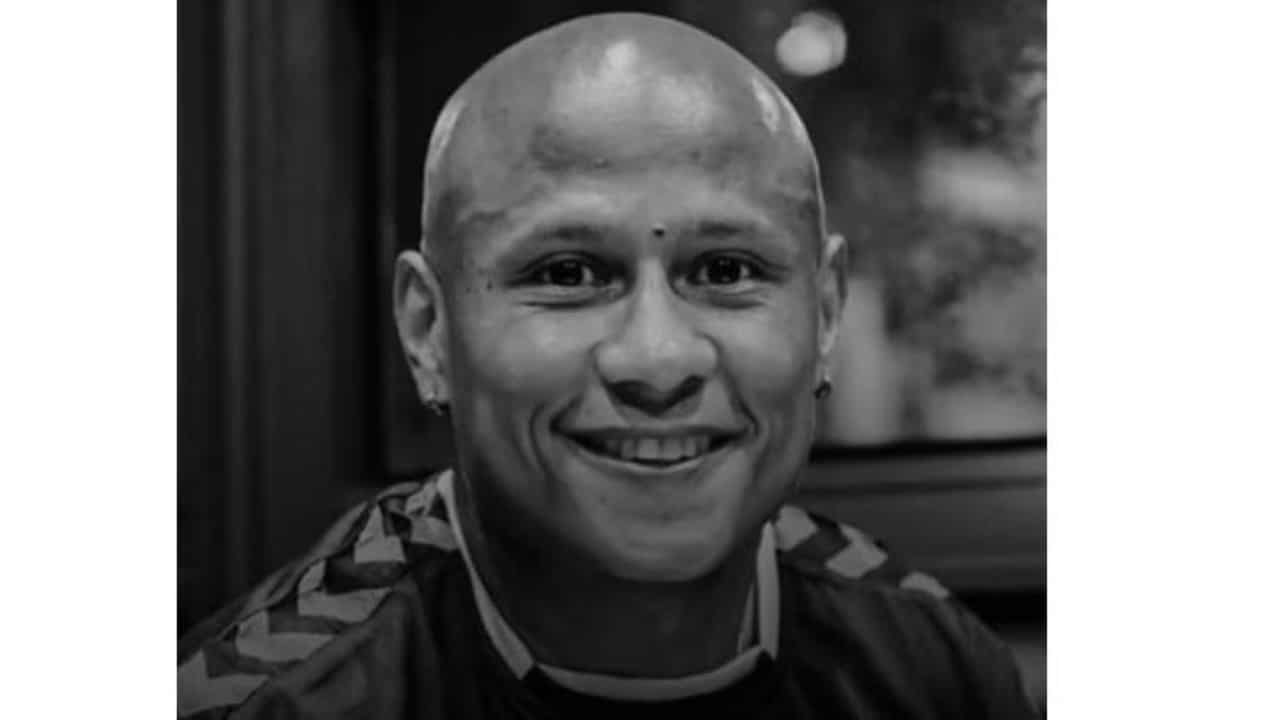
The South American football community woke up in mourning following the tragic news of the death of 32-year-old Uruguayan forward Mathías Acuña, who was found dead in his hotel room in the central Ecuadorian city of Ambato. The player had been preparing for the new season with Mushuc Runa, a team in Ecuador’s top division, following a notable career in both Uruguayan and international clubs. The tragedy, which has shaken the sporting world, remains shrouded in mystery and is being investigated by local authorities. Preliminary reports suggest a possible self-inflicted cause, but no official confirmation has been released.
Mathías Acuña had recently returned to Ecuador to rejoin his club after the end-of-year break. The forward was at a pivotal moment in his career, solidifying his position in Ecuadorian football by scoring eight goals in 15 matches in the national championship. Trained at El Tanque Sisley in Uruguay, the player had also made a name for himself at clubs such as Boston River, Fénix, and Liverpool. His international career included stints in Greece with Larissa and Lamia. Before moving to Mushuc Runa in mid-2024, he had another spell at Fénix in his homeland.
Acuña’s death not only cuts short a promising career but also highlights the challenges and pressures faced by professional athletes. Alongside his football career, the player was grappling with personal issues, including a domestic violence accusation in December 2024 that led to the imposition of an electronic monitoring device by the Ecuadorian judiciary.
Mathías Acuña’s career in South American and European football
Born in Montevideo in 1992, Mathías Acuña began his career at El Tanque Sisley, a modest club in the Uruguayan capital known for fostering young talent. His skills as a forward quickly attracted attention from bigger teams, leading him to join squads such as Boston River and Fénix. At Liverpool Montevideo, he stood out for his versatility and decisive performances, cementing his reputation in the domestic football scene.
Acuña’s international journey began in 2020 when he joined Greece’s Larissa. His time in the Greek league was marked by consistent performances, allowing him to remain in the country for two years, including a stint at Lamia. With the Covid-19 pandemic affecting global football, he decided to return to Uruguay in 2022, rejoining Fénix. However, his ambition to explore new challenges led him to Mushuc Runa in 2024, a strategic step in his professional journey.
Career highlights
- At Fénix, he was instrumental during the 2018 and 2023 campaigns, scoring crucial goals in domestic competitions.
- At Larissa, he had a memorable game against PAOK in 2021, scoring the decisive goal that saved his team from relegation.
- At Mushuc Runa, he became one of the team’s top scorers, contributing to their qualification for the Copa Sudamericana.
Circumstances surrounding his death
Acuña’s passing raises complex questions about the well-being of athletes, both physical and mental. The imposition of the electronic monitoring device and the domestic violence accusations came to light in late 2024 when his ex-partner, Lu Rodríguez, filed formal complaints with Ecuadorian authorities. While Acuña did not publicly address the case, those close to him reported that he was struggling with significant emotional challenges.
Mushuc Runa expressed profound sorrow over the loss of their player. Club president Luis Chango stated their commitment to supporting the player’s family and assured that the team would handle the necessary arrangements to repatriate his body to Uruguay. Investigations into his death are ongoing, with no defined timeline for their conclusion.
Impact on Ecuadorian football
Acuña quickly adapted to the playing style in Ecuador, contributing to Mushuc Runa’s growth in both national and international competitions. His sudden death is a significant blow to the team, which was striving to establish itself among the country’s top clubs. Founded in 2003, Mushuc Runa represents Ecuador’s indigenous community, carrying deep cultural and social symbolism. Acuña’s loss comes as the club was preparing to expand its presence on the South American stage.
Domestic violence and sports
Acuña’s case reignites discussions about domestic violence within the sports world, a topic often shrouded in stigma. The imposition of the electronic monitoring device was a judicial measure reflecting Ecuadorian authorities’ commitment to addressing such crimes. In various countries, athletes face pressure to maintain a spotless public image, even when personal issues arise. This scenario underscores the need for preventive and educational measures to avoid future cases and promote healthy behavior on and off the field.
Mental health in the sports environment
The pressure to perform, combined with social expectations and personal struggles, can significantly impact the mental health of football players. Acuña’s case highlights the importance of providing psychological support and creating an environment where athletes feel comfortable seeking help. While European clubs often have multidisciplinary teams that include sports psychologists, many South American teams still face resource limitations.
Key statistics from his career
- Over 300 official matches played across Uruguayan, Greek, and Ecuadorian clubs.
- A total of 63 goals scored throughout his professional career.
- Eight goals in 15 matches in the 2024 Ecuadorian Championship, showcasing his impact at Mushuc Runa.
The legacy of Mathías Acuña
Mathías Acuña’s death leaves a void in South American football and serves as a lesson about the challenges faced by athletes on and off the field. Despite controversies, his career exemplifies dedication to the sport, with memorable performances at clubs across continents. His legacy will be remembered by fans and teammates, who expressed their grief on social media. Tributes from players like Manchester United’s Manuel Ugarte and entities like the Uruguayan Football Association highlight Acuña’s importance in the sport.
The path toward structural change
Acuña’s case should act as a catalyst for broader changes in football. From addressing domestic violence to investing in mental health, there is much work to be done to ensure athletes have a solid support structure to face adversities. Clubs, federations, and sports organizations must proactively implement educational programs and emotional support initiatives.