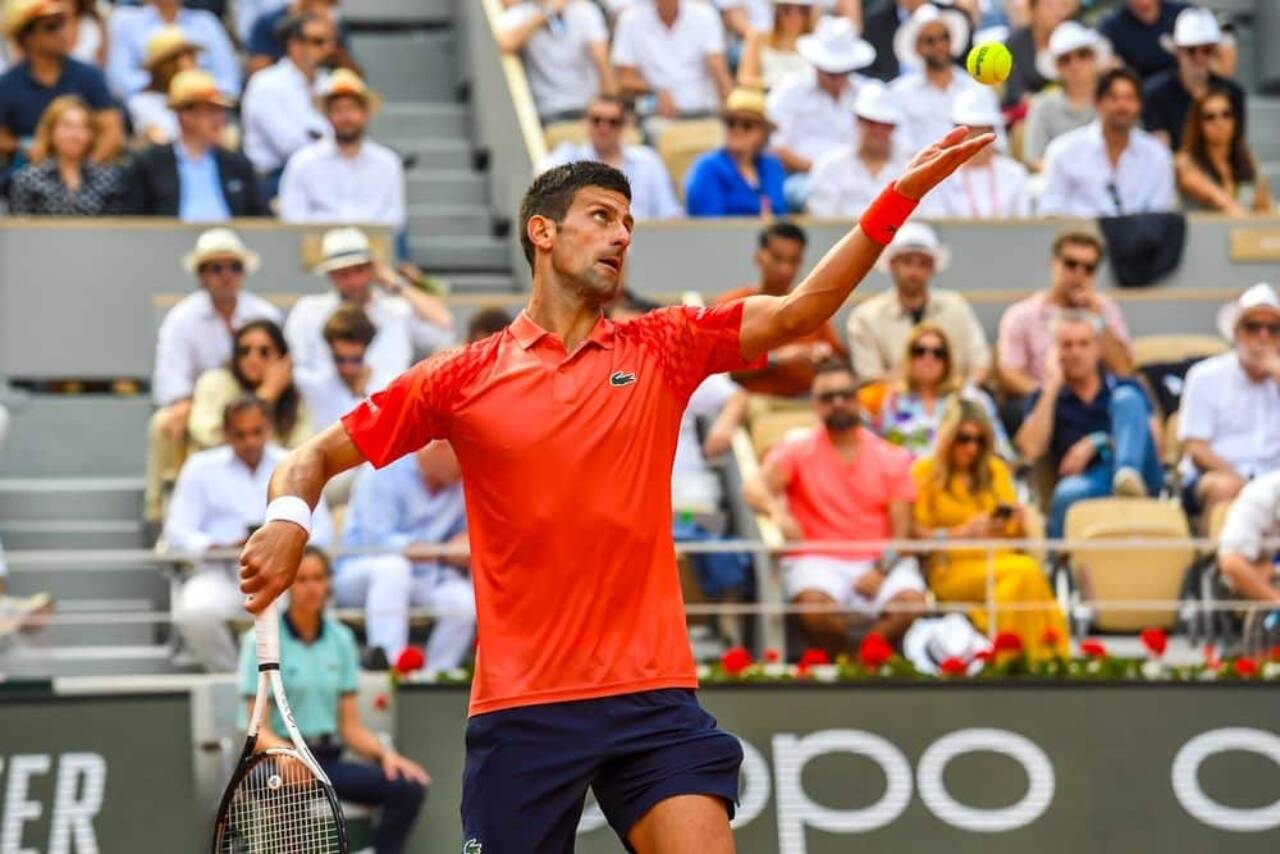
Novak Djokovic, one of tennis’ greatest legends, is facing one of the most challenging moments of his career due to an injury that has sidelined him from the courts. The Serbian, who had maintained an impressive consistency in the circuit, saw his journey at the Australian Open abruptly interrupted after suffering a muscle injury to his left thigh during the quarterfinals against Carlos Alcaraz. The injury worsened in the semifinal against Alexander Zverev, forcing the tennis player to withdraw from the match after losing the first set. The immediate impact was his drop in the ATP ranking, causing Djokovic to lose positions and altering the competitive landscape of the circuit. This withdrawal sparked various reactions in the tennis community and opened the door for emerging talents to take center stage in professional tennis.
Djokovic’s withdrawal from the match not only disappointed fans but also raised questions about his condition for upcoming tournaments. At 37 years old and with an impressive history of resilience, the injury brings concerns about his longevity in the circuit and his ability to compete against the rising stars in the sport. His return will be crucial in defining his immediate future in professional tennis.
His drop in the ranking and absence from key tournaments directly influence the competitive scenario of world tennis. The new ATP ranking configuration has young talents taking the spotlight, reflecting the natural generational shift occurring in the sport. While Djokovic focuses on his recovery, top players prepare to secure their leadership positions.
???????? Novak Djokovic's injury is almost 100% healed:
— Swish ???? Tennis (@Zwxsh) February 10, 2025
"There's no longer any muscle tear. The injury is almost 100% healed and I'm ready to go for more victories. I have the green light from the medical team to train, to prepare."
"Thank God I managed to recover quickly. I've had… pic.twitter.com/CMYp7YNkE3
Impact on the ATP ranking and the rise of new talents
Djokovic’s injury directly affected his world ranking position. Before the Australian Open, the Serbian held the top spot, but his early exit from the tournament and his inability to defend points earned in previous editions caused him to drop to seventh place, now with 3,900 points. This decline opened space for the rise of new names in the circuit, such as Italy’s Jannik Sinner, who took the number one spot with 11,830 points, followed by Alexander Zverev with 8,135 points and Carlos Alcaraz with 7,010 points. This shift marks a transition in world tennis, where the new generation is beginning to solidify its presence at the top.
The rise of these young players reflects a generational change in the sport. The dominance established by Djokovic, Rafael Nadal, and Roger Federer over the last 20 years is gradually making way for new protagonists. Djokovic himself has been one of the most dominant players in history, but the advancing age and physical challenges make the competition even fiercer.
Reactions and controversies surrounding Djokovic’s withdrawal
Djokovic’s decision to withdraw from the match against Zverev sparked a wave of reactions in the tennis world. While many lamented his injury and absence from the Australian Open final, others questioned the severity of his condition. Fans at Rod Laver Arena expressed their disappointment, booing Djokovic as he left the court. In response to the doubts raised, the tennis star posted an MRI scan of his left thigh injury on his social media, proving the extent of the damage. In his post, Djokovic sarcastically addressed his critics, stating: “I thought I’d leave this here for the ‘experts’ in sports injuries out there,” highlighting his frustration with those questioning his physical condition.
The controversy surrounding his withdrawal reignited the debate about the physical demands placed on elite athletes. At 37, Djokovic faces the natural wear and tear of his body, and this latest injury further emphasizes the need for a more cautious approach to the competitive calendar. The professional circuit imposes an intense sequence of tournaments, increasing the risk of injuries, especially for veteran players.
Djokovic’s injury history and recovery challenges
Djokovic has faced physical challenges throughout his career. Last year at Roland Garros, he suffered a meniscus injury in his right knee, forcing him to withdraw from the tournament in the quarterfinals. This injury also led to a temporary loss of his number-one ranking to Jannik Sinner. His recovery was quick, allowing him to return to the circuit later that season, but this episode underscores the fragility of his physical condition.
Djokovic’s longevity in tennis has been remarkable but requires meticulous planning to prevent further injuries. To ensure his competitive return, he will need a recovery period with specialized training and strict medical supervision. Experts highlight that muscle injuries in the thigh can be delicate and require caution when resuming high-intensity activities.
Support from fellow players and expectations for his return
After the Australian Open, Djokovic received support from various tennis players on the circuit. Alexander Zverev, his opponent in the semifinals, defended the Serbian, urging fans to show more respect and acknowledge his contributions to the sport. The German emphasized that Djokovic has always been a dedicated athlete and that his withdrawal was not a hasty decision.
The anticipation for Djokovic’s return is high. Recent reports indicate that he is in the advanced stages of recovery and plans to return to the courts at the Doha tournament in Qatar, scheduled from February 17 to 22. His main goal is to secure his 100th singles title, an achievement that only a few players in history have reached. If successful, he will join legendary names such as Jimmy Connors and Roger Federer, further cementing his legacy in the sport.
Statistics and Djokovic’s dominance in world tennis
Djokovic has built a career filled with impressive records. Some of his most remarkable achievements include:
- 24 Grand Slam titles, making him the most successful male player in history.
- 389 weeks as world number one, the longest reign ever recorded.
- Six ATP Finals titles, equaling Roger Federer.
- Bronze medal at the 2008 Beijing Olympics.
- Most Masters 1000 titles, surpassing Nadal and Federer.
These numbers demonstrate Djokovic’s significance in the sports world and reinforce his position as one of the greatest of all time. Despite facing physical difficulties, his return to the circuit promises to further shake up the tennis world.
Season outlook and physical challenges
The 2025 season will be crucial for Djokovic. With the Paris Olympics approaching, he is still in pursuit of an Olympic gold medal, the only major title missing from his career. However, to achieve this goal, he must maintain a competitive rhythm and avoid further injuries. The tennis circuit demands endurance and consistency, and any physical setback could jeopardize his chances of winning more titles.
Djokovic will face tough competition from the rising generation, who have already demonstrated their ability to win major tournaments. Jannik Sinner, Carlos Alcaraz, and Alexander Zverev have shown impressive skill and are determined to establish themselves at the top of the rankings. The Serbian will need to balance his experience with the need to adapt to the fast-paced nature of the circuit.
The pursuit of the 100th title and Djokovic’s enduring legacy
Djokovic is on the verge of joining an elite group of tennis players who have won 100 career titles. The anticipation for this historic milestone is high, and his return to competitions will be closely followed by fans and sports analysts. With a trajectory full of achievements, he remains a crucial figure in world tennis, regardless of the physical challenges he faces.