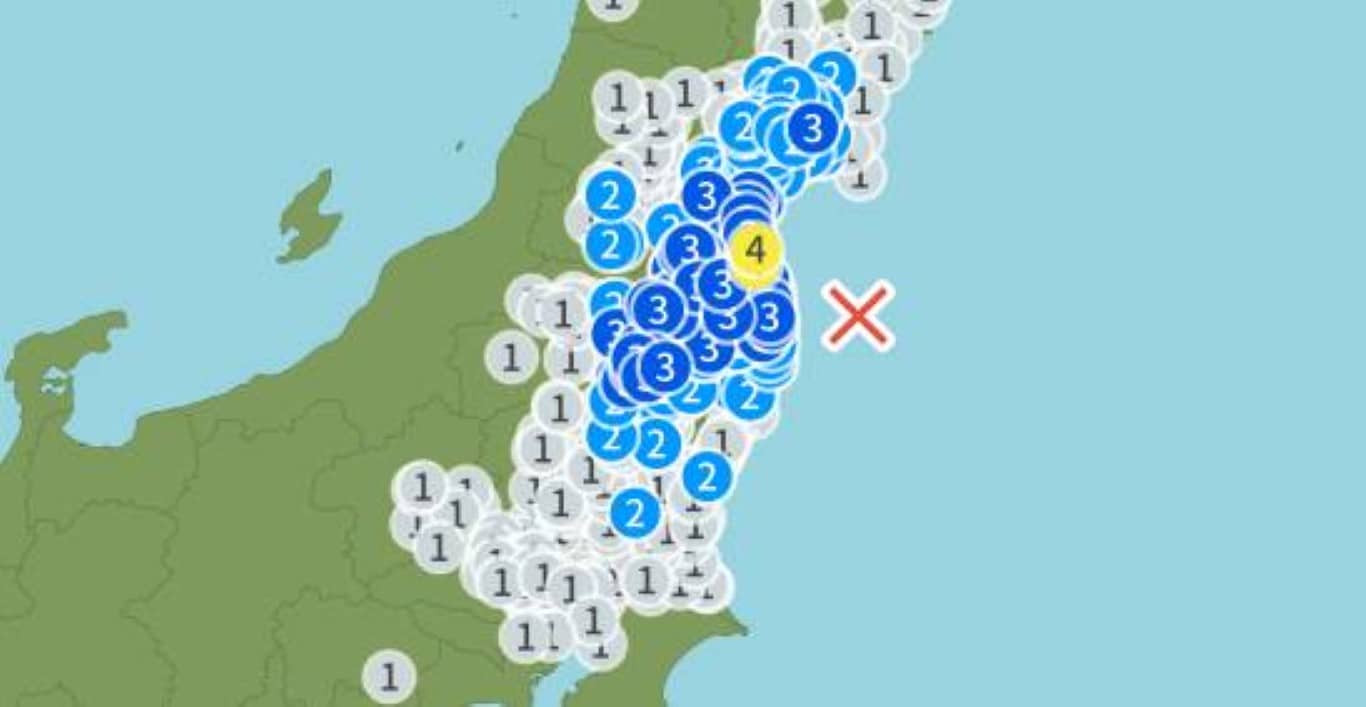
On February 21, 2025, at approximately 10:01 PM local time, a magnitude 5.0 earthquake struck off the coast of Fukushima Prefecture, Japan. The Japan Meteorological Agency (JMA) reported the epicenter at a depth of 50 kilometers, located at latitude 37.5°N and longitude 141.5°E. Authorities confirmed there was no tsunami risk associated with this seismic event, despite its notable strength.
Affected Regions and Seismic Intensity
The earthquake was felt across a broad area, particularly in Fukushima and neighboring prefectures. The highest seismic intensity recorded was Shindo 4, a level that can cause noticeable shaking indoors but typically results in minimal structural damage.
- Shindo 4 (Moderate shaking): Fukushima Prefecture – Soma City, Shinchi Town
- Shindo 3 (Light shaking): Miyagi Prefecture – Ishinomaki, Natori, Kakuda, Iwanuma, and others; Fukushima Prefecture – Fukushima City, Koriyama, Minamisoma, and several more municipalities
- Shindo 2 (Weak shaking): Iwate Prefecture – Ichinoseki; Miyagi Prefecture – Sendai City and surrounding towns; Fukushima Prefecture – Iwaki City, and others
- Shindo 1 (Barely perceptible): Aomori, Iwate, Yamagata, and even parts of Tokyo and Chiba reported mild tremors
Impact on Transportation and Infrastructure
Following the earthquake, precautionary safety checks led to temporary suspensions on the Tohoku Shinkansen bullet train line, which resumed operations after confirming track safety. Local train services also experienced brief delays. Airports in the region reported no disruptions. However, some areas experienced brief power outages, especially near the epicenter, which were quickly resolved thanks to prompt response teams.
Public Reaction and Evacuation Efforts
Residents in Soma and Shinchi, where the strongest tremors were felt, evacuated buildings and gathered in open areas as a precaution. Temporary shelters were opened to accommodate those concerned about potential aftershocks. Local schools and government buildings were inspected, but no major structural damages were found.
Eyewitness accounts described the shaking as strong enough to rattle windows and furniture but not severe enough to cause widespread panic. Many residents, still sensitive to seismic events due to the devastating 2011 Tohoku Earthquake and Tsunami, took immediate action to ensure their safety.
Historical Context: Fukushima’s Seismic Vulnerability
The coastal region of Fukushima is particularly susceptible to seismic activity, having been one of the hardest-hit areas during the 2011 Great East Japan Earthquake (magnitude 9.1), which caused catastrophic damage and a nuclear disaster. Since then, the region has experienced numerous aftershocks and moderate earthquakes, leading to ongoing vigilance and enhanced disaster preparedness protocols.
The 2011 disaster reshaped Japan’s approach to earthquake readiness, leading to widespread infrastructure reinforcements and improvements in early warning systems. Regular earthquake drills and public education campaigns have since become standard practices in Fukushima and surrounding areas.
Japan’s Earthquake Early Warning System in Action
Japan’s Earthquake Early Warning (EEW) system, renowned for its effectiveness, successfully issued alerts seconds before the shaking reached populated areas. This system provided residents with a crucial window to take cover, halt machinery, or pause public transportation services, significantly reducing the risk of injuries.
The JMA emphasized the importance of these alerts, especially in densely populated regions like Sendai and Fukushima, where thousands of people were able to prepare for the tremors in advance. This response showcases Japan’s commitment to mitigating the dangers associated with its frequent seismic activity.
Ongoing Precautions and Aftershock Risks
Seismologists have warned of potential aftershocks in the coming days, urging residents in the affected areas to remain cautious. While the initial earthquake caused no major structural damage, aftershocks of magnitude 4.0 or higher are possible and could pose risks to weakened buildings or infrastructure.
Local governments have advised residents to review evacuation routes, keep emergency supplies ready, and stay informed through official updates. Shelters in areas most affected remain open for those feeling unsafe in their homes.
Summary of Key Details
- Date and Time: February 21, 2025, at 10:01 PM
- Epicenter: Off the coast of Fukushima Prefecture
- Magnitude: 5.0
- Depth: 50 km
- Strongest Intensity: Shindo 4 in Soma City and Shinchi Town
- Tsunami Warning: None issued
- Infrastructure Impact: Minor power outages, temporary train suspensions, no major structural damage
- Casualties: No injuries or fatalities reported
Emergency Preparedness and Public Awareness
The earthquake has reignited discussions on disaster preparedness across Japan. Local governments are emphasizing the importance of personal emergency kits, knowledge of evacuation routes, and participation in regular safety drills. Schools, businesses, and public facilities have been encouraged to review and update their disaster protocols to ensure community safety during future seismic events.
Lessons Learned and the Importance of Vigilance
This moderate earthquake serves as a reminder of Japan’s vulnerability to seismic activity and the need for continued public awareness. Despite the country’s advanced safety infrastructure, the unpredictability of earthquakes means residents must always be prepared.
Japan’s success in minimizing the impact of frequent earthquakes lies in its comprehensive preparedness strategies, robust construction codes, and community education efforts. Events like this highlight the effectiveness of these measures while reinforcing the importance of remaining vigilant.
Key Earthquake Terms
- Magnitude (M): A measure of the energy released during an earthquake. This event registered M5.0, considered moderate.
- Shindo Scale: Japan’s seismic intensity scale, which measures the degree of shaking felt at specific locations. Shindo 4 can cause moderate shaking indoors but typically results in limited damage.
- Epicenter: The point on the Earth’s surface directly above where the earthquake originates.
Historical Earthquakes in the Region
- 2011 Great East Japan Earthquake: M9.1, resulting in over 15,000 deaths and a nuclear crisis.
- 2016 Fukushima Earthquake: M7.4, which triggered a tsunami warning and caused minor damage.
- 2022 Offshore Fukushima Earthquake: M7.3, leading to power outages and transportation disruptions.
Safety Tips During Earthquakes
- Drop to the ground, take cover under sturdy furniture, and hold on until the shaking stops.
- Stay away from windows, glass, and heavy objects that may fall.
- If outside, move to open areas away from buildings, streetlights, and utility wires.
- Follow official evacuation orders if a tsunami warning is issued.
Earthquake Statistics in Japan
- Annual Earthquakes: Japan experiences over 1,500 perceptible earthquakes each year.
- Tectonic Setting: Located along the Pacific Ring of Fire, Japan sits on four converging tectonic plates, making it one of the most seismically active countries.
- Preparedness: Over 90% of Japanese households keep emergency kits, and regular drills are conducted nationwide.