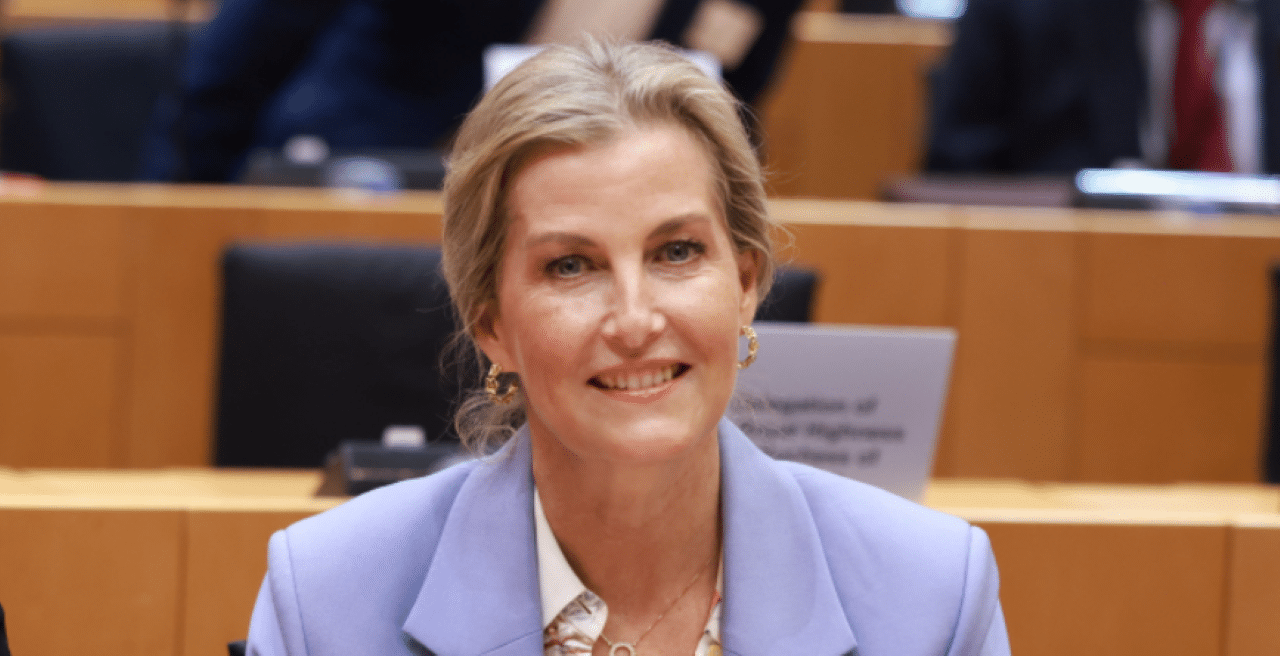
On Thursday, March 27, the Duchess of Edinburgh traveled to Brussels, Belgium, to participate in a series of high-profile events aimed at combating child sexual exploitation and abuse. Joining forces with Jess Phillips, the UK Minister for Safeguarding and Violence Against Women and Girls, the Duchess attended an event co-hosted by the European Parliament Intergroup on Children’s Rights. Delivering a powerful keynote speech to an audience of senior European and international decision-makers, alongside tech industry representatives, she highlighted the devastating impact of these crimes on young people and emphasized the urgent need for protective measures in the digital age. As Patron of the NSPCC and Plan International UK, her presence underscored a unified call for action, focusing on the role technology companies can play in designing safer online environments. The visit included a panel discussion on global responses to the issue, a reception with survivors and advocates, and a roundtable with child rights NGOs, amplifying the voices of those affected and pushing for collaborative solutions.
The Duchess’s trip to Brussels reflects her long-standing commitment to child protection. Since taking on the NSPCC patronage in 2016, a role previously held by Queen Elizabeth II, she has worked tirelessly to support the UK’s leading children’s charity in its mission to end child abuse and help victims rebuild their lives. Her recent appointment as Patron of Plan International UK in November 2024 further expands her advocacy, aligning with the organization’s global efforts to ensure children’s safety and girls’ empowerment across more than 80 countries. In Brussels, she stressed the importance of listening to young people and involving survivors in shaping strategies to address the evolving threats they face online.
During the events, the Duchess engaged with a diverse group of stakeholders, including representatives from the United Nations, European Union institutions, and non-governmental organizations. Her speech called for proactive steps from tech companies to prioritize safety-by-design principles, while the roundtable discussion explored how victim experiences could inform more effective policies. The visit, held just days before the end of March, reinforced the growing international momentum to tackle the rising prevalence of child exploitation in the digital world.
Key moments from the Brussels visit
The Duchess of Edinburgh’s activities in Brussels were packed with impactful engagements. Highlights included:
- A keynote speech addressing the harm of child sexual exploitation and the need for tech safeguards.
- Participation in a panel discussion advocating for a global response to online child abuse.
- A reception with survivors, UN representatives, and EU officials to foster collaboration.
- A roundtable with NGOs focusing on victim-informed solutions and shared societal responsibility.
These moments showcased her dedication to driving change on a global scale.
A spotlight on child protection
The Duchess of Edinburgh’s involvement in Brussels shines a light on the pressing issue of child sexual exploitation, particularly in the digital realm. With the rise of internet usage, children face increasing risks from online predators, with data showing that millions of illicit images and videos circulate annually. The events she attended aimed to address this crisis by bringing together policymakers, tech leaders, and advocates to forge a united front. Her keynote emphasized that technology companies hold a unique position to implement preventive measures, such as enhanced content moderation and age-verification systems, to protect young users from harm.
Her role as Patron of the NSPCC ties directly into this mission. The charity, active since 1884, supports over 500,000 children each year in the UK through helplines, counseling, and prevention programs. In Belgium, the Duchess highlighted how such efforts could be scaled internationally, drawing parallels with Plan International UK’s work, which reaches 54 million children and young people annually across continents. The Brussels events served as a platform to push for policies that prioritize child safety without stifling technological innovation.
Engaging with survivors was a key part of the visit. Their stories, shared during the reception and roundtable, underscored the human cost of inaction and the need for solutions that reflect real-world experiences. The Duchess’s call to involve young people as “architects of their futures” resonated with attendees, sparking discussions on how to empower the next generation to navigate a safer digital landscape.
The Duchess’s advocacy journey
Since becoming Patron of the NSPCC in 2016, the Duchess of Edinburgh has been a vocal advocate for child welfare. Her work with the charity has included visiting support centers, meeting with families, and raising awareness about abuse prevention. The role, handed down from Queen Elizabeth II, carries a legacy of royal commitment to protecting vulnerable children, a duty the Duchess has embraced with dedication. Her appointment to Plan International UK in late 2024 expanded her reach, aligning her with a global network tackling issues like child marriage, violence, and lack of education for girls.
In Brussels, her advocacy took on an international dimension. The events she attended built on her prior efforts, such as supporting the NSPCC’s “Light For Every Child” campaign in 2024, which raised funds for child protection services during the holiday season. Her speech in Belgium echoed themes from these initiatives, stressing the shared responsibility of governments, corporations, and communities to safeguard young people. The roundtable discussion with NGOs further highlighted her focus on collaboration, as she explored how organizations can pool resources and expertise to address digital threats.
The timing of the visit, just months after her Plan International UK patronage began, signals a new chapter in her work. By linking her UK-based efforts with global initiatives, the Duchess is positioning herself as a bridge between local and international child protection strategies, a role that amplifies her influence on this critical issue.
Timeline of the Duchess’s child protection efforts
The Duchess of Edinburgh’s commitment to child welfare has evolved over years. Key milestones include:
- 2016: Becomes Patron of the NSPCC, succeeding Queen Elizabeth II.
- 2020: Supports the NSPCC’s COVID-19 response for at-risk children.
- November 2024: Takes on patronage of Plan International UK.
- March 27, 2025: Attends Brussels events to address child sexual exploitation.
This chronology reflects her growing role in the fight against child abuse.
Global response to digital threats
The Brussels events underscored the escalating challenge of child sexual exploitation online. With over 4 billion internet users worldwide, the digital space has become a breeding ground for abuse, with reports indicating that 1 in 5 children encounter harmful content annually. The Duchess’s speech called on tech giants to adopt safety-by-design principles, such as encrypted messaging that protects privacy while flagging illegal activity. Her message aligned with recent European efforts, including the EU’s Digital Services Act, which mandates stricter oversight of online platforms.
Panelists at the discussion, including UN and NGO representatives, emphasized the need for a coordinated global approach. Countries like the UK have seen a 20% rise in online grooming cases over the past five years, a trend mirrored across Europe and beyond. The Duchess’s participation highlighted how survivor insights could shape policies, such as mandatory reporting tools and better parental controls, to curb these crimes.
Technology’s dual role—as both a tool for harm and a means of protection—was a recurring theme. The Duchess urged companies to invest in AI-driven solutions to detect and remove abusive content, while also educating users about online risks. Her words echoed a broader push for accountability, with attendees agreeing that governments and corporations must work hand-in-hand to create a safer digital world.
Voices of survivors take center stage
During the reception, the Duchess of Edinburgh met survivors of child sexual exploitation, whose experiences painted a stark picture of the issue’s toll. These individuals, now advocates, shared how online abuse often begins with seemingly innocent interactions that escalate into coercion or blackmail. Their presence at the event reinforced the importance of victim-centered approaches, a point the Duchess reiterated in her discussions with NGOs.
The roundtable with global child rights organizations delved deeper into this perspective. Participants noted that survivors often face barriers to reporting, such as shame or lack of accessible support, particularly in regions with limited resources. The Duchess advocated for amplifying these voices, suggesting that their input could guide the development of more effective prevention tools and recovery programs.
The emotional weight of these stories left a mark on the event. Attendees, including tech representatives, acknowledged the urgency of acting swiftly, with many pledging to explore new safety features in response to the Duchess’s call. Her ability to connect with survivors and decision-makers alike highlighted her skill in fostering dialogue across sectors.
Tech industry’s role in prevention
Technology companies were a focal point of the Brussels events, given their influence over the digital landscape. The Duchess pointed out that platforms hosting billions of users daily have a responsibility to prioritize child safety, a view shared by Jess Phillips and other speakers. Innovations like real-time content filtering and age-appropriate design were cited as practical steps to reduce harm without compromising user experience.
In the UK alone, over 100,000 reports of online child abuse material are filed annually, a number that has spurred calls for stricter regulations. The Duchess’s speech suggested that proactive measures, such as preemptive blocking of illicit content, could set a global standard. She also praised companies already implementing such tools, urging others to follow suit to protect vulnerable users.
The panel discussion explored how tech firms could collaborate with NGOs and governments. Examples included partnerships to train AI systems on identifying abuse patterns and funding educational campaigns for parents and children. The Duchess’s emphasis on collective action resonated, with attendees noting that technology’s potential to safeguard kids is as vast as its current risks.
International collaboration in focus
The Brussels visit showcased the power of international cooperation. The European Parliament Intergroup on Children’s Rights, which co-hosted the main event, has long pushed for unified child protection laws across the EU. The Duchess’s involvement brought a British perspective, linking UK initiatives like the NSPCC’s helpline—handling over 70,000 calls yearly—with broader European and UN efforts.
NGOs at the roundtable, including Plan International, shared insights from their work in Africa, Asia, and Latin America, where online access is growing rapidly but safeguards lag. The Duchess stressed that solutions must be adaptable, addressing both high-tech urban areas and remote regions with limited infrastructure. Her presence bridged these diverse contexts, fostering a dialogue on scalable strategies.
The reception with UN and EU representatives further solidified this global outlook. Discussions touched on funding for anti-exploitation programs and the role of international treaties, like the UN Convention on the Rights of the Child, in setting benchmarks for digital safety. The Duchess’s participation signaled the UK’s commitment to this shared mission.
Impact of the Duchess’s message
The Duchess of Edinburgh’s words in Brussels carried weight beyond the events themselves. Her call for tech accountability aligns with a rising public demand for safer online spaces, evidenced by campaigns like Plan International’s “Girls Get Equal,” which has reached over 10 million people since 2019. By spotlighting child sexual exploitation, she amplified an issue often overshadowed by broader cybersecurity debates.
Her advocacy also ties into Plan International UK’s efforts to educate 20 million girls by 2026, a goal that includes digital literacy to combat online risks. The NSPCC’s work, meanwhile, has influenced UK policy, with recent laws mandating schools to teach internet safety. The Brussels events extend these impacts, pushing for a ripple effect across borders.
Attendees left with a renewed sense of purpose. Tech leaders pledged to review their platforms, while NGOs planned follow-up talks to refine victim-support frameworks. The Duchess’s blend of compassion and pragmatism made her a compelling figure in this ongoing fight.
Facts about child exploitation and the Duchess’s work
The issue and the Duchess’s efforts reveal striking details. Here are some key points:
- Over 80 million child abuse images were reported globally in 2024.
- The Duchess has visited NSPCC projects in 15 UK cities since 2016.
- Plan International UK operates in 80+ countries, aiding 54 million kids yearly.
- Online grooming cases in Europe rose 25% from 2020 to 2024.
These figures and facts highlight the scale of the challenge and her dedication.