Sean Combs, widely known as Diddy, faces a trial that threatens to dismantle his public image. The key witness, Casandra Ventura, his former girlfriend, delivered chilling testimony at the Southern District of New York Federal Court. The artist, also known as Cassie, described a relationship defined by control, violence, and intimidation. She met the hip-hop mogul in 2005, at age 19, when she signed with his label, Bad Boy Records.
The case gained traction with the release of a 2016 video. Captured by a hotel security camera in Los Angeles, the footage shows Combs brutally assaulting Ventura. The video, played in court, amplified the accusations against the rapper, who faces charges of sex trafficking and racketeering.
Ventura’s allegations extend beyond physical violence. She claimed Combs used compromising sexual videos to silence her, manipulating her personal and professional life. Her testimony exposed a darker side of the entrepreneur, starkly contrasting his public persona of success.
- Financial control: Ventura relied on Combs’ label for her music career.
- Constant threats: Intimate videos were wielded as tools of coercion.
- Social isolation: The singer struggled to maintain relationships outside Combs’ circle.
Testimony details turbulent relationship
Casandra Ventura began her testimony with resolute clarity. She met Sean Combs at a vulnerable moment, aged 19, aspiring to break into the music industry. The rapper, already a powerhouse, offered a ten-album deal with Bad Boy Records, marking the start of a complex relationship. Ventura acknowledged her initial admiration for Combs’ talent and charisma but soon noticed his controlling tendencies.
The relationship, spanning over a decade, was a blend of affection and fear. Ventura stated that Combs demanded total compliance, from career choices to personal matters. Violence, she claimed, became routine, with incidents involving physical and psychological abuse.
A pivotal moment in her testimony was the reference to the 2016 video. The footage depicts Combs chasing Ventura down a hotel corridor, knocking her to the ground, and dragging her by her hair. The images stunned those in the courtroom and bolstered the prosecution’s case.
- Initial meeting: Ventura met Combs in 2005 at a music industry event.
- Contract terms: Bad Boy Records promised to launch her career but restricted her autonomy.
- Violent episodes: Abuse began shortly after the relationship started.
Hotel video strengthens allegations
The 2016 video is a cornerstone of the trial against Sean Combs. Recorded in a Los Angeles hotel, it captures the rapper in a rage. Ventura attempts to flee down the corridor, only to be caught and assaulted. The prosecution used the footage to argue that Combs exhibited a pattern of violence against his former girlfriend.

The video was not the only evidence presented. Witnesses corroborated Combs’ aggressive behavior. Israel Florez, a former hotel security guard, testified that Combs offered him cash to keep silent about the incident. Florez’s account underscored the rapper’s efforts to conceal his actions.
Prosecutor Emily Johnson emphasized that the video represents just one of many violent episodes. She portrayed Combs as a man who leveraged his influence to manipulate and intimidate. The footage, Johnson argued, clearly illustrates how the rapper maintained control over Ventura.
Defense challenges prosecution’s narrative
Sean Combs’ defense team, led by attorney Teny Geragos, offered a contrasting perspective. They admitted the relationship with Ventura had turbulent moments but denied the sex trafficking charges. Geragos described the relationship as “toxic” but mutually troubled, suggesting Ventura contributed to the conflicts.
The defense’s strategy involves depicting Ventura as an unreliable figure. They claim she exaggerated events for financial gain, citing the 2023 out-of-court settlement as evidence. The prosecution countered, noting that the settlement does not negate the evidence of violence.
The defense also argued that the sex trafficking allegations lack merit. Geragos maintained that sexual interactions between Combs and Ventura were consensual, even in complex circumstances. She insisted the case revolves more around jealousy and personal disputes than serious crimes.
Additional witnesses broaden accusations
Beyond Ventura, other witnesses provided testimony that complicates Combs’ position. Daniel Phillip, an event producer, spoke about his interactions with the couple from 2012 to 2013. He confirmed participating in sexual encounters with Combs and Ventura, often in exchange for payment. Phillip described an atmosphere of coercion, with Combs setting the terms.
Another witness, whose identity remains undisclosed, recounted an incident where Combs set a man’s car on fire. The prosecution used this testimony to reinforce the image of a man willing to use violence to maintain power. The witness also described an episode where Combs threatened a woman, choking her on a balcony.
These accounts paint a picture of erratic behavior. Witnesses described Combs as someone who oscillated between generosity and outbursts of anger. Such testimonies clash with the rapper’s public image, known for his successful career and lavish events.
- Car incident: Combs set a vehicle ablaze in 2010, per a witness.
- Direct threats: A woman reported being choked on a balcony by Combs.
- Hush money: Employees received payments to stay quiet about incidents.
Prosecution highlights pattern of coercion
Prosecutor Emily Johnson built the case around a consistent pattern of behavior. She argued that Combs used his influence to manipulate not only Ventura but also employees and associates. The prosecution presented evidence that the rapper orchestrated events involving questionable practices, where participants were pressured to comply.
Johnson described Combs as a man with “unlimited power.” She noted that he used his wealth to buy loyalty, bribing witnesses and staff. The prosecutor also pointed out that Combs maintained a tight-knit circle, making it difficult for victims to come forward.
A key element of the case is the sex trafficking charge. The prosecution alleges that Combs coordinated sexual encounters involving coercion, drugs, and threats. If proven, these accusations could result in a conviction that keeps the rapper behind bars for decades.
History of allegations against Combs
Sean Combs, with a net worth estimated at $1 billion, has a career marked by controversies. Prior to the current case, he faced other accusations of violence and misconduct. In 1999, Combs was arrested following a nightclub brawl in New York but was acquitted. Other incidents, such as assaults on employees, also tarnished his reputation.
The current case, however, is the most severe. Ventura’s allegations, supported by other witnesses, reveal a pattern of behavior beyond isolated incidents. The prosecution argues that Combs used his label and social events to sustain a system of control and exploitation.
Bad Boy Records, founded by Combs, was a cornerstone of 1990s hip-hop. Artists like Notorious B.I.G. and Mary J. Blige rose to fame under his guidance. Yet, former employees reported a toxic work environment, with constant intimidation.
- 1999 nightclub: Combs was acquitted after a gun-related brawl in New York.
- Reported assaults: Employees cited incidents behind the scenes at Bad Boy Records.
- Controversial events: Combs’ parties were known for excesses and allegations.
Public reactions to the trial
The trial of Sean Combs has sparked heated discussions on social media and in the press. Fans of the rapper are divided, with some defending his innocence and others supporting the victims. Movements like #MeToo have gained momentum with the case, emphasizing the importance of exposing abuse by powerful figures.
Organizations supporting victims of domestic violence praised Ventura’s bravery. Groups in New York held events to address the impact of violence in celebrity relationships. Media coverage keeps the case in the spotlight, with fresh details emerging daily.
Combs’ image, once tied to glamour and success, is faltering. Brands like Ciroc Vodka, previously partnered with the rapper, have paused collaborations. The financial toll remains unclear, but the trial is already damaging his reputation.
Details of the judicial process
The trial of Sean Combs began in May 2025 and is expected to last weeks. The Southern District of New York Federal Court hosts intense clashes between the prosecution and defense. The 12 jurors, carefully selected, will determine the rapper’s fate.
The prosecution plans to call additional witnesses, including former Bad Boy Records employees and other alleged victims. The defense is preparing counterarguments, challenging the credibility of testimonies. The presiding judge, yet to be publicly named, maintains strict oversight to prevent leaks.
If convicted, Combs faces life imprisonment. The charges of sex trafficking and racketeering carry severe penalties, reflecting the gravity of the crimes. Even an acquittal, however, may not erase the stains on his career.
- Expected duration: The trial may extend into July 2025.
- Additional witnesses: At least ten more individuals are set to testify.
- Potential penalties: A conviction could lead to decades in prison.
Combs’ properties under scrutiny
Sean Combs’ mansions, particularly those on Star Island, Florida, have drawn attention. The prosecution is investigating whether these properties hosted illicit activities. Neighbors reported frequent parties, with heavy security and restricted access.
The Biscayne Bay mansion, valued in the millions, epitomizes Combs’ extravagant lifestyle. Court documents suggest that events at the property involved questionable practices, with participants under pressure. The defense denies this, claiming the gatherings were typical celebrity celebrations.
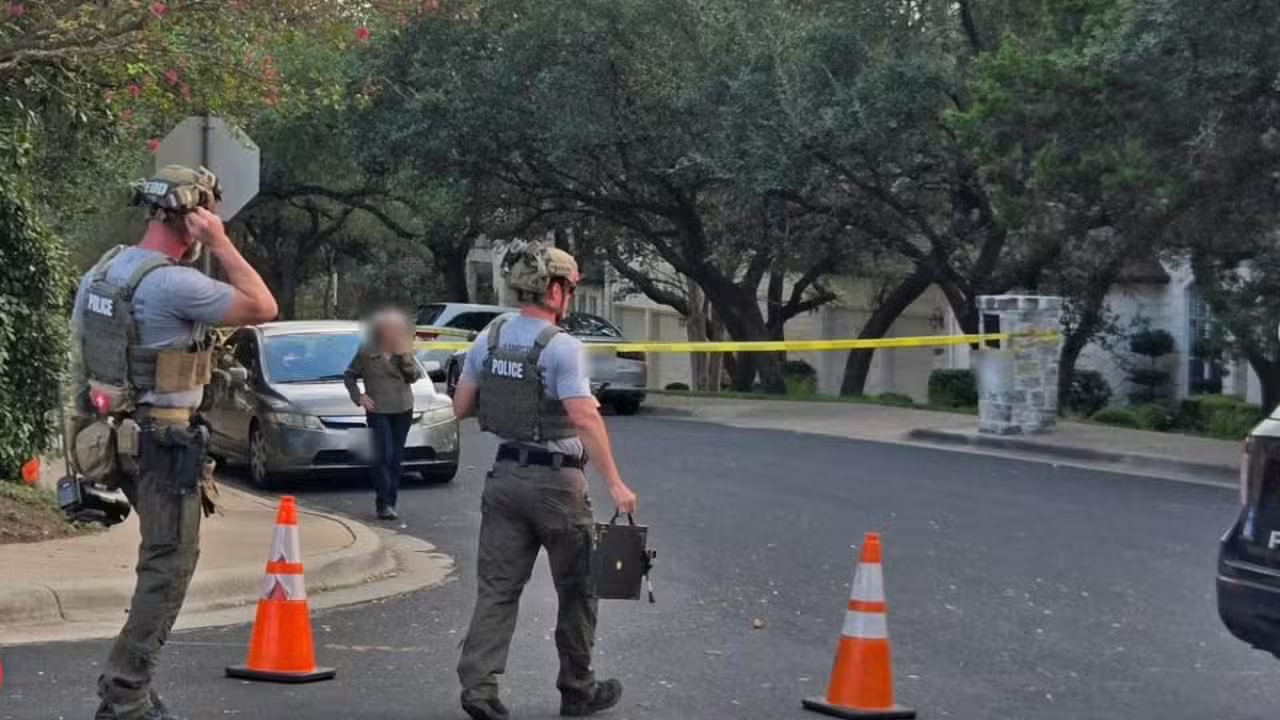
Authorities searched the properties in 2024, seizing documents and electronic devices. The findings remain undisclosed, but the prosecution believes the evidence will bolster the case. The mansions, once symbols of success, are now central to the allegations.