Caleb Williams’ father sought to derail Bears draft pick in 2024 NFL Draft
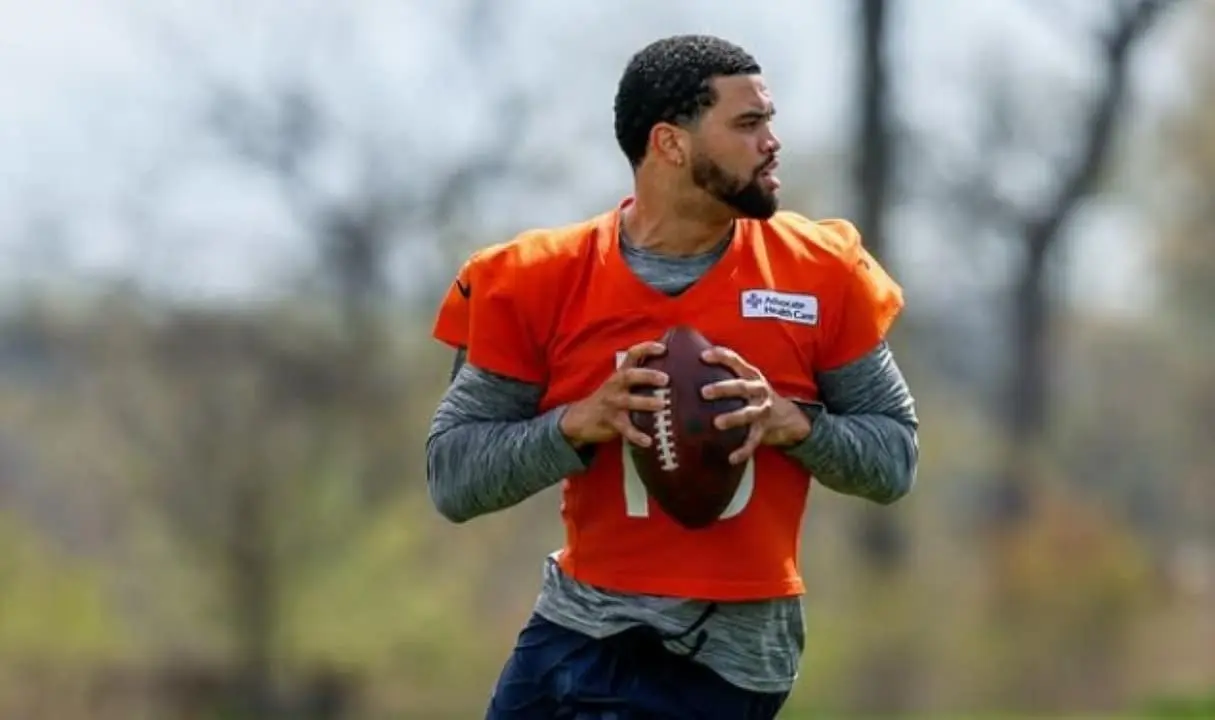
A new book has unveiled a dramatic chapter in the 2024 NFL Draft, detailing how Caleb Williams and his family attempted to steer the quarterback away from the Chicago Bears. The Heisman Trophy winner, widely regarded as the top prospect, was selected first overall by the Bears, but behind-the-scenes efforts by his father, Carl Williams, aimed to circumvent the draft process entirely. The revelations, detailed in Seth Wickersham’s upcoming book “American Kings: A Biography of the Quarterback,” shed light on the quarterback’s reservations about joining a franchise with a rocky history of developing signal-callers. These efforts, though unsuccessful, highlight the complexities of the NFL Draft and the influence of family in high-stakes decisions.
The book, set for release in September 2025, draws from extensive interviews with Caleb, Carl, and other key figures. It paints a picture of a family deeply skeptical of the Bears’ ability to nurture a young quarterback. The Williams family explored unconventional paths, including legal consultations and even the possibility of bypassing the NFL altogether. Their concerns were rooted in Chicago’s track record, which has seen quarterbacks like Mitchell Trubisky and Justin Fields struggle to meet expectations.
Key points from the book include:
- Carl Williams’ blunt assessment of Chicago as a place where “quarterbacks go to die.”
- Meetings with lawyers to explore loopholes in the NFL’s collective bargaining agreement.
- Consideration of signing with the United Football League (UFL) to gain free agency in 2025.
- Caleb’s eventual acceptance of the Bears after a pre-draft visit to their facility.
As the Bears prepare for the 2025 season, the revelations have sparked discussions among fans and analysts about Williams’ commitment to the team and the franchise’s ongoing efforts to rebuild.
Carl Williams’ bold stance against the Bears
Carl Williams, a real estate developer and Caleb’s father, emerged as a central figure in the draft saga. He voiced strong objections to his son joining the Bears, citing the franchise’s lack of success with quarterbacks since the 1980s. In interviews with Seth Wickersham, Carl described the NFL’s rookie wage scale as “unconstitutional” and the collective bargaining agreement as the “worst in sports history.” His frustration stemmed from the system’s structure, which could lock Caleb into a team for up to eight years, potentially limiting his earning potential.
The elder Williams took proactive steps to explore alternatives. He consulted labor lawyers to find ways around the NFL’s draft rules, seeking a path that would allow Caleb to choose his destination. One idea involved signing with the UFL for a year, positioning Caleb as an unrestricted free agent in 2025. This strategy, while risky, reflected Carl’s belief that his son deserved a better environment to thrive.
Carl also reached out to Archie Manning, whose son Eli famously maneuvered his way to the New York Giants in 2004. The discussions provided insights into navigating the draft, though the Williams family ultimately decided against a public campaign against the Bears. Carl’s efforts underscored his determination to protect his son’s career trajectory.
- Carl’s key objections:
- Chicago’s history of quarterback struggles.
- The NFL’s restrictive rookie wage scale.
- Lack of confidence in Bears’ coaching staff, particularly Shane Waldron.
- Potential loss of hundreds of millions in market-value income.
Caleb’s reservations about Chicago
Caleb Williams, the 2022 Heisman Trophy winner from USC, shared his father’s concerns about landing in Chicago. During the pre-draft process, he expressed doubts about working under then-offensive coordinator Shane Waldron, stating, “I don’t think I can do it with Waldron.” His skepticism was fueled by the Bears’ recent performance, including a 7-10 record in 2023 and a lack of playoff appearances since 2020. The quarterback, known for his improvisational style, worried that Chicago’s system might not suit his skill set.
A pivotal moment came at the 2024 NFL Scouting Combine, where Caleb met with Minnesota Vikings head coach Kevin O’Connell. The two connected instantly, and Caleb told his father, “I need to go to the Vikings.” The Vikings, a divisional rival of the Bears, were an appealing destination due to O’Connell’s reputation for developing quarterbacks. However, Bears general manager Ryan Poles made it clear that trading the No. 1 pick to a rival was unlikely, effectively closing that door.
Caleb considered a drastic measure: publicly criticizing the Bears and the city of Chicago to force a trade, similar to John Elway’s approach with the Baltimore Colts in 1983. He ultimately rejected the idea, telling Wickersham, “I wasn’t ready to nuke the city.” His decision reflected a desire to avoid starting his NFL career on a contentious note.
Saiba mais: Archie Manning voices concern over premature hype surrounding grandson Arch at Texas
Pre-draft visit changes Caleb’s perspective
A pre-draft visit to the Bears’ facility at Halas Hall in April 2024 proved to be a turning point. Caleb, initially hesitant, found himself warming to the idea of joining the franchise. Meetings with team officials, including Ryan Poles, provided clarity about the Bears’ vision for rebuilding around him. The organization’s commitment to bolstering the roster, including the addition of wide receiver D.J. Moore, reassured Caleb that he could succeed in Chicago.
After the visit, Caleb told his father, “I can do it for this team. I’m going to go to the Bears.” The decision marked a shift from resistance to acceptance, as Caleb embraced the challenge of turning around a franchise that hadn’t had a 4,000-yard passer in its 105-year history. The Bears solidified their commitment by selecting him first overall on April 25, 2024, marking their first No. 1 pick since 1947.
Rookie season marked by ups and downs
Caleb Williams’ rookie season with the Bears was a rollercoaster, reflecting both his potential and the challenges he faced. He completed 62.5% of his passes, throwing for 3,541 yards,
20 touchdowns, and six interceptions. His 489 rushing yards added another dimension to his game, placing him among elite rookies like Jayden Daniels and C.J. Stroud. However, Williams endured a league-high 68 sacks, tied for the third-highest single-season total in NFL history, highlighting issues with the offensive line and coaching instability.
The Bears fired offensive coordinator Shane Waldron after a 19-3 loss to the New England Patriots in Week 10, followed by head coach Matt Eberflus later in the season. At times, Caleb watched film alone without guidance, telling his father, “No one tells me what to watch. I just turn it on.” Despite these setbacks, he set multiple Bears rookie passing records, including completions (351), yards (3,541), and touchdowns (20).
- Notable rookie achievements:
- First rookie quarterback with multiple 300-yard passing games.
- Best touchdown-to-interception ratio (3.33:1) among Bears rookies.
- Longest streak of passes without an interception by a rookie (354).
- Game-winning drive against Green Bay, snapping an 11-game skid.
Bears’ coaching overhaul boosts optimism
In January 2025, the Bears hired Ben Johnson, formerly the Detroit Lions’ offensive coordinator, as head coach. The move was met with enthusiasm from Williams, who reportedly let out a “loud scream of excitement” upon hearing the news. Johnson, known for his innovative play-calling, brought structure and accountability, qualities Williams valued. The team also appointed Declan Doyle as offensive coordinator, further strengthening the staff.
Mais sobre o assunto: Chicago Bears e Philadelphia Eagles se reencontram em 2026 no Monday Night Football pela Semana 3
Veja Também
Jolly conquista indicação democrata para o governo da Flórida nos EUA
Adeus a um pioneiro: Bill Rasmussen, fundador da ESPN, falece aos 93 anos de idade

Padrões de escrita em bilhetes de resgate de Nancy Guthrie podem identificar suspeito nos EUA
The coaching changes addressed some of the concerns raised by Carl Williams during the draft process. Johnson’s track record with the Lions, who led the NFL in scoring in 2024, suggested a brighter future for Williams’ development. The Bears’ 2025 season opener against the Minnesota Vikings on “Monday Night Football” added intrigue, given Caleb’s earlier interest in the Vikings.
Offseason moves to support Williams
The Bears’ front office made significant investments to support their young quarterback. In free agency, they signed center Drew Dalman and traded for interior linemen Joe Thuney and Jonah Jackson, addressing the offensive line’s weaknesses. The 2025 NFL Draft saw the Bears select tight end Colston Loveland in the first round and wide receiver Luther Burden III in the second, enhancing Williams’ weapons alongside D.J. Moore and Rome Odunze.
Additional draft picks, including tackle Ozzy Trapilo and guard Luke Newman, provided depth to the offensive line. These moves, part of a broader strategy by Ryan Poles, aimed to create an environment where Williams could thrive. The Bears’ haul from the 2023 trade with the Carolina Panthers, which yielded the No. 1 pick used on Williams, proved instrumental in building a competitive roster.
- Key offseason acquisitions:
- Drew Dalman, top free-agent center.
- Joe Thuney and Jonah Jackson, veteran interior linemen.
- Colston Loveland, first-round tight end.
- Luther Burden III, second-round wide receiver.
Fan reactions to draft revelations
The book’s excerpts, released on May 15, 2025, sparked a wave of reactions among Bears fans. Social media platforms buzzed with discussions, with some fans expressing frustration over Caleb’s initial reluctance. Others viewed his eventual commitment as a positive sign, noting his performance in the season finale against Green Bay, where he led a game-winning drive. Posts on X highlighted the drama, with users debating whether the Bears’ history justified the Williams family’s concerns.
Fan sentiment remained mixed, with many focusing on the team’s improved outlook under Ben Johnson. The Bears’ 5-12 record in 2024 was a disappointment, but Williams’ flashes of brilliance, including four games with over 300 passing yards, offered hope. Supporters pointed to the strengthened roster as evidence that Chicago could finally break its quarterback curse.
No mesmo tema: Bears garantem Darnell Wright com extensão de contrato de US$ 116 milhões por quatro anos
NFL Draft system under scrutiny
Carl Williams’ criticisms of the NFL Draft system resonated with some players and agents. The rookie wage scale, introduced in the 2011 collective bargaining agreement, caps salaries for first-round picks, limiting their leverage. For a player like Caleb, projected to earn $39.4 million over four years, the system restricts long-term earning potential compared to free agency. Carl’s estimate of hundreds of millions in lost income underscored the financial stakes.
The idea of bypassing the draft via the UFL, while unconventional, drew comparisons to past attempts to challenge the NFL’s structure. In 1983, John Elway’s threat to play baseball forced a trade from the Baltimore Colts to the Denver Broncos. More recently, Eli Manning’s refusal to play for the San Diego Chargers led to a trade to the Giants. These precedents informed the Williams family’s strategy, though they ultimately chose a less confrontational path.
Historical struggles of Bears quarterbacks
The Bears’ struggles with quarterbacks are well-documented. In 105 NFL seasons, no Bears quarterback has thrown for 4,000 yards in a single season, a stark contrast to franchises like the Green Bay Packers and Minnesota Vikings. Recent first-round picks, including Mitchell Trubisky (No. 2 overall in 2017) and Justin Fields (No. 11 overall in 2021), failed to deliver consistent success. Trubisky’s 64.0% completion rate and Fields’ 5-22 record as a starter fueled skepticism about Chicago’s ability to develop talent.
Caleb Williams became the third Bears quarterback in seven years to learn a new offense after his rookie season, joining Trubisky and Fields. The firing of Matt Eberflus midseason, a franchise first, highlighted the instability that concerned the Williams family. Despite these challenges, Williams’ 87.8 passer rating as a rookie ranked among the highest for Bears first-year players.
- Bears’ quarterback woes:
- No 4,000-yard passer in franchise history.
- Mitchell Trubisky: 41 touchdowns, 29 interceptions in four seasons.
- Justin Fields: 40 touchdowns, 30 interceptions in three seasons.
- Three head coaches in five years (2018-2022).
Vikings’ appeal during draft process
The Minnesota Vikings’ appeal to Caleb Williams was rooted in Kevin O’Connell’s reputation as a quarterback-friendly coach. O’Connell, who led the Vikings to a 13-4 record in 2022, had a track record of maximizing quarterback performance, as seen with Kirk Cousins’ 4,547 passing yards in 2023. Caleb’s admiration for O’Connell reflected his desire for a stable, innovative offensive system, qualities he initially doubted in Chicago.
The Vikings, holding the 11th pick in 2024, were unlikely to trade up to No. 1, especially within the NFC North. Ryan Poles’ firm stance on drafting Williams eliminated any possibility of a deal. The Vikings’ selection of J.J. McCarthy at No. 10 underscored their focus on securing a quarterback, further complicating Caleb’s hopes of landing in Minnesota.
Bears’ 2025 outlook with Williams
As the Bears approach the 2025 season, expectations for Caleb Williams are high. The team’s offseason moves, including the additions of Loveland and Burden, have positioned Williams for a potential breakout year. Ben Johnson’s offense, which averaged 32.3 points per game with the Lions in 2024, is expected to unlock Williams’ dual-threat abilities. The Bears’ draft strategy, which prioritized offensive talent, aligns with Johnson’s philosophy of building around a young quarterback.
Mais sobre o assunto: Chicago Bears headline new Hallmark holiday film set to begin production this summer
Williams’ performance in the 2024 season finale, where he threw for 340 yards and two touchdowns against the Vikings, demonstrated his resilience. His ability to avoid interceptions in nine consecutive games, a rookie record, showcased his decision-making under pressure. With a revamped offensive line and coaching staff, the Bears aim to protect Williams and reduce the 68 sacks he endured as a rookie.
- 2025 season priorities for Bears:
- Improve offensive line protection for Williams.
- Integrate new weapons like Loveland and Burden.
- Establish a consistent running game with D’Andre Swift.
- Leverage Ben Johnson’s play-calling expertise.
Community and media reactions
The release of the book’s excerpts on May 15, 2025, dominated sports media in Chicago. Local radio stations, including 670 The Score, hosted discussions with Seth Wickersham, who provided additional context about the Williams family’s motivations. Fans called in to express a range of emotions, from disappointment over Caleb’s initial reluctance to optimism about his future with the Bears. Media outlets like The Athletic and Bleacher Nation analyzed the implications for team morale and fan support.
Posts on X captured the polarized sentiment, with some users criticizing Carl Williams for his outspokenness and others praising Caleb for embracing the challenge. The controversy added intrigue to the Bears’ 2025 season, particularly their Week 1 matchup against the Vikings. The game, set for September 8, 2025, will pit Williams against the team he once hoped to join, fueling speculation about his performance.