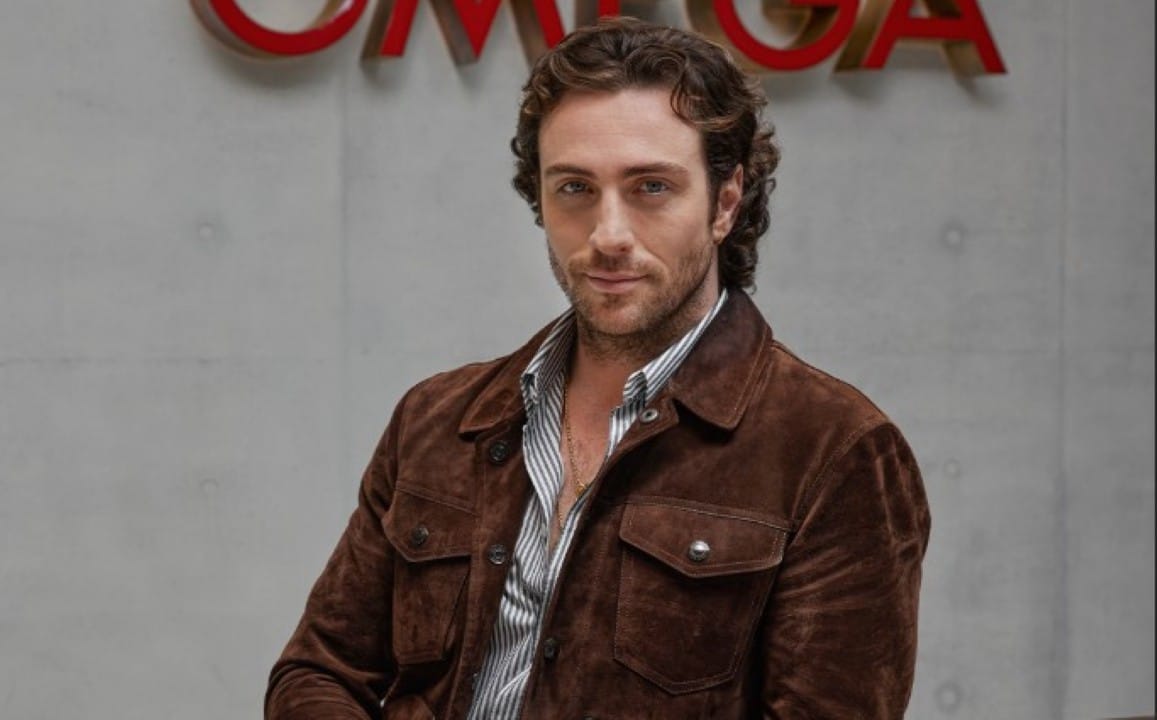
A whirlwind of speculation has gripped the entertainment world as a prominent Hollywood actor appears to have dropped a significant clue about securing one of cinema’s most iconic roles. Aaron Taylor-Johnson, long rumored to be a frontrunner for the James Bond mantle, has ignited fresh excitement with his latest career move. The 34-year-old star, known for his roles in major franchises like Marvel’s Avengers and Kick-Ass, has signed a high-profile deal with Omega, the luxury watch brand synonymous with the 007 franchise since 1995. This development has sent fans and industry insiders into a frenzy, as the question of who will succeed Daniel Craig as the suave British spy remains unanswered.
The James Bond franchise, a cultural juggernaut spanning over six decades, has kept audiences on edge with its meticulous casting process. Names like Henry Cavill, Tom Hardy, and even lesser-known actors such as Stuart Martin have surfaced in discussions, but Taylor-Johnson’s recent association with Omega has positioned him as a leading contender. This article delves into the latest developments, exploring the significance of his Omega partnership, the history of the Bond casting process, and the franchise’s enduring legacy. From the actor’s cryptic comments to the franchise’s commitment to its British roots, every detail adds fuel to the speculation fire.
Here’s what makes this moment pivotal in the Bond saga:
- Omega’s long-standing connection to 007, supplying watches since GoldenEye.
- Taylor-Johnson’s rising profile in Hollywood, bolstered by diverse roles.
- The franchise’s transition to Amazon’s ownership, raising questions about its future direction.
As the world awaits official confirmation, the clues surrounding Taylor-Johnson’s potential casting offer a tantalizing glimpse into the next chapter of the James Bond legacy.
Omega partnership fuels Bond rumors
Aaron Taylor-Johnson’s recent announcement as an Omega global ambassador has sent shockwaves through the entertainment industry. The luxury watchmaker, which has provided timepieces for every James Bond film since 1995’s GoldenEye, is a brand deeply intertwined with the spy’s image. A promotional image released by Omega shows Taylor-Johnson gazing into a display case filled with the brand’s iconic watches, a visual that many interpret as a deliberate nod to the 007 role. This partnership comes on the heels of years of speculation about the actor’s involvement, with The Sun reporting in 2022 that he had secretly screen-tested for the role at Pinewood Studios under the watchful eye of Bond producer Barbara Broccoli.
The timing of the Omega deal is particularly noteworthy. Industry insiders have long pointed to brand affiliations as subtle indicators of casting decisions in the Bond universe. Omega’s association with the franchise began when Pierce Brosnan’s Bond donned a Seamaster in GoldenEye, and the brand has since become a staple of the spy’s sophisticated arsenal. Taylor-Johnson’s alignment with Omega suggests a strategic move, potentially signaling his formal attachment to the franchise. A source close to the production previously told The Sun that a formal offer had been extended to the actor, with the decision resting in his hands.
Casting a new 007
The search for the next James Bond has been a topic of intense debate since Daniel Craig announced his departure after 2021’s No Time to Die. Craig, who redefined the character with a grittier, more introspective portrayal across five films, left behind a legacy that any successor must navigate carefully. The franchise’s producers, Barbara Broccoli and Michael G. Wilson, have maintained a tight-lipped approach to the casting process, fueling speculation about potential candidates. Aaron Taylor-Johnson first emerged as a contender in 2022, when reports surfaced of his screen test at Pinewood Studios.
Other actors have also been linked to the role, each bringing a distinct flavor to the conversation:
- Henry Cavill, whose commanding presence and experience in action roles make him a fan favorite.
- Tom Hardy, known for his intense performances and versatility.
- Harris Dickinson, a rising star whose name has gained traction among industry insiders.
- Stuart Martin, a lesser-known actor recently mentioned as a dark horse.
Taylor-Johnson’s appeal lies in his ability to balance charisma with depth, qualities essential for a modern Bond. His performances in films like Nocturnal Animals and Bullet Train showcase a range that could suit the spy’s multifaceted persona.
Historical significance of the Bond role
The James Bond franchise, born from Ian Fleming’s novels in the 1950s, has evolved into a cinematic institution. Since the first film, Dr. No, in 1962, the role of 007 has been portrayed by seven actors, each leaving a unique imprint on the character. Sean Connery, the original Bond, set the standard with his suave charm, while Roger Moore brought a lighter, more humorous touch across seven films. Timothy Dalton’s brief tenure introduced a darker edge, followed by Pierce Brosnan’s polished sophistication. Daniel Craig’s era, beginning with 2005’s Casino Royale, marked a bold reinvention, emphasizing emotional complexity and physical intensity.
The transition between Bond actors has always been a high-stakes moment for the franchise. Each casting decision reflects the cultural and cinematic priorities of its time, from Connery’s Cold War-era machismo to Craig’s post-9/11 vulnerability. The current search for the eighth Bond comes at a pivotal juncture, as the franchise navigates its recent acquisition by Amazon in a £770 million deal. Producers Barbara Broccoli and Michael G. Wilson, who inherited the franchise from Albert “Cubby” Broccoli, have emphasized preserving the character’s British identity, a commitment reaffirmed in negotiations with Amazon.
Franchise’s British roots
The Bond franchise’s insistence on maintaining a British male lead has been a focal point in recent discussions. Despite Amazon’s acquisition of the franchise, insiders have clarified that the streaming giant is committed to honoring the character’s heritage. A source told the Mail on Sunday that Amazon agreed to keep Bond British or from the Commonwealth, dispelling fears of a drastic reimagining. This decision aligns with the franchise’s history, as all seven previous Bonds—Sean Connery, George Lazenby, Roger Moore, Timothy Dalton, Pierce Brosnan, Daniel Craig, and even the briefly considered Lazenby—hailed from the UK or Commonwealth nations.
The emphasis on nationality reflects the character’s origins in Ian Fleming’s novels, where Bond’s British identity is central to his role as a Secret Service agent. Barbara Broccoli, who has steered the franchise since 1995, has been a staunch advocate for preserving this legacy. Her agreement with Amazon underscores the delicate balance between commercial pressures and creative control, ensuring that the next Bond remains true to the character’s roots.
Aaron Taylor-Johnson’s rise
Aaron Taylor-Johnson’s journey to becoming a Bond frontrunner is a testament to his versatility and growing prominence in Hollywood. Born in England in 1990, the actor began his career with roles in family-friendly films like Shanghai Knights before transitioning to more complex characters. His breakout performance in 2010’s Kick-Ass showcased his ability to blend action with humor, while his role as Quicksilver in Avengers: Age of Ultron elevated his profile in the superhero genre. Films like Nocturnal Animals and Tenet further demonstrated his range, earning him critical acclaim.
The actor’s physicality and screen presence make him a compelling candidate for Bond. At 34, he is younger than most previous Bonds at the start of their tenures, offering the potential for a long-term commitment to the role. His response to Bond rumors has been diplomatic yet intriguing, with comments like, “I find it charming and wonderful that people see me in that role,” fueling speculation without confirming or denying his involvement.
Omega’s role in the Bond legacy
Omega’s connection to James Bond extends beyond mere product placement, embodying the character’s elegance and precision. The brand’s Seamaster watch, first worn by Pierce Brosnan in GoldenEye, has become an iconic accessory, appearing in every subsequent film. Omega’s partnership with the franchise has included limited-edition releases tied to each movie, often featuring design elements inspired by 007’s adventures. The brand’s involvement in the casting speculation surrounding Taylor-Johnson underscores its status as a cultural touchstone within the Bond universe.
The promotional image of Taylor-Johnson with Omega has been widely analyzed by fans, who point to the actor’s confident demeanor and the brand’s historical significance as evidence of his casting. The partnership also aligns with the franchise’s tradition of associating its stars with luxury brands, a practice that enhances the character’s aspirational appeal. Omega’s role in this saga highlights the intersection of commerce and storytelling in the Bond franchise, where every detail is scrutinized for deeper meaning.
Fan and industry reactions
The prospect of Aaron Taylor-Johnson as James Bond has elicited a range of responses from fans and industry observers. Social media platforms have buzzed with excitement, with many praising the actor’s charisma and suitability for the role. On X, users have shared side-by-side images of Taylor-Johnson and past Bonds, debating his potential to carry the franchise forward. However, some fans remain loyal to other candidates, with Henry Cavill and Tom Hardy retaining strong support in online polls.
Industry experts have also weighed in on the casting speculation. Bond franchise expert Mark O’Connell, speaking on LBC radio, suggested that the next Bond’s identity could be revealed by mid-2025. He advocated for a British actor and highlighted lesser-known names like Harris Dickinson, while acknowledging Taylor-Johnson’s strong position. The diversity of opinions underscores the high stakes of the casting decision, as the franchise seeks to balance tradition with innovation.
Production dynamics under Amazon
Amazon’s acquisition of the James Bond franchise in 2021 marked a significant shift in its production landscape. The £770 million deal, which included the purchase of MGM, gave Amazon control over one of cinema’s most valuable properties. However, Barbara Broccoli and Michael G. Wilson retained significant creative influence, ensuring that the franchise’s core elements remain intact. Their insistence on a British male Bond reflects a broader commitment to preserving the character’s identity amid Hollywood’s influence.
The transition to Amazon has raised questions about the franchise’s future direction. While some feared that the streaming giant might push for a more commercial or “woke” approach, insiders have emphasized Amazon’s respect for the Bond legacy. The company’s investment in the franchise includes plans for new films, with production timelines suggesting a potential release in 2026 or 2027. Taylor-Johnson’s Omega deal, if indicative of his casting, could signal the start of pre-production efforts.
Evolution of the Bond archetype
The James Bond character has undergone significant evolution since his debut in 1962. Sean Connery’s portrayal established the spy as a charismatic womanizer, while Roger Moore leaned into campy humor. Timothy Dalton’s darker interpretation paved the way for Daniel Craig’s raw, emotionally complex Bond. Each actor has reshaped the character to reflect contemporary sensibilities, from Cold War tensions to post-9/11 anxieties. The next Bond will inherit this legacy, tasked with adapting the character to a new era.
Aaron Taylor-Johnson’s potential casting aligns with the franchise’s history of selecting actors who can reinterpret Bond for their time. His youth and modern sensibilities could introduce a fresh perspective, while his British background ensures continuity with the character’s roots. The challenge for the next Bond will be to honor the franchise’s traditions while addressing modern audiences’ expectations for diversity and depth.
Cultural weight of the franchise
The James Bond series has long been a mirror of global culture, reflecting shifts in politics, technology, and social norms. From the gadget-laden adventures of the 1960s to the psychologically driven narratives of the 2000s, the franchise has adapted to changing times while retaining its core appeal. The casting of the next Bond is more than a personnel decision; it is a statement about the franchise’s vision for the future.
The speculation surrounding Aaron Taylor-Johnson highlights the intense public interest in the franchise. Fans and critics alike view the Bond role as a cultural institution, with each new actor sparking debates about representation and relevance. The franchise’s ability to generate such fervor, even in the absence of official announcements, underscores its enduring place in popular culture.
What’s next for 007
The timeline for the next James Bond film remains uncertain, but industry insiders suggest that preparations are underway. Barbara Broccoli and Michael G. Wilson have indicated a desire to take their time with the casting process, ensuring that the right actor is chosen. The Omega deal with Aaron Taylor-Johnson has intensified speculation, but no official confirmation has been made. Reports indicate that the producers are aiming for a reveal by mid-2025, with production potentially starting later that year.
The franchise’s history suggests that the announcement of a new Bond will be a carefully orchestrated event, designed to maximize publicity. Whether Taylor-Johnson or another actor ultimately takes the role, the decision will mark the beginning of a new chapter for 007. For now, fans can only speculate, fueled by tantalizing clues like the Omega partnership and the actor’s cryptic comments.