
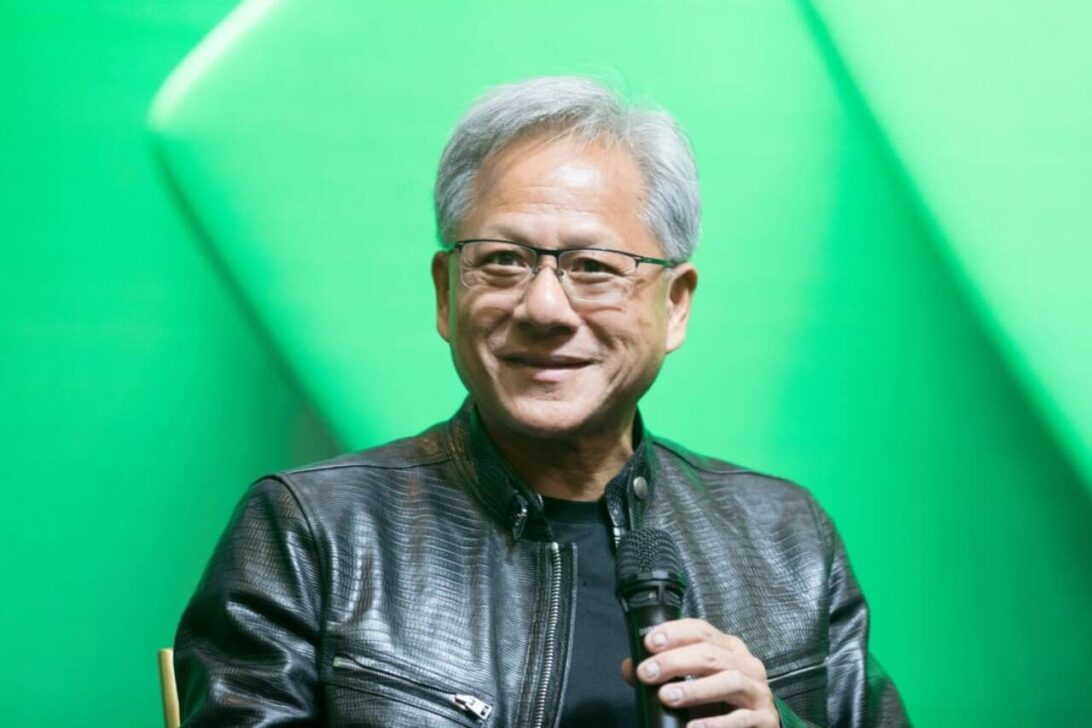
Jensen Huang, a 62-year-old Taiwanese immigrant, has propelled Nvidia, the company he co-founded in 1993, to become the world’s most valuable publicly traded company, reaching a market value of $3.446 trillion on June 4, 2025. Born in Taiwan, Huang moved to the United States, worked as a dishwasher, and now leads a tech giant pivotal in artificial intelligence and gaming. This milestone, surpassing Microsoft, unfolded during the Computex tech fair in Taiwan in May, where Huang was celebrated like a rock star. Nvidia’s journey, from gaming roots to AI dominance, showcases innovation and strategic vision. How did Huang achieve this? What drives Nvidia’s rise? The story involves grit, partnerships, and soaring demand for cutting-edge tech.
Huang’s tale and Nvidia’s ascent captivate audiences worldwide. In Taiwan, his birthplace, the term “Jensanity” captures the frenzy around him at Computex. Starting in a diner, Nvidia now powers tech giants with its chips, fueling systems like ChatGPT and beyond.
- Key products: H100 and A100 chips lead AI innovation.
- Market value: Hit $3.446 trillion on June 4, 2025.
- Humble start: Huang washed dishes and waited tables.
- Early fame: Nvidia first shone in the gaming sector.
A visionary’s humble beginnings
Born in Taiwan, Jensen Huang spent part of his childhood in Thailand before his parents sent him and his brother to the U.S. There, he attended a boarding school that doubled as a reformatory, cleaning bathrooms as a chore. At 15, he landed a job at a diner, washing dishes and serving customers. Huang cherishes this, noting the restaurant industry teaches humility and hard work. He studied electrical engineering at Oregon State University, graduating in 1984, and met his wife, Lori, there. Later, he earned a master’s from Stanford and worked in tech before launching Nvidia.
Founding Nvidia at a diner
In 1993, Jensen Huang, alongside Chris Malachowsky and Curtis Priem, founded Nvidia during a chat at a diner—the same chain where Huang once worked. Their goal was to create graphics chips for personal computers, targeting gaming. Nvidia went public on the New York Stock Exchange in 1999, marking a turning point. Huang owns about 3% of the company, contributing to his $124 billion fortune, ranking him among the world’s top ten richest, per Forbes, as of June 4, 2025.
What powers Nvidia’s chips?
Nvidia excels in crafting graphics processing units (GPUs), vital for AI and gaming. The H100 chip, highly sought after, trains AI models like ChatGPT, needing around 30,000 GPUs to function, per TrendForce. The A100 also serves clients like Microsoft, Google, Amazon, Meta, and Spotify. Recently, Nvidia unveiled the Blackwell (B100), a more advanced, efficient chip. Production is outsourced, mainly to the Taiwan Semiconductor Manufacturing Company (TSMC), a global leader.
Roots in the gaming world
Long before AI, Nvidia made its name in gaming. In 1999, amid the internet boom, it launched its first GPU, transforming computer graphics for gamers. Its video cards became a benchmark, rivaling U.S. firms AMD and Intel. This early success laid the groundwork for broader ambitions.
Nvidia’s surge ties to heavy investments in AI. Companies like Meta demand thousands of H100 chips for AI systems, with each unit priced between $16,000 and $100,000, reflecting intense need. Nvidia holds about 80% of the high-end AI chip market, per Reuters. This dominance draws global attention, especially amid U.S.-China tech rivalry.
Ties to Taiwan and key alliances
Nvidia’s AI infrastructure relies on numerous Taiwanese firms, big and small, for components and expertise. TSMC, based in Taiwan, manufactures most of Nvidia’s chips, a critical partnership. Huang’s connection to Taiwan is also personal—he’s hailed as a hero there, with crowds cheering him at Computex in May 2025.
- Top products: H100, A100, and Blackwell (B100).
- Key partner: TSMC produces most Nvidia chips.
- AI market share: Roughly 80% of premium segment.
- Rising demand: Meta aimed for 350,000 H100 units by 2024.
Global tech race unfolds
Nvidia sits at the heart of the U.S.-China tech contest. U.S. restrictions, enacted under Joe Biden, banned advanced chip sales to China to curb its AI progress. Yet, China’s Deepseek chatbot, launched in January 2025, stunned the world, rivaling ChatGPT without Nvidia chips, sparking debate about costs and methods.
Meaning behind Nvidia’s name
The name “Nvidia” blends meaning. “NV” stands for “new vision” or “next vision,” nodding to innovation. “VID” ties to “video,” reflecting its graphics card origins. It also echoes “invidia,” Latin for “envy,” hinting at the company’s ambitious edge. This mix captures Nvidia’s forward-thinking spirit.
Jensen Huang’s unique style
Huang stands out in business. Known for leather jackets, his signature look, he’s direct and relaxed. He champions risk tolerance and agility, shifting Nvidia’s path early on. After ditching a Sega console deal, the company focused on PC processors, nearly going bankrupt but ultimately thriving.
Early hurdles and triumph
Nvidia faced tough starts. Pivoting to PC chips demanded bold moves and heavy investment. Huang and his co-founders persevered, and the 1999 stock market debut solidified its rise. The later bet on AI expanded its reach, cementing Nvidia as a global force.
Soaring demand for chips
Demand for Nvidia’s GPUs is fierce. In 2023, Elon Musk, at a Wall Street Journal event, joked that finding them is harder than finding drugs. These chips power data centers, unlocking computing strength once limited to research hubs. The shortage underscores Nvidia’s role in the AI revolution.
Jensen Huang is a star, especially in Taiwan. At Computex in May 2025, fans mobbed him, one child holding a “Jensen, I love you” sign outside a restaurant. His journey—from immigrant to billionaire—inspires many. Nvidia, under his lead, keeps shaping tech’s future.