
Live: Minister Barroso cites military dictatorship and Trump’s assessments of Moraes in speech at the Supreme Court

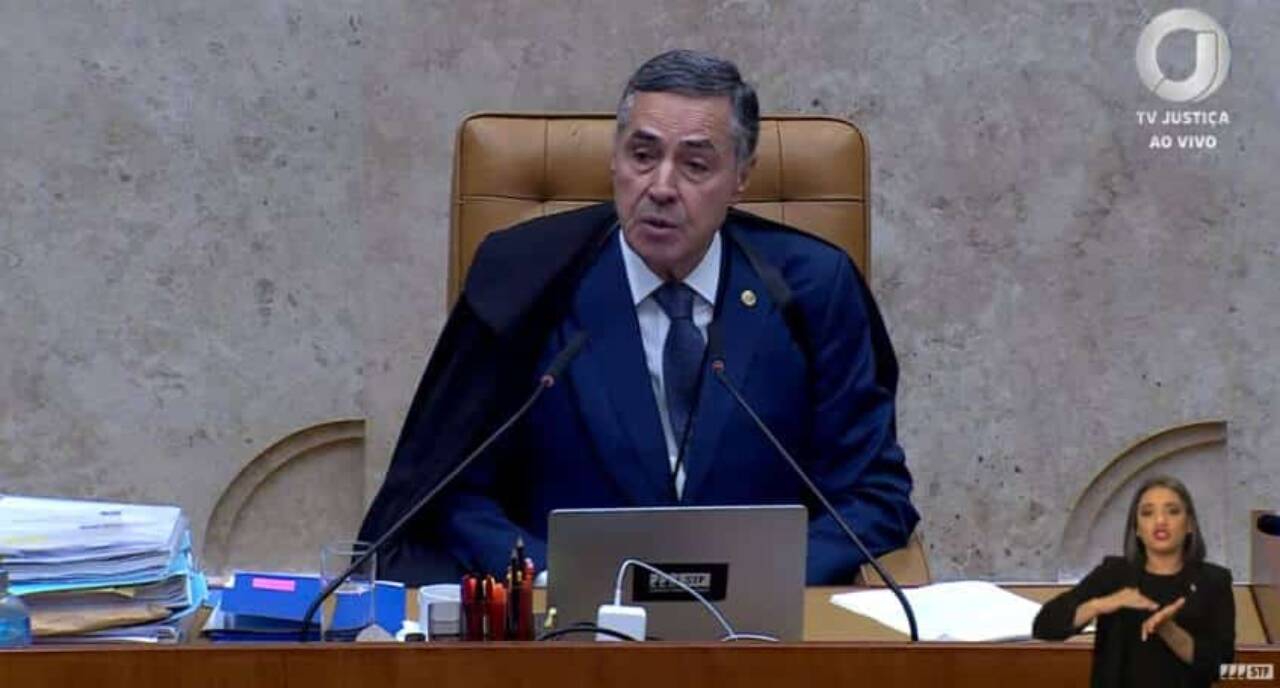
The reopening of the Supreme Federal Court (STF) on August 1, 2025, after the recess, was marked by a powerful speech from the Court’s president, Minister Luís Roberto Barroso, in Brasília. Titled “The Supreme Federal Court and the defense of institutional integrity,” the speech addressed the recent sanctions imposed on Minister Alexandre de Moraes and revisited historical episodes of Brazil’s military dictatorship. Barroso emphasized the importance of protecting democracy and judicial independence, warning against attempts at institutional rupture. The event, held in the STF plenary, underscored the Court’s role as a guardian of the Constitution amid debates over freedom of expression and judicial actions against authoritarian threats. The speech comes at a time of political tension, with criticism surrounding the sanctions on Moraes sparking widespread societal debate.

Barroso’s speech brought forth a historical reflection on the fragility of Brazilian democracy over time. He mentioned landmark events, such as Deodoro da Fonseca’s attempted coup in 1891 and constitutional ruptures during the military regime. The minister stressed that Brazil’s history is marked by authoritarian presidents, military interventions, and attacks on the STF, reinforcing the need for vigilance to preserve institutional integrity.
- Key points of the speech:
- Defense of STF’s independence against political pressures.
- Warning about risks of democratic backsliding.
- Criticism of sanctions imposed on Minister Alexandre de Moraes.
- Historical recount of coups and threats to the Judiciary.
The STF reopening takes place in a polarized context, with debates over the Judiciary’s role in curbing extremist rhetoric. Barroso emphasized that the Court will not yield to pressures that compromise its duty to protect the Constitution.
Speech revisits history of constitutional ruptures
Barroso’s speech revisited critical moments in Brazilian history, starting with the Proclamation of the Republic in 1889. He cited Deodoro da Fonseca’s resignation in 1891 after a failed coup attempt and Floriano Peixoto’s decision to remain in power without calling elections, violating the Constitution. These episodes, according to the minister, illustrate a trajectory of institutional instability extending into the 20th century. Barroso highlighted Peixoto’s statement about the STF: “If the Supreme grants habeas corpus, I don’t know who will grant habeas corpus to the ministers tomorrow,” underscoring historical threats to the Court.
The speech also addressed the 1930 Revolution, the 1935 Communist Uprising, and the 1937 Estado Novo coup under Getúlio Vargas. Barroso recalled that during the military regime (1964-1985), the STF faced severe interventions, such as the forced retirement of ministers and the expansion of seats for regime-aligned appointments. These events, he argued, highlight the importance of an independent Judiciary.
- Historical milestones mentioned by Barroso:
- Deodoro da Fonseca’s resignation in 1891.
- Estado Novo coup in 1937.
- Institutional Act No. 5 in 1968.
- Forced retirement of ministers in 1969.
The minister noted that the 1988 Constitution marked a turning point, consolidating democracy and strengthening the STF’s role as a guardian of legality.
Sanctions on Alexandre de Moraes spark debate
The sanctions imposed on Minister Alexandre de Moraes, criticized for his actions in cases involving disinformation and anti-democratic rhetoric, were a central focus of the speech. Barroso defended Moraes, arguing that the measures against him represent an attack on judicial independence. The sanctions, stemming from decisions related to fake news investigations, have reignited discussions about the boundaries of free speech and the STF’s role in protecting democracy.
Barroso’s speech comes as the STF faces pressure from various sectors. He reiterated that the Court will not be intimidated by criticism or attempts to undermine its institutional role. The minister also emphasized the importance of judicial decisions grounded in the Constitution, even when unpopular, to ensure democratic stability.
Military dictatorship and memories of repression
Barroso devoted part of his speech to recalling the “years of lead” during the military dictatorship, a period marked by torture, censorship, and exile. He mentioned iconic cases, such as the murders of Vladimir Herzog and Manuel Fiel Filho, presented as suicides by authorities at the time. The minister also referenced the film “I’m Still Here,” by Walter Salles, as a humane portrayal of the regime’s consequences. According to Barroso, these memories serve as a warning about the risks of democratic backsliding.
The dictatorship period, the minister noted, was characterized by systematic human rights violations. He highlighted that the STF, for much of that time, was unable to effectively counter authoritarian threats, underscoring the need to protect the Court today. Barroso cited the forced retirement of ministers like Evandro Lins e Silva and Victor Nunes Leal in 1969, as well as the Congress closure in 1977, as examples of attacks on democracy.
- Notable dictatorship episodes cited:
- Vladimir Herzog’s murder in 1975.
- Censorship of journalists and artists.
- Exile of regime opponents.
- Congress closure in 1977.
- Forced retirement of STF ministers.
Recalling these events, Barroso said, reinforces the STF’s commitment to defending the Constitution and fundamental rights.
STF’s role in consolidating democracy
The speech also addressed the STF’s role post-redemocratization. With the 1988 Constitution, the Court took on an unprecedented role in protecting fundamental rights and curbing abuses of power. Barroso noted that the STF has worked to ensure the separation of powers and the supremacy of the Constitution, even in politically turbulent times.
The minister stressed that judicial independence is crucial to prevent democratic setbacks. He cited recent decisions addressing anti-democratic rhetoric and attempts at institutional destabilization, reaffirming the Court’s commitment to democracy. Barroso also highlighted the importance of a strong Judiciary to protect minorities and ensure equality.
- STF’s roles in democracy:
- Ensuring the supremacy of the Constitution.
- Protecting fundamental rights.
- Upholding the separation of powers.
- Countering anti-democratic rhetoric.
The speech concluded with a call to society to value democracy and support the STF in its mission to protect institutional integrity.
Reactions to Barroso’s speech
Barroso’s speech prompted immediate reactions from jurists, politicians, and civil society. Some praised the minister’s firmness in defending the STF’s independence and recalling the dictatorship’s legacy. Others criticized the speech’s tone, arguing it fuels polarization by addressing sensitive issues like the sanctions on Moraes. The minister’s remarks were seen as a clear stance against attempts to weaken the Judiciary.
On social media, the speech garnered significant attention, with hashtags related to democracy and the STF trending. Human rights organizations emphasized the importance of remembering the dictatorship’s horrors, while conservative groups questioned Barroso’s approach to the Moraes sanctions. The event solidified the STF as a central player in the current political debate.





