Vivo reports connection issues in SP and interior, says Downdetector
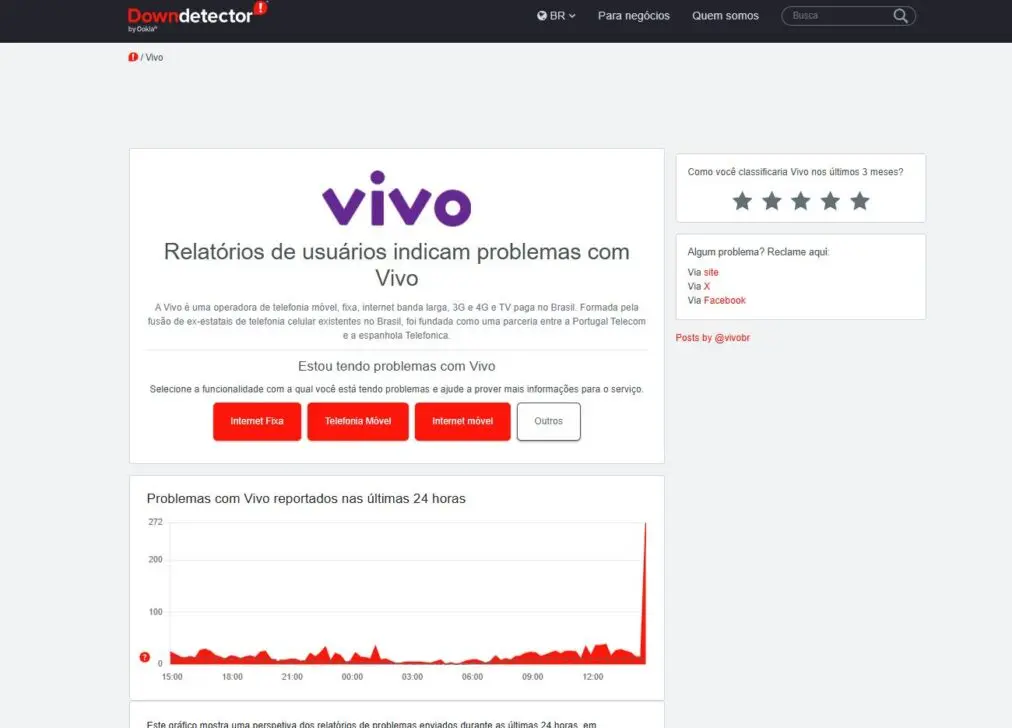
As of 2:52 PM on Wednesday, August 6, 2025, Vivo users in São Paulo, both in the capital and inland cities, reported significant failures in fiber and residential internet connections. According to Downdetector, a platform that monitors digital service status, there was a sharp increase in complaints, with a peak in notifications about network instability. The issues primarily affected fixed internet, but there were also reports of problems with mobile internet and telephony. The operator has not yet issued an official statement on the cause or expected resolution time, leading to frustration among customers. The situation impacted remote workers, students, and essential services, highlighting the reliance on connectivity in the state.
The connection failure at Vivo is not an isolated case, as similar issues were reported in other Brazilian cities in recent days. The operator, one of the largest in the country, faces criticism for recurring instabilities, especially at a time when internet access is critical for daily activities.
- Affected cities: São Paulo, São José dos Campos, Campinas, among others.
- Impacted services: Fixed internet (55%), mobile internet (23%), telephony (21%).
- Peak time: 2:52 PM, with a surge in reports on Downdetector.
Complaints spread across social media, with users reporting difficulties working, studying, or accessing online services. The situation sparked debates about the quality of service provided by Vivo in São Paulo, one of Brazil’s largest markets.
User reactions and immediate impact
The wave of complaints gained momentum in the early afternoon, with reports concentrated in neighborhoods of the capital, such as Vila Maria and Vila Andrade, and in inland cities like São José dos Campos. Many users expressed frustration over the lack of an official statement from Vivo. Professionals reliant on the internet for remote work, such as designers and programmers, were directly affected, reporting financial losses.
A user from São José dos Campos noted that the connection had been unstable since the morning, disrupting virtual meetings. In the capital, a Vila Maria resident reported that fixed internet was unavailable for hours, affecting access to streaming platforms and remote work. The situation also impacted ride-hailing drivers, who rely on stable connections to accept rides.
- Affected sectors: Remote work, online education, ride-hailing drivers.
- Common complaints: Slow speeds, frequent drops, complete signal loss.
- Reported duration: Issues since early afternoon, with no resolution timeline.
The absence of an official response from Vivo intensified criticism, with users demanding transparency and swift resolution. Downdetector recorded a 300% increase in reports compared to the usual volume for that time, underscoring the severity of the issue.
Mais sobre o assunto: WhatsApp não envia fotos e vídeos nesta noite de segunda: relatos de problemas em todo o mundo
History of operator outages
Vivo, controlled by Telefônica Brasil, has faced similar issues in 2025. In July, cities like Fortaleza, São Luís, and Caruaru reported connection failures, with reports of outages lasting days. In São Luís, for instance, users were without mobile internet for nearly 48 hours between July 16 and 17. These incidents raised questions about the operator’s infrastructure, particularly in regions with high connectivity demand.
The operator is known for its extensive coverage, reaching 95% of Brazilian territory with 2G, 3G, 4G, and 5G technologies. However, recurring outages have caused dissatisfaction, especially in urban areas where Vivo holds a significant market share. In São Paulo, the company leads in fixed and mobile internet, but recent issues could harm its reputation.
- Recent incidents: Outages in Fortaleza, São Luís, and Niterói in July 2025.
- Affected technologies: Fiber optic, 4G, and 5G.
- São Paulo market: Vivo’s largest customer base in Brazil.
The fiber optic infrastructure, while advanced, faces challenges such as network overload and the need for constant maintenance. Experts note that peak usage times, such as during business hours, can strain the network, especially in large urban centers.
Possible causes of the outages
The reasons for today’s outage remain unclear, as Vivo has not provided details, but users and analysts speculate on potential causes. Technical issues, such as failures in fiber optic cables or servers, are common in large-scale networks. Additionally, unscheduled maintenance may have contributed to the instability. In São José dos Campos, a user reported seeing Vivo technicians working on cables in the area, suggesting a possible network intervention.
Another factor could be the increased data traffic, driven by the growth of remote work and streaming consumption. São Paulo, as Brazil’s largest economic hub, experiences high volumes of simultaneous connections, which can overload infrastructure.
Veja Também

Vídeo viral exibe cachorro aterrorizado sendo arrastado por força misteriosa em casa

Influenciadora tenta provar Coca-Cola e Pepsi simultaneamente com língua dividida ao meio

Lutador desembolsa R$ 95 por dois kiwis no Mercadão de SP; internautas alertam sobre ‘golpe da fruta’
- Likely causes: Cable failures, network overload, unannounced maintenance.
- External factors: High data demand during peak hours.
- Critical areas: Densely populated neighborhoods and industrial hubs.
The lack of communication from Vivo about the issue has been a point of criticism. In previous incidents, the operator was slow to issue statements, leading to speculation and dissatisfaction among customers.
Steps to mitigate disruptions
For affected users, some actions can help minimize impacts while the connection is not restored. Restarting the modem or router is a recommended initial step, as it may resolve temporary issues. Checking network settings on mobile devices, such as selecting 4G or 5G bands, can also improve signal in some cases.
Vivo offers support channels, such as its official app and WhatsApp (11 99915-1515), for registering complaints and seeking assistance. However, many users reported difficulties getting prompt responses through these channels during peak outage periods.
- Temporary solutions: Restart equipment, check network settings.
- Support channels: Vivo app, WhatsApp, 1058 hotline.
- Practical tip: Use alternative networks, such as public Wi-Fi or data from another operator.
- Prevention: Monitor network status via Downdetector before critical activities.
The operator also advises customers to check signal availability in their regions through its official website, though the tool may not always reflect real-time issues.
Saiba mais: ChatGPT and Sora down: OpenAI grapples with instability crisis
Expectations for resolution
Vivo has not yet announced when the connection will be restored, but expectations are high for a swift resolution given the importance of the São Paulo market. In past incidents, the company restored service within hours in some cities, but more complex issues, like those in São Luís in July, took up to two days.
Users are awaiting an official statement with details on the cause and measures to prevent future outages. The pressure for transparency is significant, especially in a state where Vivo competes with other operators, such as Claro and TIM, which have reported fewer recent complaints.
- Average resolution time: 2 to 48 hours, based on prior cases.
- Competition: Claro and TIM with fewer outage reports in August.
- Customer demands: Official statement and compensation for disruptions.
The situation underscores the need for ongoing investments in infrastructure and customer communication. São Paulo, with its high population density and digital reliance, demands robust networks and quick responses during crises.
Social media backlash
User dissatisfaction gained traction on social media, where hashtags related to Vivo trended in the early afternoon. Many shared screenshots of speed tests showing connections below expectations, while others demanded compensation for downtime. The hashtag #VivoOut was mentioned in thousands of posts, with criticism of the fiber optic service quality and delays in customer support.
A ride-hailing driver in the capital reported lost rides due to the lack of connection, while a student in Campinas mentioned difficulties accessing online classes. These reports reflect the direct impact of the outage on the daily lives of thousands of people.
- Popular hashtags: #VivoOut, #VivoInternet, #VivoFailure.
- Demands: Compensation, infrastructure improvements, transparency.
- Reach: Thousands of mentions on social media within hours.
The social media backlash amplifies pressure on Vivo, which faces the challenge of regaining customer trust in a highly competitive market.