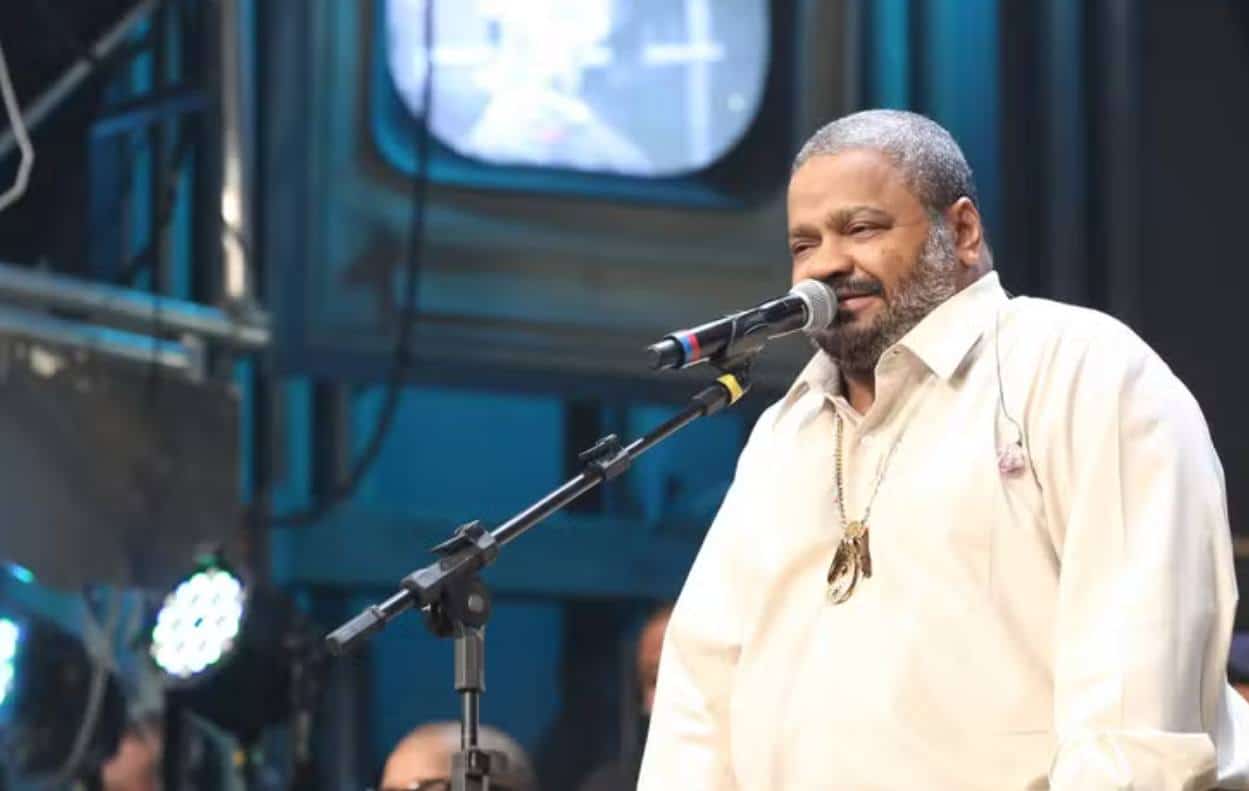
Brazilian samba is in mourning: Arlindo Cruz, one of the genre’s greatest names, died at 66 in Rio de Janeiro on Friday, August 8, 2025, as confirmed by his wife, Babi Cruz. The singer and composer, who suffered a hemorrhagic stroke in March 2017, had been dealing with its aftermath ever since, undergoing multiple hospitalizations. Known for his mastery of the cavaquinho and banjo, as well as over 550 recorded compositions, Arlindo leaves a legacy that spans generations. The news shook fans, artists, and the samba community, which loses one of its pillars. The exact cause of death was not detailed, but it reflects the artist’s long battle with health issues. His career’s impact resonates in Brazil and beyond, celebrating a life dedicated to music and carioca culture.
Arlindo Cruz, born on September 14, 1958, in Rio, transformed samba with his distinctive voice and compositions that captured the genre’s essence. From a young age, he stood out as a self-taught musician, starting to play the cavaquinho at 7. His career, which began in the Cacique de Ramos samba circle, solidified historic partnerships with names like Zeca Pagodinho and Beth Carvalho.
- Key milestones in Arlindo’s life:
- Received his first cavaquinho at age 7, shaping his path.
- Participated in Cacique de Ramos, a cradle of great sambistas.
- Over 550 compositions recorded by renowned artists.
- Memorable 12-year stint with the Fundo de Quintal group.
Roots in samba and musical training
Arlindo Cruz grew up in Madureira, the heart of carioca samba, where music was ever-present. At 12, he played “by ear” and learned guitar with his brother, Acyr Marques. His musical training was enriched at the Flor do Méier school, where he studied theory and classical guitar. It was during this time that he began frequenting samba circles and met Candeia, a key figure who mentored him and opened doors to his first recordings. The LP “Roda de Samba,” recorded with Candeia’s support, marked his professional debut.
At 15, Arlindo had a unique experience studying at the Air Cadets Preparatory School in Barbacena, Minas Gerais. There, he participated in music festivals, winning competitions in Barbacena and Poços de Caldas. This brief phase broadened his musical perspective and reinforced his versatility, later reflected in his compositions.
Cacique de Ramos and success with Fundo de Quintal
Back in Rio, Arlindo found in Cacique de Ramos the ideal setting for his rise. The samba circle, frequented by legends like Jorge Aragão and Beth Carvalho, was where he formed lasting partnerships with Zeca Pagodinho and Sombrinha. In this space, he composed his first songs recorded by other artists, such as “Lição de Malandragem” and “Grande Erro,” performed by Beth Carvalho.
His entry into Fundo de Quintal, replacing Jorge Aragão, was a turning point. For 12 years, Arlindo helped shape the group’s sound, with hits like “Seja sambista também” and “O Mapa da Mina.” His departure in 1993 marked the start of an equally brilliant solo career, but his time with Fundo de Quintal remains one of the most celebrated chapters of his journey.
- Contributions to Fundo de Quintal:
- Recorded hits like “Castelo Cera” and “Primeira Dama.”
- Solidified the group as a reference in modern samba.
- Collaborations with Zeca Pagodinho and Beth Carvalho in timeless hits.
Prolific composer and passion for samba schools
Arlindo Cruz composed over 550 songs, many recorded by samba giants like Alcione, Zeca Pagodinho, and Beth Carvalho. His lyrics, blending romance, roguery, and everyday chronicles, won over audiences and critics. Songs like “Bagaço de Laranja” and “Jiló com Pimenta” became samba anthems, while his storytelling ability in verses cemented his status as one of the genre’s greatest composers.
Beyond his career as a performer, Arlindo had a deep connection with Rio’s carnival. Passionate about Império Serrano, he composed iconic samba-enredos, such as the 1996 “E verás que um filho teu não foge à luta.” His move to Grande Rio in 2008, with the enredo “Do Verde de Coarí Vem Meu Gás, Sapucaí!,” showcased his versatility and commitment to samba culture.
Solo career and final years
After leaving Fundo de Quintal, Arlindo released albums and DVDs that reinforced his relevance. The DVD “Arlindo Cruz MTV Ao Vivo” (2009) and projects like “Batuques e Romances” (2011) and “Batuques do Meu Lugar” (2012) featured major collaborations, such as Caetano Veloso and Alcione, alongside new songs. His voice and charisma continued to captivate audiences, even with fewer performances after the 2017 stroke.
In recent years, Arlindo faced health challenges that limited his appearances. Still, his passion for samba and Flamengo, his beloved football team, remained strong. One of his last public appearances was on SporTV’s “É Gol!!!” in February 2025, where he sang hits and celebrated his connection to football and music.
- Memorable moments of his solo career:
- Release of the “MTV Ao Vivo” DVD with major partnerships.
- Albums blending new songs and re-recordings of hits.
- Constant presence on TV shows like “É Gol!!!”.
- Tributes received for his contribution to samba.
Eternal legacy in Brazilian samba
Arlindo Cruz’s impact on samba transcends generations. His compositions, addressing love to life in communities, continue to inspire new artists. His skill on the cavaquinho and banjo, combined with his unique voice, made him an icon who bridged tradition and innovation. The Cacique de Ramos samba circle, Fundo de Quintal, and Rio’s samba schools bear his mark, while fans mourn the loss of an artist who lived for music.
Arlindo Cruz’s death sparked immediate grief. Artists like Zeca Pagodinho and Alcione paid tributes on social media, highlighting his generosity and talent. Fans filled the streets near his home in Madureira, singing his hits in an emotional farewell. His work remains a testament to his dedication to samba and Brazilian culture.
- Tributes and reactions to Arlindo’s death:
- Homages from artists like Beth Carvalho and Sombrinha.
- Spontaneous fan gatherings in Madureira.
- Social media posts celebrating his journey.
- Planned samba circles and shows in his memory.