
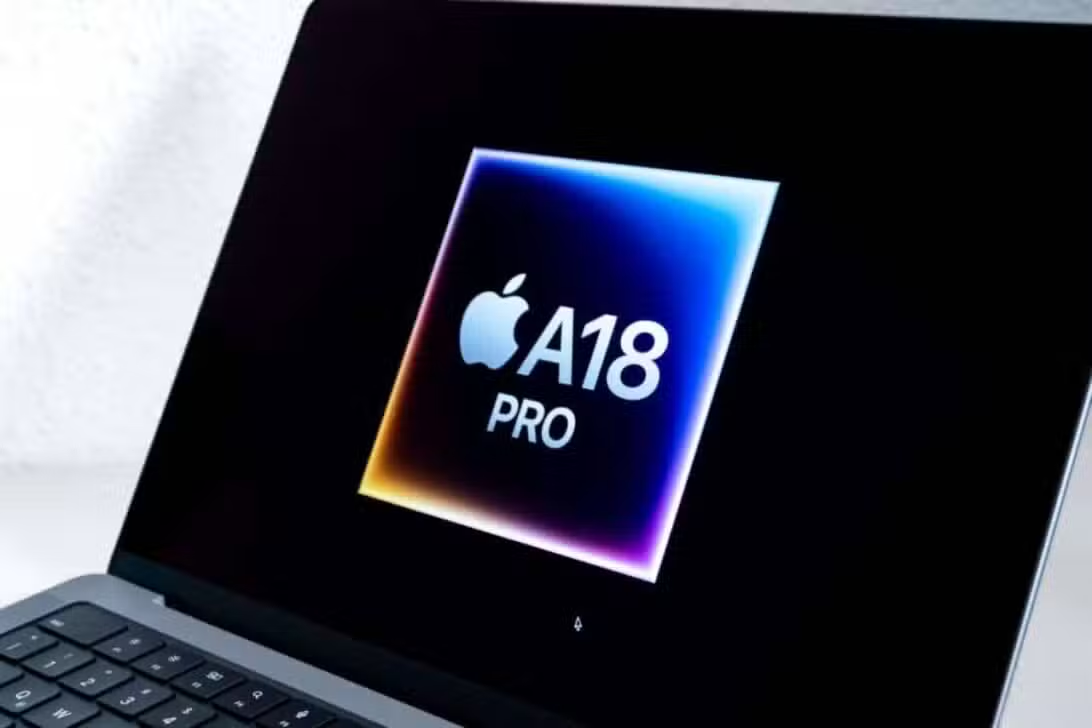
Apple plans to launch a new 12.9-inch MacBook with a starting price of $599 in 2025, marking a milestone in the company’s strategy to make its laptops more affordable. Equipped with the A18 Pro chip, previously used in the iPhone 16 Pro, the device will be manufactured by Quanta and is expected to enter mass production by the end of the third quarter, with availability slated for late 2025 or early 2026. The model aims to directly compete with Chromebooks, offering an ultra-thin design, vibrant colors, and performance suitable for everyday tasks. The initiative targets new users, particularly students and professionals seeking an affordable macOS device. Apple projects the new laptop to achieve 5 to 7 million units sold in 2026, boosting total MacBook sales.
This project marks the first time a MacBook will feature an A-series chip, traditionally used in iPhones. So far, all Apple laptops with in-house processors have used M-series chips, known for higher core counts and advanced external display support. The choice of the A18 Pro reflects the intent to cut costs without compromising efficiency for daily use.
- Key expected features:
- 12.9-inch display, slightly smaller than the MacBook Air’s.
- A18 Pro chip with 6-core CPU and 6-core GPU.
- Ultra-thin design with silver, blue, pink, and yellow color options.
- USB-C ports without Thunderbolt support.
- At least 8 GB of RAM to support Apple Intelligence features.
The decision to use an iPhone chip in a laptop is a bold yet strategic move, aiming to capture a larger share of the entry-level market.
A18 Pro chip details
The A18 Pro, launched in 2024 with the iPhone 16 Pro, is built on a 3-nanometer process, ensuring energy efficiency and robust performance for common tasks. Compared to M-series chips, it has fewer cores, but benchmarks indicate its single-core performance is close to the M4, used in higher-end models like the Mac mini. For users performing tasks like web browsing, document editing, and streaming, the chip delivers ample power. The 6-core GPU also supports light graphic tasks, such as photo and 4K video editing.

The lack of Thunderbolt support limits connectivity to a single external display via USB-C. This tradeoff, however, is acceptable to hit the target price. Apple also plans to equip the MacBook with at least 8 GB of RAM, the minimum required to run Apple Intelligence features, such as image editing tools and Siri enhancements.
Design and market positioning
The new MacBook will feature an ultra-thin design, inspired by the discontinued 12-inch MacBook, retired in 2019. With an estimated weight below 1 kg, the laptop will be highly portable, ideal for students and users on the go. The vibrant color options—silver, blue, pink, and yellow—follow the aesthetic of iPhones and iPads, setting it apart from the more subdued look of MacBook Air and Pro models. The use of recyclable materials, like aluminum, reinforces Apple’s sustainability commitment, avoiding plastic to maintain a carbon-neutral footprint.
The starting price, between $599 and $699, positions the laptop as the most affordable in Apple’s lineup, directly competing with Chromebooks and entry-level Windows laptops. Compared to the MacBook Air, which starts at $999 (or $899 with an educational discount), the new model is significantly cheaper, broadening access to the macOS ecosystem. The strategy may attract consumers already using iPhones or iPads but hesitant to invest in pricier Apple laptops.
Production and launch timeline
Component production is scheduled to begin by the end of the third quarter of 2025, with final assembly led by Quanta in the fourth quarter. This timeline suggests the MacBook could be available to the public by late 2025, in time for the holiday shopping season, or early 2026. Apple is betting on a significant sales boost, with estimates of 5 to 7 million units in 2026, increasing total MacBook volume to up to 25 million units annually, a 30% to 40% growth over current figures.
Choosing Quanta as the manufacturing partner reinforces confidence in large-scale production capacity. The company, which already produces other Apple products, has optimized facilities to meet the projected demand. The early start of component production indicates Apple is accelerating development to ensure availability on schedule.
- Expected timeline:
- Component production starts: September 2025.
- Final assembly: October to December 2025.
- Commercial launch: Late 2025 or early 2026.
- Sales target: 5 to 7 million units in 2026.
Impact on educational and corporate markets
The low-cost MacBook has the potential to capture the educational market, where Chromebooks dominate due to affordability and simplicity. Schools already using iPads may adopt the new laptop to provide students with a full macOS experience, with seamless integration via iCloud, Continuity, and Universal Clipboard. For businesses, the device could be an option for light tasks, like email management and video conferencing, with macOS’s robust security.
The limitation of a single external display and the absence of features like Center Stage in the camera may be drawbacks for some corporate users. However, Apple may promote using iPhones as webcams via Continuity Camera, reducing production costs. The strategy positions the MacBook as a bridge between iPads and traditional laptops, offering macOS flexibility in an affordable format.
Comparison with other Apple models
The new MacBook differs from the MacBook Air and Pro due to its lower price and more modest specs. While the MacBook Air with the M4 chip starts at $999 and offers superior multicore performance and Thunderbolt support, the A18 Pro model focuses on efficiency and cost reduction. Compared to the iPad Air ($599) and entry-level iPad ($349), the MacBook provides the full macOS experience, making it more versatile for multitasking and desktop apps.
- Advantages of the new MacBook:
- Lower price than the MacBook Air.
- Ultra-thin and lightweight design, ideal for portability.
- Integration with the Apple ecosystem.
- Support for Apple Intelligence with 8 GB of RAM.
- Vibrant colors to attract a younger audience.
Consumer expectations
Initial consumer reactions, gathered from forums and social media, show enthusiasm for the affordable price, but some concerns about the A18 Pro chip’s limitations. Users performing intensive tasks, like 3D rendering or advanced video editing, may prefer models with M-series chips. However, for the target audience—students, educators, and casual users—the A18 Pro’s performance is more than adequate. The customizable vibrant colors also generate excitement, especially among younger users who value style and functionality.
Apple may face the challenge of differentiating the new MacBook from the iPad Air, which has a similar price. The strategy will likely emphasize the macOS experience, offering greater productivity and ecosystem integration. The potential absence of a built-in camera, as speculated, could be offset by accessories like AirPods or discounted external monitors.
Apple’s market strategy
Introducing the MacBook with the A18 Pro reflects a more aggressive approach to compete in the entry-level segment. Apple aims to replicate the success of the iPhone SE, combining solid performance with affordability to attract new users to the ecosystem. Focusing on emerging markets and the educational sector could drive sales, especially in regions where traditional MacBook prices are a barrier.
The choice of the A18 Pro also signals an evolution in Apple’s silicon strategy. Past tests, like using the A12Z chip in a Mac mini for developers in 2020, indicate the company has long explored A-series chips in Macs. The new model could pave the way for a more diversified lineup, with A-series chips for entry-level devices and M-series for premium models.
- Apple’s strategic goals:
- Expand the macOS user base.
- Compete with Chromebooks and entry-level Windows laptops.
- Strengthen Apple ecosystem integration.
- Achieve 25 million MacBooks sold annually.
- Maintain sustainability with recyclable materials.
Detailed technical specifications
The A18 Pro features a 6-core CPU (4 performance cores and 2 efficiency cores), a 6-core GPU, and a 16-core Neural Engine, optimized for AI tasks. Benchmarks show single-core performance close to the M4 (3,500 points on Geekbench) and multicore performance similar to the M1 (around 8,700 points). Storage capacity is expected to start at 256 GB, aligning with current MacBook standards. The 12.9-inch display may use Retina technology, rather than the MacBook Air’s Liquid Retina, to cut costs while maintaining visual quality.
The absence of fans, enabled by the A18 Pro’s thermal efficiency, ensures a silent design, ideal for classrooms. The battery, with up to 20 hours of life, matches the efficiency of iPhones, making the MacBook suitable for extended use without recharging.
Launch preparations
Apple has already included references to the new MacBook in macOS code, such as the identifier “Mac17,1,” discovered in 2024. This suggests advanced development, with internal testing underway. Large-scale production, led by Quanta, will be critical to meet projected demand. Apple may also offer educational promotions, like student discounts, to make the price even more attractive.
The official announcement is expected at an Apple event in early 2026, possibly alongside other launches, like MacBook Air updates with the M5 chip. The marketing campaign will likely highlight affordability, modern design, and Apple ecosystem integration, appealing to both new and existing users.