Police confront traffic in Morro do Dendê with 12 buses hijacked and one set on fire in Rio de Janeiro Por Luís Henrique Costa
7 min de leitura
 |
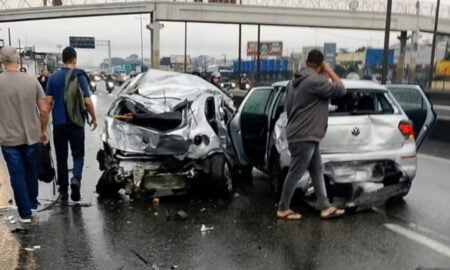
Criminals hijacked 12 buses and set one on fire on the morning of Monday, August 18, 2025, in Ilha do Governador, North Zone of Rio de Janeiro, in retaliation to a Military Police operation in Morro do Dendê. The action, coordinated by the 17th BPM (Ilha do Governador), with support from the 22nd BPM (Maré) and the 3rd BPM (Méier), resulted in the arrest of four suspects and the seizure of four rifles. Roads such as Avenida Paranapuã and Estrada da Cacuia were blocked, causing chaos in traffic and disrupting residents’ routines. The operation aimed to dismantle trafficking and remove barricades, but the violent response from criminals heightened tensions in the area. The action highlights the complexity of combating organized crime in Rio’s communities.
The criminals’ response was immediate and violent. After the operation began around 9 a.m., residents reported intense gunfire and makeshift barricades. In addition to the buses, garbage bins were overturned and set on fire, hindering access to main roads.
- Immediate impact: 10 bus lines were rerouted, affecting thousands of passengers.
- Public safety: Four health units suspended external activities.
- Police response: PM intensified presence to clear blocked roads.

Criminals’ reaction
The hijacking of 12 buses, with one set on fire, marked the traffickers’ response to the police operation. According to the Rio Ônibus syndicate, the destroyed vehicle operated the 921 line (Ribeira x Bancários). The buses were used as barricades on strategic roads, such as Avenida Paranapuã and Estrada da Cacuia, blocking access to Morro do Dendê. The criminal action aimed to hinder police movement and pressure authorities. Residents reported panic during the clashes, with accounts of burning objects on the streets and reinforced barricades by criminals. The Military Police confirmed that the operation targeted trafficking hubs, but armed resistance complicated the agents’ efforts.
Using buses as barricades is not new in Rio. The practice, common in communities dominated by factions, reflects criminals’ attempts to control territories and challenge police presence. The burning of vehicles and objects intensifies the climate of tension, directly affecting the local population.
The police operation
The action in Morro do Dendê was planned to curb trafficking activities, focusing on arresting suspects and seizing weapons. By early morning, four men were detained, and the police seized four rifles, along with grenades, magazines, radios, and bulletproof vests. The operation involved a large contingent, with agents from the 17th BPM leading the efforts, reinforced by teams from the 22nd BPM and the 3rd BPM.
- Main objective: Disrupt trafficking and remove barricades from access roads.
- Initial results: Four arrests and seizure of heavy weaponry.
- Logistical support: Use of armored vehicles to ensure agent safety.
- Critical timing: Clashes began around 9 a.m., according to reports.
The Military Police stated that the operation was prompted by reports of intense criminal activities in the area, including extortion and territorial control by the Third Pure Command (TCP). The presence of barricades, often set up with vehicles and burning objects, is a recurring strategy to hinder police incursions.
Impacts on urban mobility
The bus hijackings and road blockages caused significant disruptions for the population of Ilha do Governador. Ten bus lines were rerouted, directly impacting public transportation. Affected lines included key routes like Bananal x Castelo and Ribeira x Candelária, essential for workers and students. Rio Ônibus reported that the hijacked buses belonged to different companies, and losses are still being calculated.
The Rio Operations Center (COR) confirmed the closure of Avenida Paranapuã at 9:50 a.m., with repercussions on traffic throughout the region. Residents had to find alternative routes, and drivers reported difficulties accessing nearby neighborhoods like Tauá and Cacuia. The disruption in public transportation also caused delays and overcrowding in other transport modes, such as vans and ride-hailing apps.
- Rerouted lines: 323, 327, 328, 634, 635, 901, SV901, 910, 326, and 696.
- Affected areas: Avenida Paranapuã, Estrada da Cacuia, and nearby roads.
- Economic impact: Losses to bus companies and local commerce.
- Estimated duration: Blockages persisted until early afternoon.
Community repercussions
The operation and the criminals’ response created a climate of tension among residents of Morro do Dendê and surrounding neighborhoods. Schools in the area, though kept operational, faced challenges with the arrival of students and teachers. Four health units, including family clinics, suspended external activities, such as home visits, prioritizing in-person care. The Municipal Health Department stated that the measure was taken to ensure the safety of staff and patients.
Residents reported fear and insecurity during the clashes. Many avoided leaving their homes, and local commerce was impacted, with stores temporarily closing due to orders from traffickers, according to reports on social media. The disruption of essential services like transportation and healthcare underscores the challenges faced by communities near areas dominated by trafficking.
History of operations in Morro do Dendê
Morro do Dendê, located in the central part of Ilha do Governador, is a complex of favelas known for harboring drug trafficking activities, particularly by the Third Pure Command. Police operations in the area are frequent, often driven by reports of extortion, kidnappings, and territorial control. In June 2024, a similar action resulted in the arrest of two suspects and the recovery of stolen vehicles, following reports of threats to ride-hailing drivers.
- June 2024: PM arrested two suspects and recovered stolen vehicles.
- May 2024: Ride-hailing drivers were taken hostage by traffickers.
- 2019: Death of criminal leaders in a police operation in the area.
- Recurring reports: Extortion and control of alternative transportation.
The recurrence of violent episodes reflects the complexity of combating organized crime in Ilha do Governador. The presence of barricades and armed resistance complicates police actions, while the population bears the direct impacts of the clashes.
Authorities’ measures
The Military Police stated that the operation in Morro do Dendê will continue until the roads are fully cleared and safety is ensured in the area. Additional teams were deployed to reinforce the police presence, and armored vehicles were used to protect agents during the clashes. The 17th BPM command emphasized that the action is part of an ongoing effort to dismantle trafficking and reduce the influence of factions in Ilha do Governador.
Authorities are also investigating the origin of the seized weapons and the possible connection of the detained suspects to other crimes in the region. The Rio Public Security Secretariat highlighted the importance of coordinated operations to combat organized crime but refrained from commenting on the social impacts of the action.
Community mobilization and safety
The tension caused by the operation exposed the fragility of public safety in areas dominated by factions. Residents of Ilha do Governador report living with constant fear, especially during police operations. The disruption of essential services, such as transportation and healthcare, reinforces the sense of vulnerability.
- Local demands: Residents call for more security and dialogue with authorities.
- Psychological impact: Clashes affect the routine of children and the elderly.
- Proposed alternatives: Strengthening community policing in the area.
The situation in Morro do Dendê reflects a structural issue in combating trafficking in Rio de Janeiro. Despite police efforts, armed resistance and intimidation tactics by criminals continue to challenge authorities and impact the lives of the local population.