Moon influences tides and Earth’s climate, studies reveal
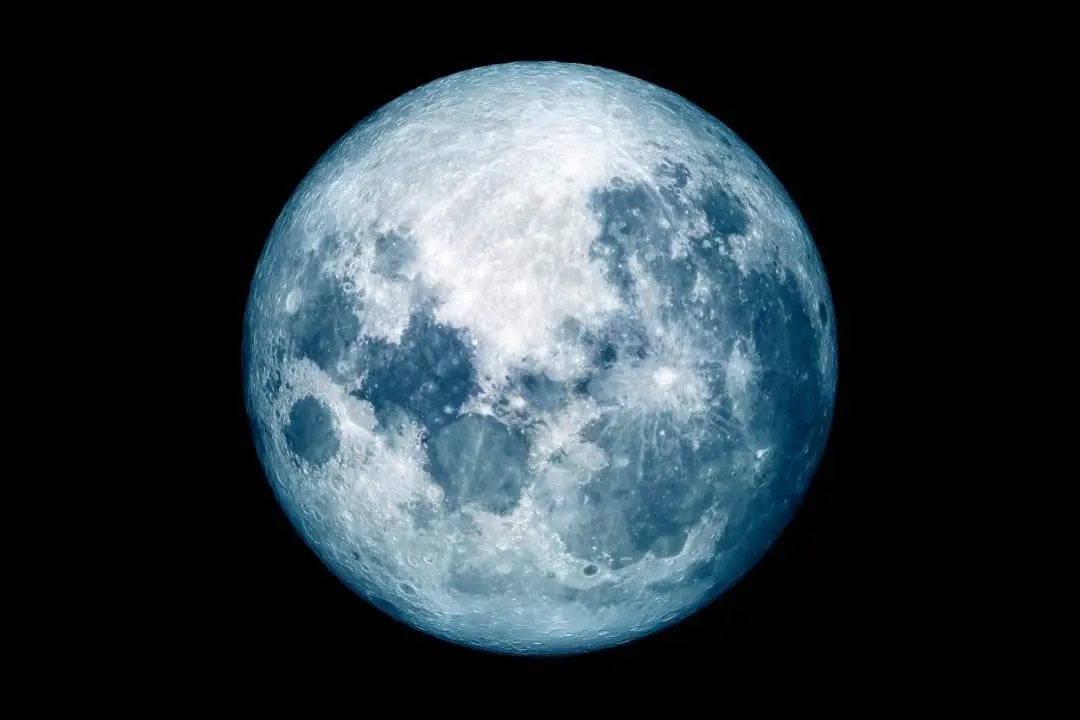
The Moon, Earth’s only natural satellite, directly influences tides, climate, and day length. Orbiting at about 385,000 kilometers, it completes a cycle around the planet in 28 days, affecting oceans and climatic stability. Studies highlight that its gravity is essential for terrestrial life.
Researchers note that the Moon not only regulates tides but also stabilizes Earth’s axial tilt, ensuring climatic predictability. Without it, the planet would face extreme seasonal variations. Its gravitational effect also slowed Earth’s rotation, shaping the 24-hour day.
- Tides: Lunar gravity creates water bulges in oceans, causing high and low tides.
- Climate: The Moon stabilizes Earth’s axis, preventing abrupt seasonal shifts.
- Rotation: Billions of years ago, the Moon slowed Earth’s rotation speed.
The interaction between Earth and Moon continues to be studied by scientists worldwide.
Lunar gravitational effects
The Moon’s gravitational force acts unevenly on Earth. The side closest to the satellite experiences stronger attraction, while the opposite side is less affected. This generates tides, with ocean water responding most intensely.
Lakes, the atmosphere, and even Earth’s crust feel these effects, though to a lesser extent. Without the Moon, tides would rely solely on the Sun, being less pronounced.
Lunar phases and illumination
The Moon’s phases depend on its position relative to the Sun and Earth. During a full Moon, the Sun directly illuminates the visible face. In crescent and waning phases, illumination is partial.
Mais sobre o assunto: Moon phase today: What to expect from the sky on august 18, 2025?
In the new Moon, the satellite is nearly invisible from Earth. These changes, however, do not alter gravitational effects, according to astrophysicists.
In the new Moon, the satellite is nearly invisible from Earth. These changes, however, do not alter gravitational effects, according to astrophysicists.
Impacts on Earth’s rotation
Billions of years ago, Earth spun faster, with days lasting about six hours. The Moon’s formation, after a cosmic impact, slowed this rotation. Today, days last 24 hours due to this interaction.
The Moon’s synchronized rotation ensures we always see the same face. This phenomenon, common in other Solar System satellites, stabilizes its orbit.
The slowing process continues, with the Moon drifting 3.8 centimeters away yearly. Over millions of years, this could further lengthen Earth’s days.
Veja Também



The Moon’s interaction has shaped the planet over eons.
Climatic stability
The Moon stabilizes Earth’s axial tilt at about 23.5 degrees. Without this influence, drastic axis oscillations could cause extreme climate shifts.
This stability enabled diverse ecosystems to thrive. The moderate tilt ensures predictable seasons, favoring life.
Research suggests planets without similar satellites face more intense climate variations. The Moon is thus crucial for Earth’s habitability.
Cobertura completa: Ciência
Studies reinforce that the Moon’s presence was vital for life’s evolution.
Myths and science
Many associate lunar phases with behavioral or natural changes. However, scientists affirm effects are limited to gravity.
The idea of cutting hair during specific phases, for example, lacks scientific basis. The Moon influences only physical phenomena like tides and rotation.
Moon’s role in the Solar System
The Moon is the fifth largest natural satellite in the Solar System. Its stable orbit, 385,000 kilometers from Earth, is gradually receding.
This movement may alter day length and tide dynamics in the future. Research continues to explore these long-term impacts.
The Moon remains a focus of space missions, like Luna 3, which revealed its far side in 1959. New technologies promise further discoveries.