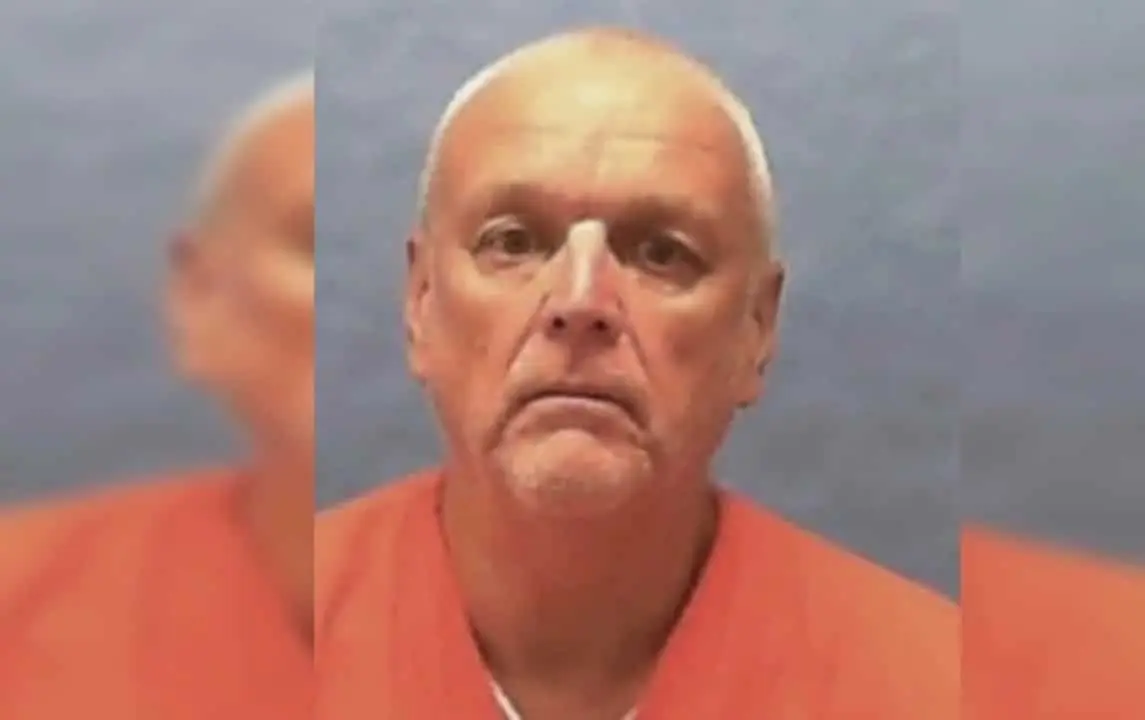
Samuel Smithers, the Death Deacon, is killed by lethal injection in Florida at age 72
The Florida State Prison in Raiford carried out on Tuesday, October 14, 2025, the execution of Samuel Lee Smithers, 72, convicted of two first-degree murders that occurred in 1996. Smithers, known as a Baptist deacon in a local church, received a lethal injection at 6 p.m. and was pronounced dead at 6:15 p.m. Governor Ron DeSantis signed the death warrant in September, authorizing the procedure after decades of judicial appeals.
The victims, Christy Elizabeth Cowan and Denise Elaine Roach, were lured by Smithers to a rural property in Plant City, where he worked as a caretaker. The crimes took place in May 1996, when the women, sex workers from Tampa, accepted paid encounters at nearby motels. Police investigated the cases after the bodies were found in a lake on the property, with evidence directly linking Smithers to the murders.
The Hillsborough County jury convicted Smithers in 1999, unanimously recommending the death penalty due to the brutality of the acts, which involved beatings with farm tools and strangulation. The Florida Supreme Court and the U.S. Supreme Court rejected final appeals, including one claiming cruelty due to the convict’s advanced age.
Authorities from the Department of Corrections reported that the execution proceeded without incidents, with Smithers declining a final statement by responding only “No, sir” when asked. This was the 14th execution in the state in 2025, surpassing the previous record of eight in 2014 and positioning Florida as the national leader in applying the death penalty this year.
Crimes uncovered on rural property
Investigators arrived at the property spanning over 100,000 square meters on May 28, 1996, after the owner, who knew Smithers from church, noticed blood in the carport. Smithers was cleaning an axe at the time and claimed it was animal blood from a recent hunt.
The first victim, Denise Roach, 26, was killed on May 12. Smithers took her to the site under the pretext of payment for sexual services and attacked her with a hoe, causing severe head injuries before strangling her.
Christy Cowan, 21, suffered a similar fate 16 days later. Her body showed marks from axe blows and signs of asphyxiation, confirmed by autopsies conducted by the Tampa Medical Examiner’s Office.
Forensic evidence, including fingerprints and clothing fibers, connected Smithers to both crime scenes, leading to his immediate arrest.
History of judicial appeals
Smithers began appeals shortly after the 1999 sentence, questioning the validity of evidence and alleging trial errors. The Florida Supreme Court upheld the conviction in 2001, citing sufficient evidence.
In 2005, a federal habeas corpus was denied, with federal judges stating that the jury adequately considered mitigating factors, such as the defense’s claim of childhood trauma.
Subsequent appeals in 2015 and 2020 focused on procedural issues, but all were rejected for lack of new merit.
- The U.S. Supreme Court denied certiorari in 2022, closing major federal avenues.
- In September 2025, the state court rejected a request for a hearing on claims of debilitating health.
- The last appeal, filed on October 8, argued exemption due to age, but was denied for lack of constitutional precedent.
Lethal injection procedure
Florida’s protocol uses three substances administered sequentially in the execution chamber at Raiford prison. A sedative is applied first to induce unconsciousness, followed by a muscle paralytic and an agent that causes cardiac arrest.
Doctors monitor vital signs starting at 6 p.m., with a professional entering the chamber for final verification before pronouncing death. Smithers showed heavy breathing initially and mild convulsions, according to official reports, before ceasing movement.
The Department of Corrections confirmed no complications occurred, unlike previous cases in other states where vein failures caused delays.
This execution happened simultaneously with another in Missouri, raising the national total to 37 in 2025, the highest since 1999.
Stance of groups against capital punishment
The organization Floridians for Alternatives to the Death Penalty issued a statement after the procedure, stating that the application of the penalty does not address current public threats. The group noted that Smithers, at 72, had served 26 years without incidents in prison.
Leia Também

Empresária relata saga burocrática para garantir devolução de mais de US$ 15 mil em tarifas federais

Após décadas, assassinato de pastor na Geórgia em 1996 tem detento com prisão perpétua indiciado

Promotor é considerado em desacato judicial por comentários públicos em assassinato de Charlie Kirk, mas pena de morte não é afastada
Defense attorneys reiterated in petitions that advanced age violates constitutional bans on cruel punishments, citing precedents of rehabilitation in similar cases.
National activists recorded 35 executions in the U.S. up to October, with Florida accounting for 40% of the total, according to data from the Death Penalty Information Center.
The statement emphasized focus on crime prevention through social policies, without direct reference to the individual case.
Context of executions in the state
Since the U.S. Supreme Court reinstated the death penalty in 1976, Florida has carried out 109 executions up to 2024. The year 2025 marks an acceleration, with warrants signed by DeSantis in 16 cases.
Two additional executions are scheduled for November, involving convicts for multiple murders in central counties.
Statistics show that 95% of executions in the state use lethal injection, with alternative methods like the electric chair available but rarely chosen.
- Convicts for double homicides represent 25% of cases executed since 2000.
- Average time on death row: 22 years, with Smithers above the average.
- Estimated cost per execution: $3.2 million, including judicial appeals.
Details of police investigations
Hillsborough police began searches after Roach’s disappearance, tracking transactions at Tampa motels. Interviews with local patrons identified Smithers as a recurring client.
At the crime scene, items like bloodstained gloves and discarded clothing were collected, analyzed in a state lab for mitochondrial DNA.
Church witnesses described Smithers as an active member, which allowed access to the property without initial suspicions.
Phone records confirmed contacts between the convict and the victims days before the incidents.
Immediate community reaction
Plant City residents expressed relief in local interviews after the execution news, recalling the impact of the crimes on the small rural community. Victims’ families followed the process closely, with representatives present at the witnessing.
The Tampa Police Department issued a note reaffirming commitment to unsolved crime investigations, including a 1989 homicide linked to Smithers by circumstantial evidence.
The Baptist church where he served removed references to the deacon in 1999 after the conviction and continues to offer support to affected congregants.
This execution reinforces the debate on applying the penalty in long-standing cases, with judicial analysts noting a 50% increase in warrants over the past two years.