War in Rio de Janeiro leaves 56 drug traffickers and 4 agents dead in clashes in the North Zone Por Jeronimo Santos
5 min de leitura
 |
Major operation by Rio de Janeiro security forces against the Red Command in the Alemão and Penha complexes, in the city’s North Zone, left at least 60 dead this Tuesday (28), including four police officers. The action, named Containment, mobilized 2,500 agents to serve 100 arrest warrants and resulted in 81 detained, with the state government classifying it as the deadliest in the state’s history. Criminals reacted with gunfire, burning barricades, and drones dropping explosives, isolating accesses and affecting expressways like the Yellow Line.
Clashes began at dawn, with traffickers blocking streets with vehicles and debris. Agents used armored vehicles, helicopters, and demolition equipment to advance over 9 million square meters of conflict areas. The Rio Operations Center raised the city’s stage to level 2, prioritizing control of retaliations.
- 56 suspects killed in shootouts, two from Bahia and one from Espírito Santo;
- 4 fatal police officers: two civilian and two from Bope;
- 3 civilians injured by stray bullets, with immediate care at health units.
The initiative aims to curb the faction’s territorial expansion in Rio communities, focusing on regional leaders.
Start of armed confrontations
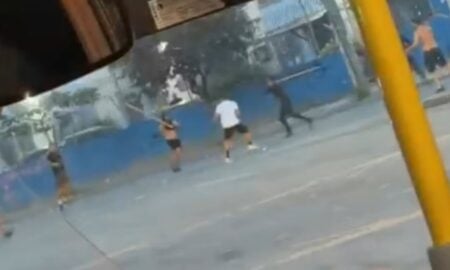
Armed traffickers positioned themselves at high points shortly after police teams entered. Intense gunfire echoed for hours, with resident videos recording continuous bursts in narrow streets. Barricades with tires and burning wood hindered initial access, forcing the use of demolition equipment.
The advance included searches in 180 addresses, with prior intelligence mapping targets. Criminals fled in groups through the upper parts of the communities, abandoning light weapons.
Victims and medical care
Civil Police confirmed the deaths of two agents: Marcus Vinícius Cardoso de Carvalho, 51, and Rodrigo Velloso Cabral, 34. Two Bope military personnel, Cleiton Searafim Gonçalves and Herbert, were also fatally hit during incursions.
Among civilians, a homeless man suffered a back injury and received on-site aid. A woman shot at a nearby gym was discharged after quick treatment. Another injured, at an adjacent scrapyard, was transferred to a reference hospital.
Seven police officers were wounded, including one from Bope shot in the leg and another from the Dog Actions Battalion. Salvage Group ambulances operated alongside the fighting.
Investigations identify that some dead suspects operated in interstate trafficking routes.
Seizures of weapons
Agents collected 75 high-caliber rifles during searches in homes and hideouts. Two pistols and nine motorcycles used in escapes were confiscated at main accesses.
Enemy drones dropped explosive devices against police positions but were neutralized by aerial countermeasures. Recovered material includes rifle ammunition and homemade explosives.
Searches continued in wooded areas, prioritizing drug and weapon depots. The operation covered 26 communities, focusing on strategic distribution points.
Arrests of regional leaders
Thiago do Nascimento Mendes, known as Belão do Quitungo, was detained at a monitored address in Penha. He coordinated local Red Command actions for years.
Nicolas Fernandes Soares, financial operator linked to Edgar Alves de Andrade, was caught in coordinated searches. The pair facilitated transfers for expansion in Jacarepaguá.
Other 79 detained include subordinates with warrants for trafficking and association. The action occurred without federal support, per state planning.
Effects on urban mobility
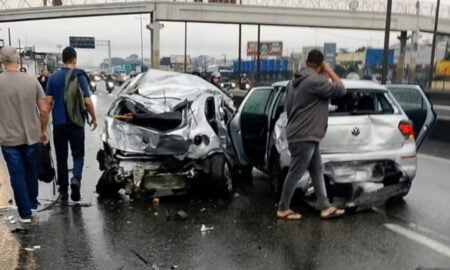
Blockades on roads like Grajaú-Jacarepaguá halted traffic for hours. Buses were diverted to alternative routes, affecting lines like 721 and 292.
Drivers reported congestion in neighboring areas, with the Operations Center guiding parallel routes. The Federal Highway Police monitored interstate accesses.
The interruption lasted until the end of main clashes, with gradual street releases.
State operation logistics
The Public Security Secretary, Victor Santos, coordinated mobilization of units like Core and COE. Helicopters flew over for tactical support, with 32 ground armored vehicles.
Intelligence from the Narcotics Repression Delegation guided incursions for a year. Subsequent stages plan actions in adjacent areas.
Agents mapped 150 searches and seizures, prioritizing urban disorder in alleys and irregular constructions.
Interruptions in local services
Municipal schools suspended classes in 45 units, 28 in Alemão and 17 in Penha. Health posts postponed elective care for emergencies.
About 280,000 residents in the communities faced exit restrictions. Universities like UFRJ and Uerj canceled in-person activities in the region.
Police Military administrative activities were paused, redirecting all personnel to patrols. Health units maintained minimum shifts.
Prior preparation of forces
Teams trained simulations in similar terrains weeks before. Support included Gaeco prosecutors for warrant validation.
Planning considered proximity to expressways used for illicit flow. Resources like ambulances integrated the convoy from the start.
The operation integrates permanent actions against faction advances in disputed territories.