
Battery defect leads BYD to recall almost 89,000 plug-in hybrids in China


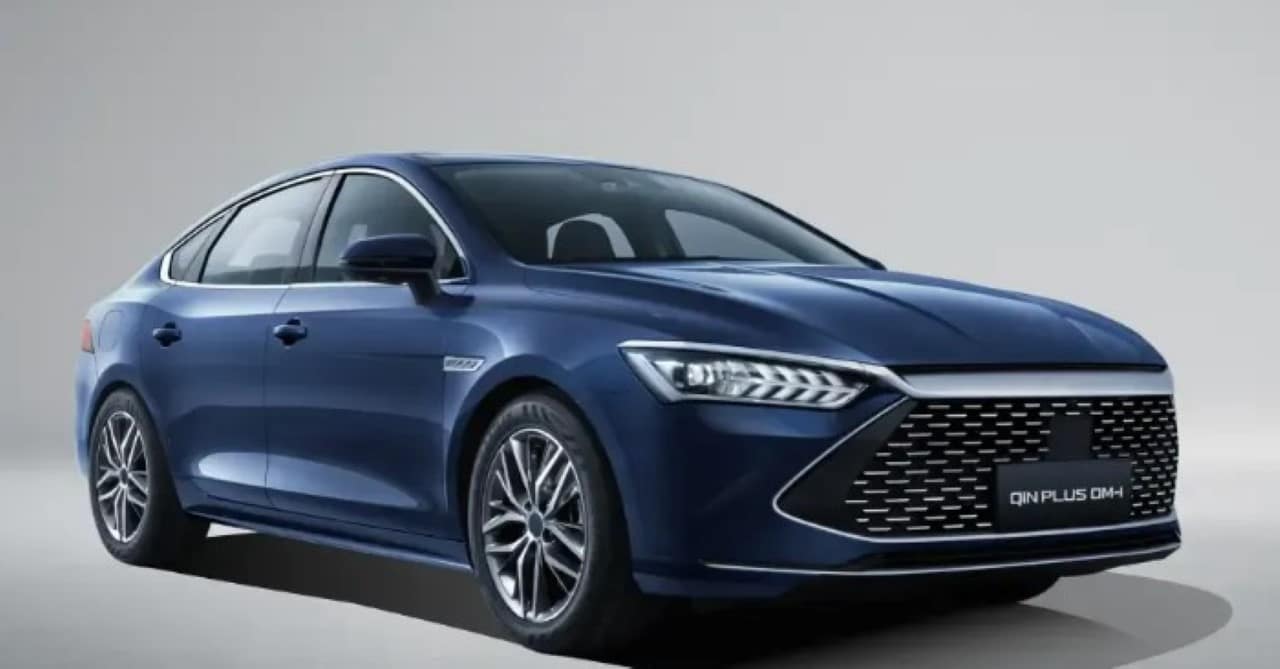
BYD announced the recall of 88,981 units of the Qin Plus DM-i model produced between January 2021 and September 2023. The reason is a consistency defect in the manufacturing of the battery packs that could reduce the power delivered. In extreme cases, the vehicle loses pure electric mode and stops working.
The call was registered with Administração Estatal of Regulação of Mercado (SAMR), a Chinese regulatory body. The measure includes remote software updates and free replacement of defective batteries at dealerships.
The problem was identified after an official investigation opened by the regulator. The failure occurs in specific components of the power modules.
Origin of the defect
The defect is related to the uniformity in the production of battery packs. Essa inconsistency may limit power delivery capacity under certain usage conditions.
When the system detects an anomaly after the software update, the dashboard displays an alert instructing the driver to look for an authorized dealer. Changing the battery pack is done at no cost to the owner.
BYD reported that there is no record of accidents related to the problem at the time of the call.
Other recent brand recalls
The current action is BYD’s third major recall in less than three months. In October, the company recalled 115,299 vehicles from the Tang DM-i and Yuan Pro lines due to battery fire risks.
In September, another 96,853 units of the Dolphin and Yuan Plus models were recalled due to a failure in the power steering control unit that increased the risk of fire.
These recalls add up to more than 300,000 vehicles affected in 2024 alone.
Sales figures in October
BYD’s global sales fell 12% in October, totaling 441,706 units compared to 502,657 in the same month of 2023. The drop was driven by plug-in hybrids.
- 100% electric vehicles: 222,559 units (up 17%)
- Plug-in hybrids: 214,297 units (down 31%)
- Commercial vehicles: 4,850 units (up 128%)
The reduction in hybrid sales occurs amid greater domestic competition and growing preference for purely electric models in the Chinese market.
Measures adopted by the manufacturer
The over-the-air update modifies the battery diagnostic system. The software starts to continuously monitor the performance of the modules.
If power reduction or abnormal behavior is detected, the vehicle activates a warning light on the dashboard. The driver receives immediate guidance to schedule an inspection.
Complete replacement of the battery pack is only carried out when the diagnosis confirms the presence of the manufacturing defect.
Stricter supervision at China
The Chinese regulator has stepped up supervision over the quality of traction batteries in recent years. The requirement for uniformity in production became a central criterion in approvals.
Leading manufacturers such as BYD, CATL and CALB face frequent audits of cell and module assembly processes. The goal is to prevent large-scale security risks.
The series of recalls demonstrates that quality control accompanies the rapid growth of the electrified vehicle industry in the country.
Procedure for owners
Owners of affected models will receive official notification from BYD in the coming weeks. Inquiries can be made via the company’s website or via the customer service number.
The software update occurs automatically via the vehicle’s 4G/5G connection. Physical inspection and possible battery replacement are scheduled at the nearest authorized network.
All service is free, including labor and parts.
BYD reinforced its inventory of components to meet the expected demand for the recall in a timely manner.



