
BYD calls for massive recall of 89,000 Qin Plus hybrids in China due to critical battery defect


Chinese manufacturer BYD has initiated a major recall process for 88,981 units of its popular plug-in hybrid sedan, the Qin Plus DM-i. The measure, which affects vehicles produced between January 2021 and September 2023, was motivated by the detection of a serious consistency defect in the manufacturing of battery packs. Esta failure can compromise energy delivery and, in extreme situations, cause the vehicle to completely shut down while it is moving.
The call was formally registered with Administração Estatal of Regulação of Mercado (SAMR), the main regulatory agency for product quality and safety in China. The official investigation was opened after reports from consumers about the loss of power, which led to an in-depth analysis of the components by the government authority.
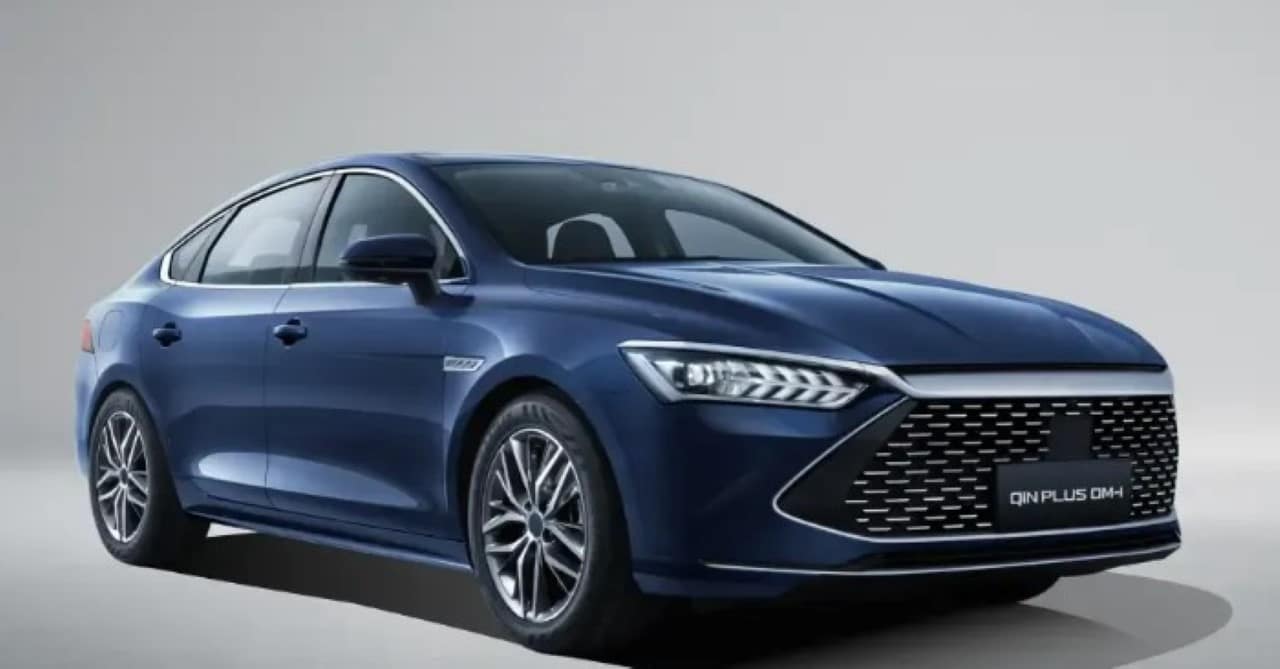
The automaker has committed to correcting the problem at no cost to owners of affected vehicles. The action plan includes both remote software updates and the physical replacement of components at authorized dealers.
Power system failure details
The technical investigation pointed out that the problem lies in the lack of uniformity during the manufacturing process of some batches of batteries. Essa inconsistência nos módulos de energia pode resultar em uma queda abrupta na capacidade de fornecimento de potência, especialmente sob certas condições de uso, como acelerações mais fortes ou em subidas íngremes.
In practice, the driver may experience the loss of the purely electric driving mode, with the vehicle starting to operate exclusively with the combustion engine. In more critical cases, the battery management system may interpret the failure as a risk, leading to complete shutdown of the powertrain as a safety measure, which represents a considerable risk if it occurs while the car is in motion.
Solution offered to owners
BYD’s remediation plan will be implemented in two main steps to ensure the safety and functionality of vehicles. Inicialmente, the company will release an “over-the-air” (OTA) software update, which will be installed remotely without the need for the owner to go to a dealership. Este new software improves the battery diagnostics and monitoring system, making it more sensitive to any abnormal variations in performance. Caso the updated system detects an anomaly consistent with a manufacturing defect, a warning light will be activated on the vehicle’s dashboard, instructing the driver to seek authorized technical assistance. At the dealership, a complete diagnosis will be carried out and, if the fault is confirmed, the entire battery pack will be replaced free of charge, including parts and labor.
Recent history of brand calls
This recall adds to other recall actions carried out by BYD in recent months, raising questions about quality control amid its rapid expansion.
In October, the company had already recalled more than 115 thousand units of the Tang DM-i and Yuan Pro models due to fire risks also related to the batteries.
The previous month, in September, another 96 thousand vehicles of models Dolphin and Yuan Plus were recalled to correct a fault in the power steering control unit.
How vehicle owners should proceed
BYD reported that the owners of the almost 89,000 vehicles involved in the Qin Plus DM-i recall will be officially notified.
Communication will be done through contact channels registered by customers, such as correspondence and brand applications.
The first stage of the correction, the software update, will occur automatically, using the vehicle’s own internet connection.
Only drivers who notice the warning light on the dashboard coming on after the update will need to schedule a service through the authorized network.
Stricter supervision at China
The series of recalls comes at a time of intensified supervision by Chinese regulators over the electric and hybrid vehicle industry.
SAMR has applied more frequent audits and stricter criteria for the approval of critical components, such as traction batteries, to ensure consumer safety.
Direct impact on hybrid sales
Quality problems may have contributed to a slowdown in the automaker’s sales. In October, BYD’s global sales recorded a 12% drop compared to the same period last year, with plug-in hybrid models being the most affected, showing a 31% reduction in registrations. On the other hand, sales of 100% electric vehicles continued to grow, with an increase of 17%.



