New celestial body surprises astronomers with intense brightness and will be visible in the southern hemisphere

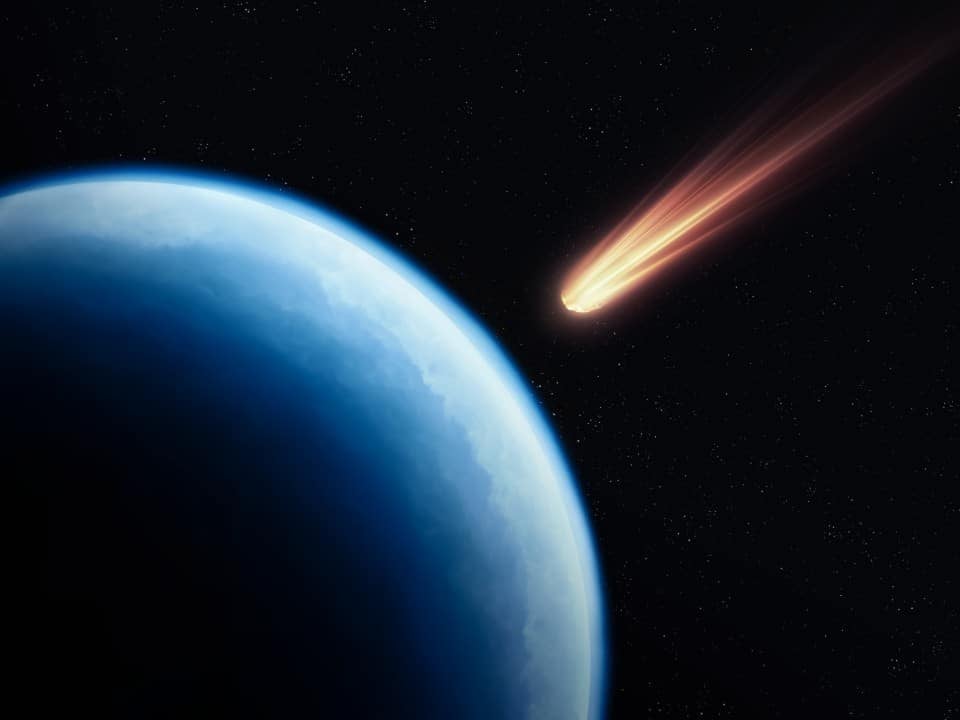
A newly discovered celestial object, tentatively cataloged as C/2024 S3 (Pereira), is capturing the attention of observatories and astronomy enthusiasts around the world. Identificado In recent weeks, the celestial body has shown an increase in brightness far above that expected for an object of its class, making it a promising target for observation in the coming days, especially for those located in the southern hemisphere.
The calculated trajectory indicates that it does not pose any risk of collision with Terra, following a long, elliptical orbit around Sol. What intrigues experts is its composition, which appears to be rich in volatile gases that, when heated by solar radiation, expand and create an exceptionally luminous “coma” — the glowing atmosphere around the nucleus.
The scientific community is already mobilizing equipment to study C/2024 S3 in detail, seeking to better understand its origin and the characteristics that make it so peculiar. The passage of this icy visitor offers a rare opportunity to collect data about the building blocks of our solar system, which have remained frozen in the far reaches of space for billions of years.
Discovery details and orbital trajectory
The first detection of C/2024 S3 was carried out by an automated observatory dedicated to searching for objects close to Terra. Inicialmente, was classified as a faint asteroid, but follow-up observations quickly revealed the presence of a coma and a subtle tail, confirming its nature.
Its designation follows the international standard: “C” indicates that it is a long-period comet, which means that its orbit takes more than 200 years to complete. The nomenclature “2024 S3” refers to the year and fortnight of its discovery, while “(Pereira)” pays homage to the tracking program responsible for the initial identification.
Orbital calculations show that the object comes from Nuvem of Oort, a vast spherical region of icy bodies that extends far beyond Plutão. Esta is its first foray into the inner solar system, which explains the large amount of volatile material on its surface.
The orbit is highly inclined in relation to the plane of the planets, a typical behavior of objects from this remote region. Ele will reach its perihelion, the point of closest proximity to Sol, in the coming weeks, at which point its brightness should peak.
Features that intrigue the scientific community
Preliminary spectroscopic analysis of C/2024 S3 revealed a composition rich in carbon monoxide and cyanogen, gases that sublime (transform from a solid to a gaseous state) at very low temperatures. The Essa characteristic explains why the object began to exhibit intense activity even though it was relatively far from the Sol. The interaction of these gases with sunlight gives the coma a greenish color, already recorded in long exposure images by amateur astronomers.
In addition to the prominent coma, the celestial body is developing two distinct tails. One of them, composed of dust, is wider, yellowish and curved, following the object’s orbital trajectory. The other, the ion tail, is straighter, bluish and points directly in the opposite direction to Sol, pushed by the solar wind. The clarity with which both tails are forming allows for detailed studies of the interaction of cometary material with the interplanetary environment.
How to observe the celestial phenomenon in the night sky
Para observers in the southern hemisphere, C/2024 S3 will become an object visible to the naked eye in places with little light pollution. The best viewing window will occur about one to two hours before dawn, when the sky is still dark. The object will be located in an easterly direction, moving slowly between the constellations of Escorpião and Sagitário over the next few weeks. To ensure a good observation experience, some recommendations are important:
- Location:Busque a location away from city lights, such as rural areas or open-air parks.
- Equipment:While Embora may be visible to the naked eye, a pair of 10×50 binoculars or a small telescope will reveal impressive details such as the shape of the coma and the beginning of the tail.
- Visual adaptation:Permaneça in the dark for at least 15 to 20 minutes to allow your eyes to fully adapt to the darkness, allowing you to perceive fainter objects.
- Celestial maps:Utilize smartphone astronomy apps or online sky charts to accurately locate the object’s position in the sky each night.
The scientific importance of celestial bodies like this
Comets are considered fossils of the early solar system. Eles are remnants of the nebula of gas and dust that gave rise to Sol and the planets about 4.6 billion years ago.
Studying its chemical composition provides direct clues about the conditions and materials present during the formation of our planetary system.
Furthermore, the theory that comets and asteroids delivered water and organic compounds—the essential ingredients for life—to the early Terra is widely debated. Detailed analysis of objects like C/2024 S3 can provide evidence to support or disprove this hypothesis.
The next steps in monitoring
Large ground- and space-based telescopes are already scheduling observation time to analyze C/2024 S3. The focus will be on obtaining high-resolution spectra to map the distribution of different molecules in its coma and tail.
Continuous monitoring of their brightness and activity will allow scientists to refine models for how these bodies behave as they approach Sol for the first time.
Repercussion among amateur astronomers
The passage of C/2024 S3 generated great excitement in the amateur astronomy community, which plays a key role in monitoring these objects, providing data and images that complement the work of professionals.
Differences from other space visitors
Unlike asteroids, which are mostly rocky and metallic, comets are composed of a mixture of ice, rock and dust. Essa composition is responsible for the formation of the coma and tail when they approach Sol.
Its sudden appearance and increasing brightness distinguish it from more predictable objects in the main asteroid belt, reinforcing the dynamic and constantly discovering nature of our solar system.
Luís Henrique Costa é jornalista formado pela FMU, editor-chefe e fundador do Mix Vale, portal de notícias em atividade desde 2013. Responde pela direção editorial do veículo, que cobre Brasil e mundo em economia, benefícios sociais, esportes, tecnologia, ciência e entretenimento. Atua na área há mais de 15 anos e lidera uma equipe de cerca de 15 colaboradores.