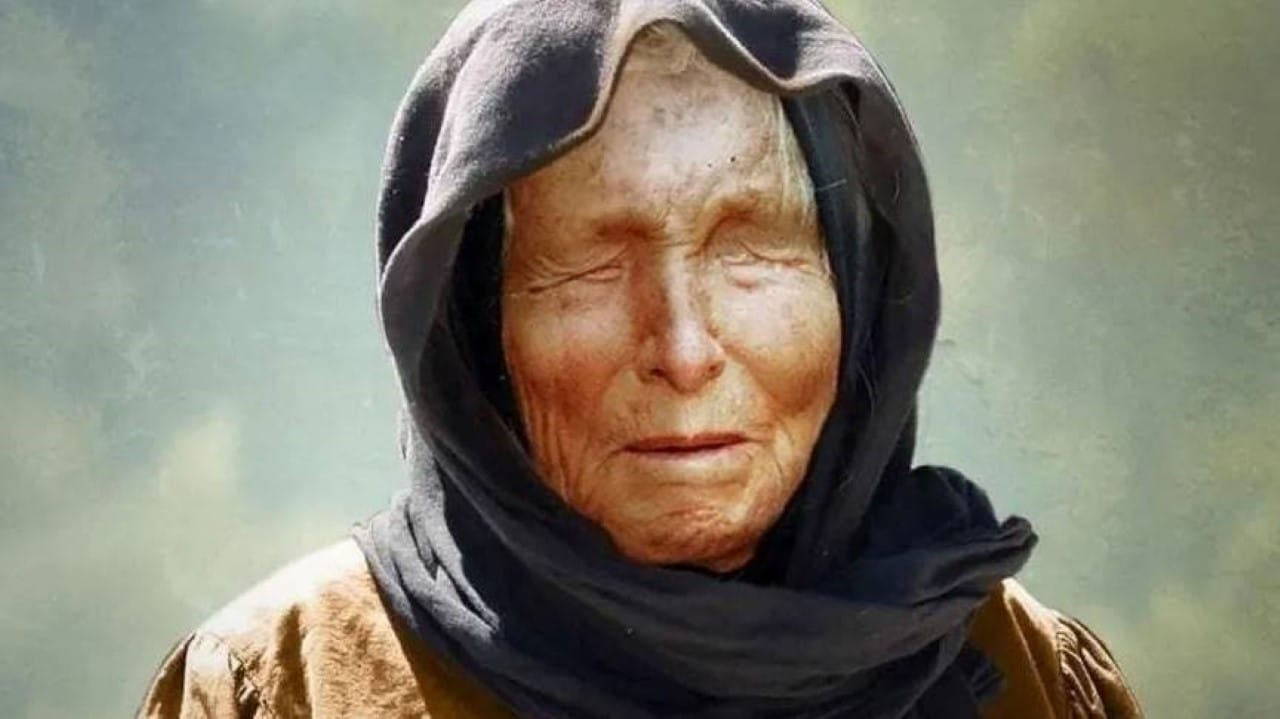
Bulgarian psychic Baba Vanga, known for predictions attributed to historical events, indicated that 2026 will bring humanity’s first contact with extraterrestrial beings. Essa vision arises from oral accounts collected by followers, without direct written records of it. The prophecy has gained recent attention on news portals and online discussions, especially after mentions of a gigantic spacecraft approaching Terra.
Ufology experts note that such reports have been circulating for decades, but go viral again during periods of space advances. NASA, for example, monitors nearby interstellar objects such as 3I/ATLAS, which will pass about 170 million miles from Terra in December 2025, fueling speculation. However, space agencies emphasize that no confirmed contact exists so far.
Vanga, who died in 1996 at the age of 85, based her visions on intuitive insights after losing her sight as a teenager. Seus reports, compiled by researchers, include details about communication with an advanced civilization, possibly facilitated by non-human technologies.
- Main elements of the ETs vision:
- Arrival of a ship of unprecedented proportions.
- Beginning of interspecies dialogues.
- Impact on global observatories, such as Arecibo, now replaced by similar projects.
These ideas contrast with the skepticism of scientists, who attribute prophecies to retrospective interpretations of vague statements.
Geopolitical conflicts on the rise
Reports attributed to Baba Vanga point to an escalation of international tensions in 2026, with the potential for conflicts on multiple fronts. Essa forecast includes disputes between powers such as Rússia and Estados Unidos, as well as instabilities in Ásia, such as tensions around Taiwan. Analistas geopoliticians note that such scenarios echo current debates about military alliances.
The vision describes a confrontation that would spread across continents, affecting trade routes and energy supplies. In 2025, UN reports already record 56 active conflicts, an increase of 10% compared to 2024, which provides the basis for speculation about 2026. Países of Oriente Médio and Europa Oriental appear as initial focuses in these narratives.
Governments monitor these risks through forums such as the G20, where discussions on nuclear disarmament have gained urgency. Vanga’s prediction does not specify exact dates, but suggests that initial events would occur in the first half of the year.
Economy under global pressure
Economic instability emerges as another pillar in Vanga’s visions for 2026, with meltdowns in emerging markets and persistent inflation. Economistas link this to factors such as sovereign debt, which reached US$305 trillion in 2025, according to the IMF, creating vulnerabilities. The prophecy mentions a transfer of economic power from Ocidente to Oriente, accelerating changes in supply chains.
Central banks, such as Federal Reserve, adjust interest rates to mitigate recessions, but projections indicate global growth of just 2.7% in 2026, below the pre-pandemic average. Setores how technology and renewable energy can benefit, while commodities suffer volatility.
Investors eye cryptocurrencies as hedges, with Bitcoin surpassing $100,000 at recent peaks, reflecting searches for alternative assets. The vision of Vanga reinforces the need for diversification in portfolios.
In Brasil, Banco Central projects controlled inflation at 4.5% for 2026, but exports depend on global stability.
Health and environmental predictions
Environmental imbalances mark Baba Vanga’s visions for 2026, with natural catastrophes intensified by climate change. Relatórios from the IPCC indicate that extreme events, such as hurricanes and droughts, will increase by 20% in intensity, affecting tropical regions. The prophecy describes floods and volcanic eruptions as signs of a planet on alert.
In healthcare, Vanga predicted advances in treatments for chronic diseases such as cancer and Alzheimer, with gene therapies gaining traction. In 2025, CRISPR editing clinical trials registered success in 70% of cases, according to the WHO, paving the way for 2026. However, the vision warns of localized outbreaks, possibly linked to migrations forced by conflicts.
Governments invest in universal vaccines, with União Europeia allocating €50 billion for research. Esses developments contrast with risks of inequalities in access, where developing countries face logistical barriers.
- Environmental mitigation measures:
- Expansion of renewable energy to 40% of the global matrix.
- Early warning protocols in 150 nations.
- Investments in reforestation, aiming for 1 billion trees planted annually.
Public health experts emphasize integrating AI for epidemic predictions, reducing response times by 30%.
Baba Vanga’s legacy persists
The legacy of Vangelia Pandeva Gushterova, or Baba Vanga, continues to influence debates about the future, with his views compiled in more than 20 books by followers. Nascida in 1911 in Bulgária, she gained fame during Segunda Guerra Mundial for advice to leaders and ordinary civilians. Sua hit rate estimated at 80% by researchers is based on retrospective links to events such as September 11, 2001 and the Chernobyl disaster in 1986.
Academic research analyzes these prophecies as cultural reflections of collective anxieties, without scientific validation. In 2025, documentaries on platforms such as Netflix revived interest, with global audiences surpassing 50 million views. Seguidores maintain study centers at Bulgária, preserving oral reports.
The absence of direct writings by Vanga fuels controversy, but his cultural impact is undeniable, inspiring works of fiction and discussions in international forums. Historiadores note that similar prophets, like Nostradamus, share traits of interpretative ambiguity.
For 2026, their visions serve as a reminder to prepare resilient systems, regardless of mystical origins. Comunidades debate adaptations online, with hashtags like #BabaVanga2026 accumulating billions of interactions.
