

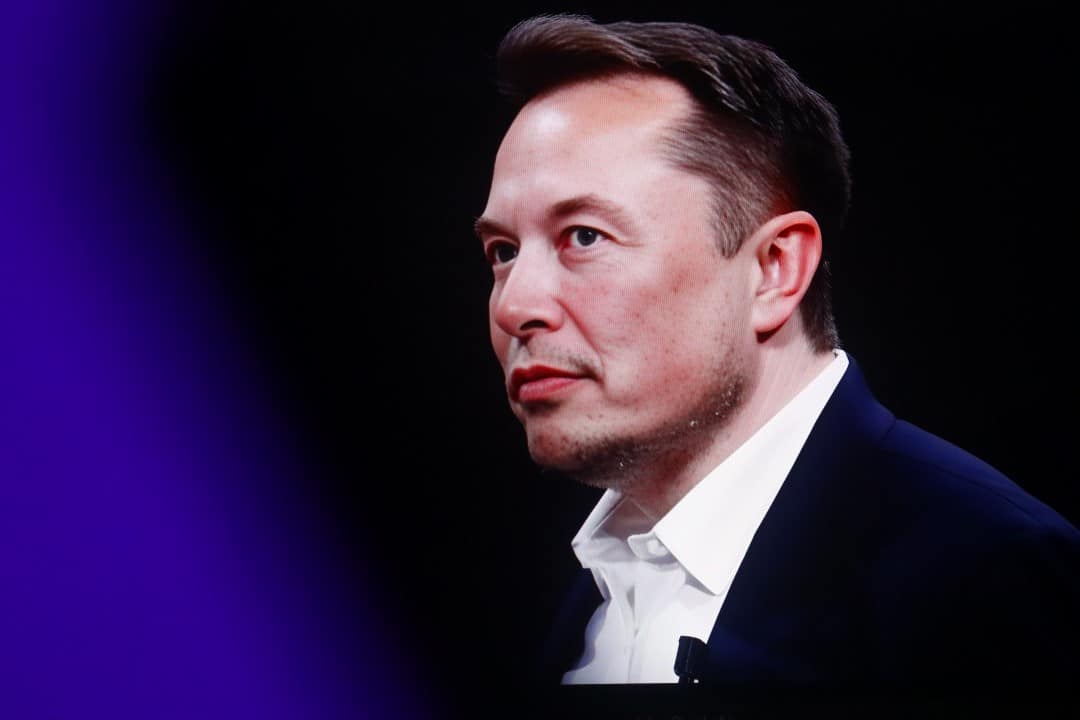
Elon Musk, CEO of The statement took place on December 4, 2025, via social network X, in response to a user question. Especialistas in vehicle safety warn that the practice remains illegal in 49 American states, in addition to Washington DC and federal territories, with Montana as an exception.
The FSD system remains classified as Nível 2 autonomy by SAE, requiring constant driver supervision. Musk mentioned the feature as an advancement, but independent tests show that attention alerts decrease in stopped or slow traffic. Tesla distributes the software via over-the-air updates, reaching millions of vehicles with a free trial.
Owners report fewer interruptions from interior cameras, which monitor the driver’s eyes. However, repeated violations may still suspend the FSD indefinitely.
- Main changes in v14.2.1: Relaxamento of “nags” at red traffic lights.
- Legal context: Multas range from $50 to $1,000 per state.
- Real tests: Jornalistas sent messages on urban routes without immediate alerts.
Evolution of the Full Self-Driving into the Tesla
Tesla launched FSD in 2016 as an advanced assistant, promising full autonomy in the following years. Musk predicted in 2019 that vehicles would drive themselves by the end of 2020, but delays accumulated due to regulatory and technical challenges.
Previous versions, such as v12, improved pedestrian and cyclist detection, reducing manual interventions by 40%, according to internal company data. v14 introduces more robust neural networks, processing traffic contexts in real time.
At the November 2025 shareholder event, Musk highlighted that the system is approaching unattended operation, citing safety statistics above the human average.
Security alerts and hands-on tests
Tests with v14.2.1 on Silicon Valley roads showed that the system allows prolonged glances at the phone in traffic jams, without disengaging autonomous mode. A journalist from Business Insider typed messages via iPhone for minutes on a 10 km route, without alerts.
Federal regulators such as NHTSA are investigating FSD after reports of 50 incidents in 2025, including collisions at intersections. The agency requires automakers to take responsibility at Nível 3 or greater for releasing distractions.
Experts recommend keeping your hands on the steering wheel, even with the software active, as failures occur in 1% of miles driven, according to IIHS studies.
Tesla has upgraded cabin cameras to track facial movements with 95% accuracy, but the texting feature does not change the legal requirement for full attention.
Legal context of cell phone use while driving
American laws have banned texting in vehicles since 2008 in several states, with penalties including license suspension after repeat offenses. In the event of an accident, the driver is fully responsible, regardless of the FSD.
Tesla clarifies in manuals that the driver is solely responsible, refusing to cover compensation in legal actions. Recent Casos, such as one from 2024 in Flórida, resulted in victories for the company by classifying the system as auxiliary.
Law enforcement authorities use radar and patrols to catch distractions, with 3,500 deaths linked to cellphones in the U.S. annually, according to the CDC.
- Aggravating factors: Acidentes double in mixed traffic.
- Rare exceptions: Apenas Montana allows without full restrictions.
- Recommendations: Apps integrated navigation devices avoid manual handling.
Musk promises and delay history
Musk announced in October 2025 plans for “unsupervised FSD” in 2026, with robotaxis operating without a driver. v14.2.1 represents an intermediate step, focusing on common urban scenarios.
Previous years have seen similar promises: In 2022, he cited “millions of autonomous vehicles” for 2023, but deliveries have stalled at supervised upgrades. Investidores question deadlines in quarterly reports.
The company invests $10 billion annually in AI for vehicles, training models on billions of miles of collected data.
Critics point out that relaxing monitoring encourages complacency, increasing risks by 20%, based on AAA simulations.
Differences between Tesla and standalone competitors
Waymo operates in Nível 4 in selected cities, taking full control and allowing unrestricted use of devices. GM’s Cruise paused operations after incidents in 2023, prioritizing safety over speed.
The Tesla opts for camera-based vision, without additional radars, which reduces costs but increases dependence on software. Concorrentes use multiple sensors for redundancy.
In 2025, Tesla reported 1 billion miles in FSD, compared to 50 million for Waymo, highlighting scale but not maturity.
Tesla owners praise fluidity on highways, but report hesitations in complex roundabouts.
Implications for drivers and regulators
Tesla owners access FSD for US$99 per month or a one-time purchase of US$8,000, with a free trial expanded in December 2025 to 2 million units. Atualizações occur weekly, adjusting permissions based on feedback.
NHTSA plans hearings in January 2026 on distractions in autonomous vehicles, potentially imposing stricter standards. Estados like Califórnia test specific fines for systems like FSD.
Studies by Forbes indicate that 70% of users feel excessive confidence, ignoring alerts in 15% of cases.
Tesla responds with internal campaigns, reinforcing that the system does not replace human surveillance.
Reactions from users and security experts
Users on X shared test videos, showing texting in light traffic without interruptions, but warning of limits at speeds above 60 km/h. A viral post from December 5th racks up 50,000 views.
IIHS experts criticize the Musk statement for minimizing risk, citing that distractions cause 8% of fatal collisions.
The Tesla community divides opinions: 60% see progress, 40% fear personal responsibility, according to an informal survey in November.
European governments are taking note, with the EU requiring Level 3 certification for similar releases.
Technical advances in version 14.2.1
The software incorporates end-to-end learning, where AI simulates human decisions in 99% of common scenarios. Processadores HW4 doubles calculation capacity, enabling 360-degree analysis in milliseconds.
Tesla collects anonymous data to refine models, with 500,000 vehicles contributing daily. v14.2.1 fixes 200 bugs reported in v14.1, focusing on parking maneuvers.
Future iterations aim for integration with streaming services, but no confirmed dates.



