

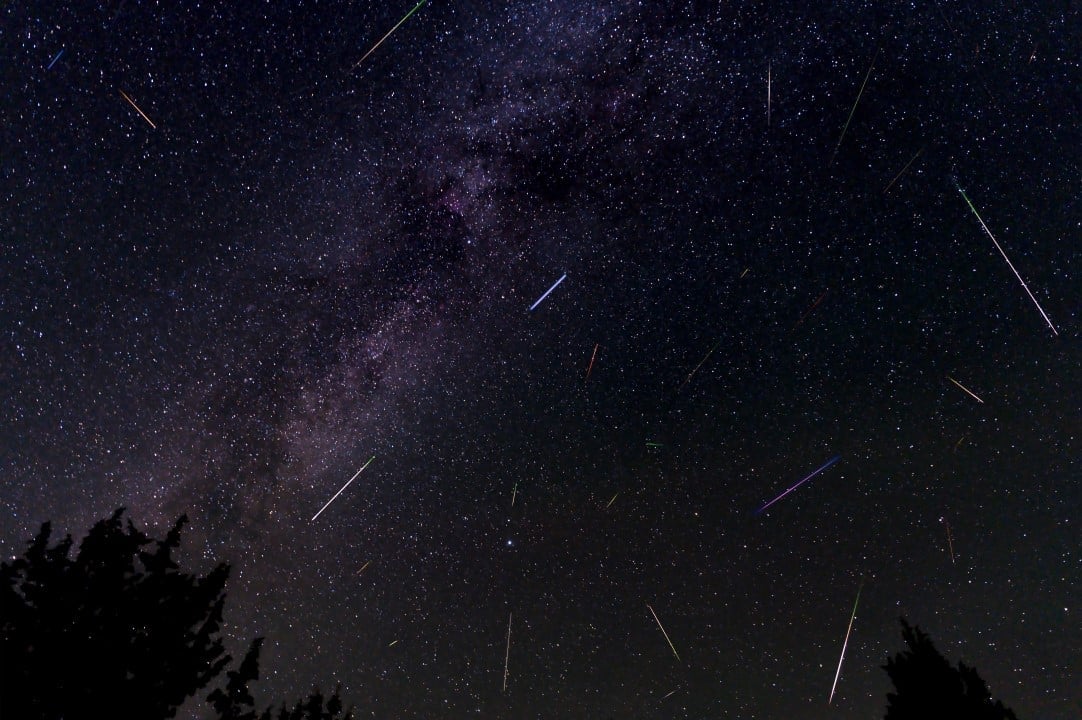
The meteor shower Activity remains high between the 4th and 20th of December, with the maximum centered on the 14th.
Observation conditions at Brasil in 2025 are favorable because Lua will be in the waning phase and only rise after midnight, leaving the sky dark during the hours of greatest rain activity.
When and where to observe the Geminidas
The best period begins after 10pm on the 13th, when the radiant – the point from which the meteors appear to emerge – is already high in the sky. Maximum activity occurs in the early hours of the 14th, between 2am and 4am, Brasília time.
In Hemisfério Sul, the radiant of Geminidas rises higher than in Hemisfério Norte countries, which increases the number of visible meteors. Cidades in the interior and regions far from large centers offer the best conditions.

Characteristics of the Geminidas meteor shower
The Geminidas stand out for their large number of bright and colorful meteors. Muitos have yellow, green and even blue tones, in addition to moderate speed (around 35 km/s), which makes observation and photography easier.
Unlike most rains, which originate from comets, Geminidas are produced by the asteroid 3200 Phaethon, classified as a “rocky comet”. Esse body leaves a dense trail of particles that Terra passes through annually in December.
Practical tips for observing successfully
- Choose locations with little or no public lighting
- Bring a reclining chair or mat to look up in comfort
- Wear warm clothes, as temperatures drop a lot in the early morning
- Wait at least 20 minutes for your eyes to adapt to the darkness
- Avoid looking at your cell phone, meteors appear throughout the celestial vault
Other celestial events of the week
In the early hours of December 10, Lua in the crescent phase passes close to the star Regulus, in Leão. Alguns countries from América to Norte record occultation of the star by Lua.
On the 12th, Lua reaches its last quarter, favoring the observation of deep-sky objects in the first half of the night. Júpiter remains bright in the constellation Touro, and Saturno is still visible in the early evening in Aquário.
Activity forecast for 2025
Astronomers at Organização Internacional of Meteoros (IMO) estimate zenith hourly rate (ZHR) of up to 150 meteors under ideal conditions. No Brasil, experienced observers report actual averages of between 80 and 120 meteors per hour in previous years when skies have been clear.
The rain remains high until the 17th, allowing good observations even for those who cannot get up early at the peak.



