
Nasa prepares for unprecedented 2025 study of newly detected interstellar comet 3I Atlas, unraveling cosmic origins from beyond our solar system

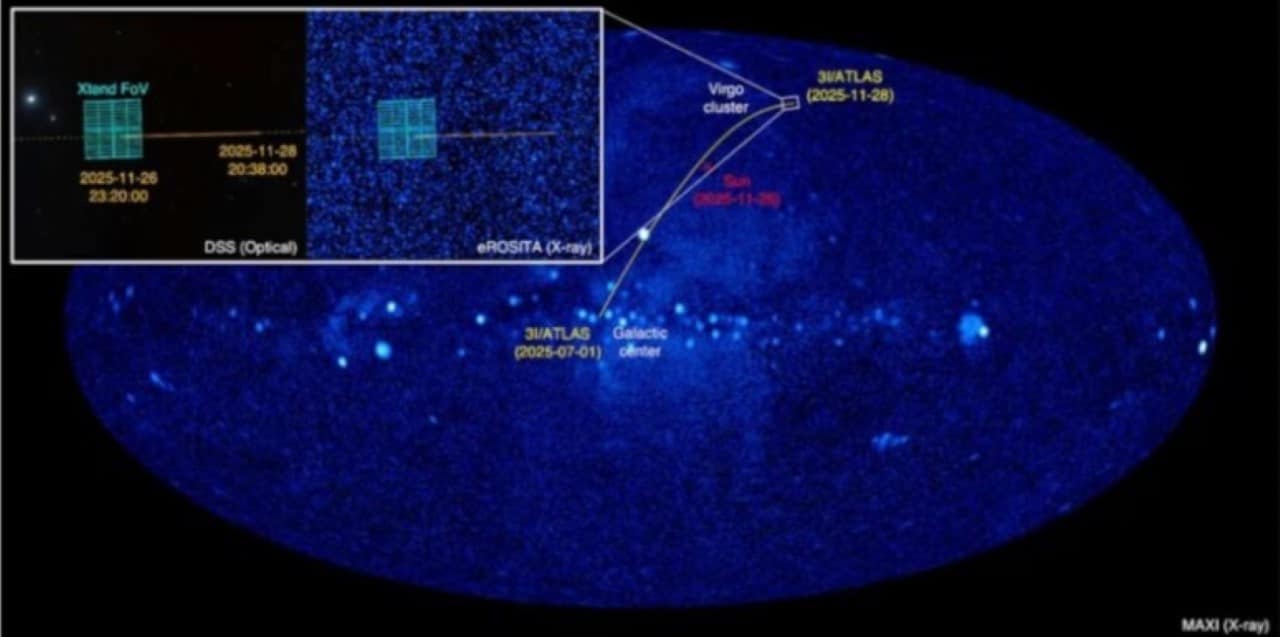
The scientific community is buzzing with excitement as NASA initiates an extensive observation campaign in 2025 for a newly identified interstellar comet, designated 3I Atlas. This celestial visitor, originating from beyond our solar system, offers an unparalleled opportunity to study pristine material from another star system, providing crucial insights into the diverse processes of planetary formation across the galaxy. Its detection marks a significant moment for astrophysics, pushing the boundaries of our understanding of cosmic chemistry and dynamics.
Interstellar objects are rare cosmic wanderers that travel between star systems, carrying with them unique chemical signatures of their birth environments. Unlike typical comets that orbit our sun, 3I Atlas is on a hyperbolic trajectory, confirming its foreign origin and making it a vital subject for study.
The implications for understanding the solar system’s genesis and the vast array of exoplanets known to exist are profound, as 3I Atlas provides a direct sample of materials that formed under different stellar conditions. Scientists anticipate that data from this comet will help refine models of planetary evolution and the distribution of elements essential for life.
Unveiling 3I Atlas: a new interstellar visitor
Initial observations of 3I Atlas in early 2025 utilized a network of advanced ground-based telescopes, including the W. M. Keck Observatory and the Very Large Telescope, followed by detailed imaging from the Hubble Space Telescope. These instruments provided critical data on its rapid trajectory and the development of its coma and tail, confirming its cometary nature and its interstellar path through our solar system. The confirmation of its hyperbolic orbit solidified its classification as an object not bound by our sun’s gravity, distinguishing it from local comets.
Compared to previously observed interstellar objects like 1I/’Oumuamua and 2I/Borisov, 3I Atlas presents unique spectroscopic characteristics, suggesting a potentially different composition or formation environment. Early analyses indicate a robust dust-to-gas ratio and the presence of volatile compounds that could point to a colder, more distant birthplace within its home star system, offering a fresh perspective on the diversity of materials traveling through interstellar space.
Nasa’s swift response and observation campaign
NASA rapidly mobilized its scientific assets to maximize the limited observation window for 3I Atlas. Teams of astronomers, planetary scientists, and engineers collaborated across multiple institutions, coordinating efforts to gather as much data as possible before the comet recedes too far to be effectively studied. This swift response underscored the scientific priority placed on understanding these rare interstellar visitors.
A comprehensive observation campaign is underway, collecting high-resolution images, spectroscopic data, and thermal measurements. These efforts aim to precisely map the comet’s trajectory, analyze its chemical makeup, and understand the physical processes governing its activity, such as gas and dust emission. Preliminary findings have already revealed unexpected spectral lines, indicating novel molecular compounds.
Decoding the comet’s composition
Spectroscopic analysis is at the forefront of efforts to determine the chemical makeup of 3I Atlas. By examining the light emitted or absorbed by its coma, scientists can identify specific elements and molecules present, including various types of ice, silicates, and organic compounds. This detailed chemical fingerprint serves as a direct probe into the conditions of its distant stellar nursery.
The composition of 3I Atlas is expected to reveal critical information about the original star system from which it was ejected. Variations in the abundance of specific isotopes or complex organic molecules could indicate whether its parent star was similar to our sun or significantly different, providing clues about the prevalence of diverse stellar environments capable of forming planetary systems. The discovery of specific organic molecules could suggest the presence of prebiotic chemistry in its home system.
Ongoing studies are specifically searching for the presence of water ice, carbon monoxide, and other volatile materials, which are key components of comet nuclei. Any unexpected ratios or novel compounds could challenge existing models of planetesimal formation and offer new insights into the chemical diversity of interstellar matter.
Implications for planetary science
Studying 3I Atlas offers a unique opportunity to test and refine current theories of planet formation. By analyzing material from another star system, scientists can compare its composition to that of comets formed in our own solar system, highlighting universal mechanisms or distinct pathways in the creation of planetary building blocks. This comparative planetology is essential for a holistic understanding of how planets emerge across the cosmos.
The comet’s composition could also shed light on the prevalence of elements critical for life, such as carbon, oxygen, and nitrogen, in other star systems. If 3I Atlas carries a rich array of organic molecules, it would further support the hypothesis that the basic ingredients for life are widely distributed throughout the galaxy, enhancing the prospects for extraterrestrial life.
Furthermore, the study of interstellar objects like 3I Atlas inspires the design and development of future interstellar missions. Understanding their properties and trajectories is crucial for potentially intercepting such objects in the future, allowing for even more detailed in-situ analysis and the direct return of samples from beyond our solar system.
This research significantly contributes to the broader search for exoplanetary systems by providing tangible evidence of material exchange between stars. It helps scientists comprehend the mechanisms by which planetary systems evolve and interact with their galactic environment, enriching our knowledge of the universe’s dynamic nature.
Challenges and future prospects
Observing fast-moving, distant objects like 3I Atlas presents numerous technical challenges, primarily due to their brief visibility and the faintness of their signals. Astronomers must work quickly and efficiently, utilizing the most sensitive instruments available to capture valuable data within a tight observational window. The limited time for study necessitates rapid data processing and analysis to extract maximum scientific value from each observation.
Despite these hurdles, the long-term goals of interstellar object research include developing advanced telescopic capabilities and potentially planning dedicated missions to intercept future visitors. Such endeavors would revolutionize our understanding of cosmic origins, providing unprecedented access to material from other stars and potentially revealing how life’s building blocks are distributed throughout the galaxy.
Public engagement and scientific collaboration
NASA is committed to sharing the unfolding discoveries of 3I Atlas with the global public and fostering international scientific collaboration. Regular updates are being provided through various platforms, aiming to engage astronomy enthusiasts and the general public in the excitement of this groundbreaking research. This transparency ensures that the wonder of cosmic exploration is accessible to all.
The arrival of 3I Atlas has generated immense excitement within the scientific community, sparking new research proposals and fostering a collaborative environment among astronomers worldwide. Its study represents a shared human endeavor to unravel the universe’s deepest mysteries, uniting researchers in a common pursuit of knowledge about our place in the cosmos.
A new era of cosmic exploration
The observation of 3I Atlas heralds a new era in cosmic exploration, moving beyond the confines of our solar system to directly sample the interstellar medium. This unique opportunity offers profound implications for astrobiology and our fundamental understanding of how star systems form and evolve, marking a pivotal moment in humanity’s quest to comprehend the universe.




