

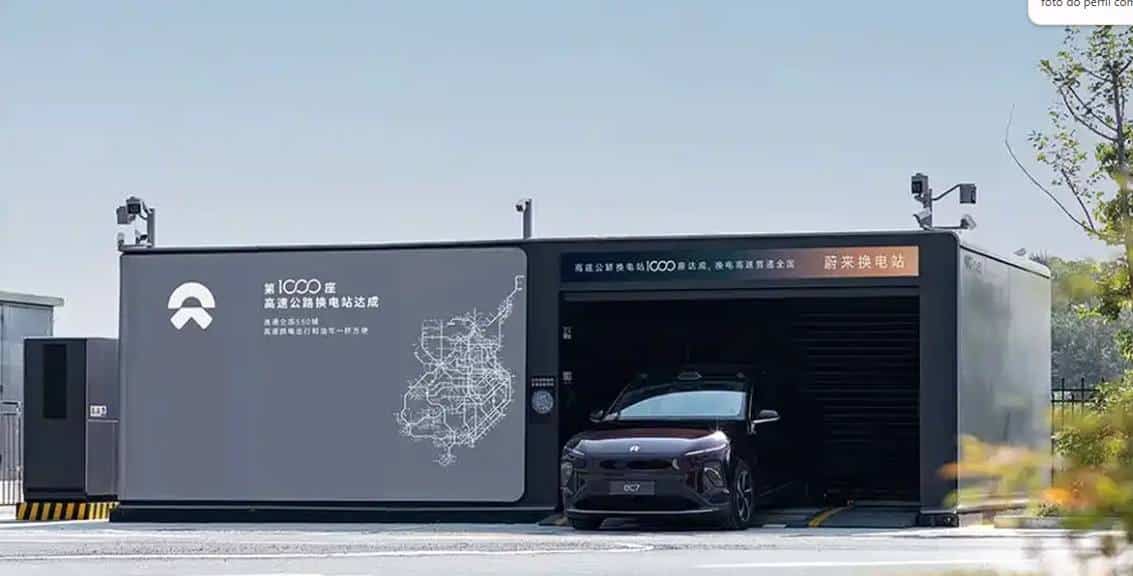
Chinese automaker NIO, a leader in electric mobility solutions, reached the remarkable milestone of 80 million battery changes at its automated stations at China. Este’s achievement consolidates the company at the forefront of an innovative system that allows the replacement of electric vehicle batteries in a matter of minutes, offering a practical and efficient alternative to conventional recharging. NIO’s strategy, initiated in 2018, has proven crucial to meeting the growing demand for electric mobility in the country, overcoming infrastructure and autonomy limitations.
With a vast infrastructure of 3,405 switching stations and 4,674 charging points, the NIO Energy network connects 550 cities across China. Este robust ecosystem is essential for the daily operation of an average of 97 thousand exchanges, significantly reducing users’ waiting time and optimizing the driving experience.
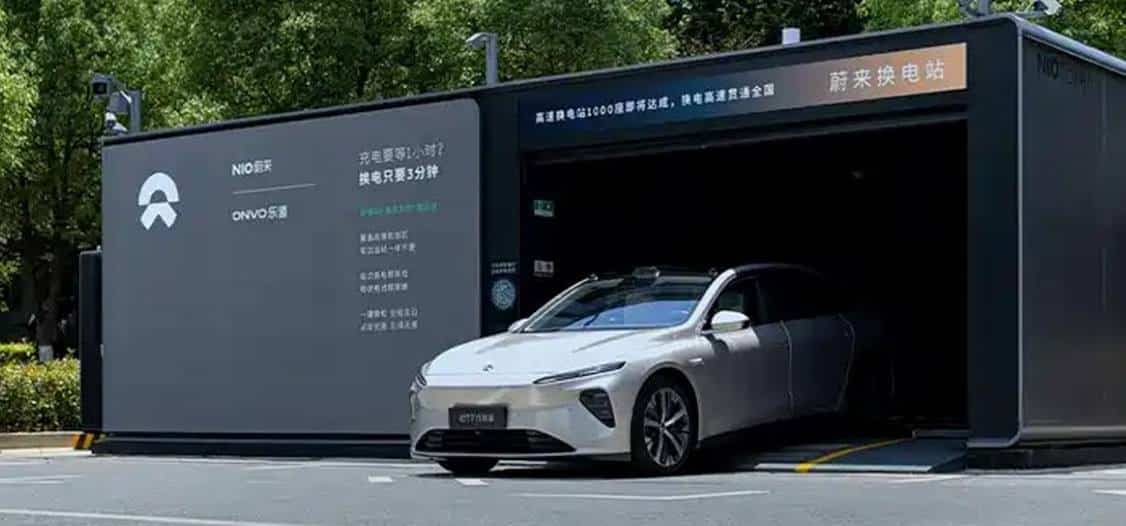
NIO’s approach, which has saved an estimated 67 million hours for its customers, reflects a commitment to innovation. Mesmo with vehicles that already offer more than 600 km of autonomy per charge, changing the battery represents a competitive differentiator that speeds up the process and improves convenience for owners.
Pioneering exchange infrastructure
NIO Energy operates a comprehensive network with a total of 8,079 charging and exchange points, highlighting the 3,405 stations dedicated exclusively to automated battery replacement. Essas facilities are equipped with cutting-edge technologies, including LiDAR sensors and Nvidia Orin
The network of stations is strategically distributed, covering 550 cities and including 1,000 points located on highways. Essa extensive coverage is essential to eliminate so-called “range anxiety” on long-distance journeys, ensuring drivers have quick and easy access to service, even in regions with limited traditional charging infrastructure.
Technology that drives efficiency
NIO’s battery swap system is one of its biggest competitive differentiators in the global electric vehicle market. Enquanto Conventional quick recharging can take 15 to 30 minutes, NIO’s automated process is completed in less than three minutes, providing a near-instant refueling experience.
The fourth generation stations, introduced in 2024, represent a technological leap. Elas utilize six ultra-wide field LiDAR sensors and four Orin
–Speed: The changeover is carried out in 144 seconds, a 22% increase in speed compared to the third generation.
–Capacity: Cada station can store up to 23 batteries, supporting up to 480 daily changes.
–Automation: The process is fully automated, with the driver starting the change without leaving the vehicle.
–Compatibility: The system currently serves NIO and Onvo models, with plans to expand to the Firefly sub-brand in 2026.
Essa advanced technology also offers the flexibility of battery upgrades, allowing users to choose different capacities (such as 75 kWh or 100 kWh) as per their needs. NIO’s Battery-as-a-Service (BaaS) model, where the customer pays a monthly subscription for battery usage, also contributes to reducing the initial cost of vehicles.
Advancement and strategic coverage
NIO’s expansion in the electric vehicle market is not just restricted to automobile production, but also to creating an integrated experience that combines cutting-edge technology and user convenience. Desde the opening of its first station in Shenzhen, the company based in Xangai reached the milestone of 80 million exchanges in just seven years.
The quick-switch system, which takes approximately three minutes to complete, is particularly advantageous in large urban centers such as Xangai, where access to home chargers is often limited. In the Chinese metropolis, for example, 183 stations carry out more than 9,000 exchanges daily, approaching the target of 10,000.
NIO has also been focusing on strategic partnerships to strengthen its infrastructure. Acordos with CATL, the largest battery manufacturer in the world, aims to develop batteries with greater longevity and expand the network. Além In addition, collaborations with state entities, such as Future Science City Group in Pequim, foresee the construction of another 100 stations, reinforcing the capillarity of the service.
Direct benefits for the driver
The battery swap solution offered by NIO solves significant problems for drivers in dense urban areas where lack of access to home chargers is a reality. In cities such as Pequim and Xangai, the NIO network ensures that convenience and practicality are prioritized, optimizing the daily lives of electric vehicle users.
Além of convenience, the system provides notable financial savings. Enquanto the average cost per customer is 34,000 yuan, the service generated total savings estimated at 20.9 billion yuan for the community, highlighting the economic efficiency of the BaaS model.
Accessibility is another key pillar of NIO’s strategy, with 80.4% of users located within 3km of an exchange station. Essa geographic proximity minimizes travel and waiting time, making battery replacement a highly attractive option for drivers’ routines.
The user experience is enhanced by integration with the NIO app, which allows you to locate stations, schedule changes and monitor battery status. In January 2025, the company registered 44,323 new users of the exchange service, an indication of growing acceptance and perceived value.
Challenges and international expansion
Embora to China is NIO’s main focus, with the highest concentration of stations, the company also expands its presence in Europa, operating 60 stations in countries such as No Oriente Médio, the first unit opened in Abu Dhabi, with plans to install exchange stations throughout 2025, supported by local government investments aimed at boosting electric mobility in the region.
Apesar of success, NIO faces challenges inherent to innovation. The utilization rate of some stations, with an average of 7.35%, indicates the need for optimization and greater user engagement. Além Furthermore, the retrofitting process is crucial to ensure the compatibility of existing stations with the new models of the Onvo sub-brand, ensuring a smooth and efficient transition for the growing fleet. Integration with the electricity grid, through programs such as Vehicle-to-Grid (V2G), is also an innovation front under development, with pilot stations that allow energy to be returned to the grid during periods of peak demand, generating credits for users.
Growth trajectory and future goals
NIO’s trajectory in the battery exchange segment is marked by accelerated growth and significant historical milestones. The company reached 10 million exchanges in July 2022, scaled to 50 million in August 2024 and celebrated 80 million in July 2025. The decrease in time between each milestone reflects the rapid escalation in adoption and improvement of the service, demonstrating the effectiveness of its strategy.
NIO plans to reach the milestone of 5,000 exchange stations by the end of 2025, with 2,500 of them already compatible with the Onvo sub-brand. Essa ambitious goal includes coverage of more than 2,300 counties in China, strengthening the company’s presence in both urban and rural areas and ensuring that battery swapping technology is accessible to an increasing number of drivers.
Perspectives of electric mobility
NIO’s strategy, which combines robust infrastructure, advanced technology and strategic partnerships, aims to consolidate battery swapping as a viable and superior alternative to traditional recharging. Enquanto competitors invest in ultra-fast chargers, NIO is betting on the speed and convenience of switching, meeting the needs of urban drivers and long-distance travelers, with plans to launch the fifth generation of stations in 2026, compatible with the Firefly sub-brand.



