Nasa’s deep space mission tracks newly discovered 3I Atlas comet’s unprecedented trajectory near Earth in 2025
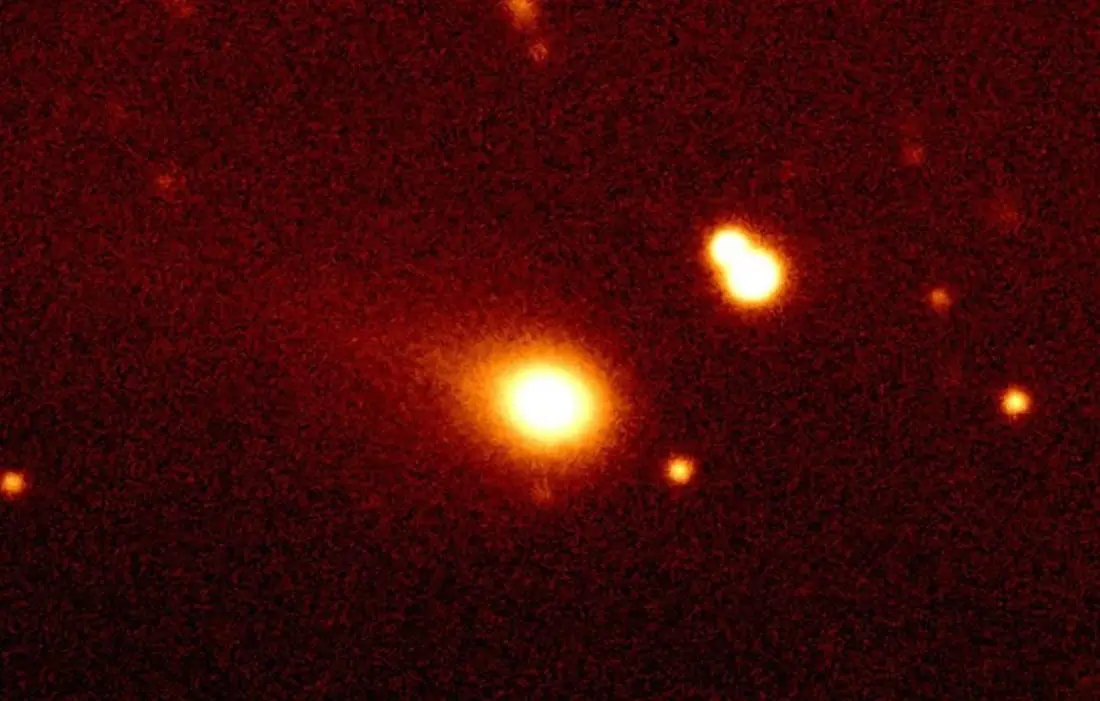
Nasa’s Jet Propulsion Laboratory is actively monitoring Comet 3I Atlas, a newly identified celestial body whose unusual trajectory suggests a close approach to Earth in late 2025, sparking significant interest among astronomers and the public alike. This rare astronomical event, confirmed through initial observations by the Pan-STARRS survey and subsequently refined by Nasa’s deep space tracking instruments, represents a unique opportunity for scientific study, potentially offering unprecedented insights into the composition and origins of objects from the outer solar system. Scientists are particularly keen on understanding its orbital path and potential visibility, as such close encounters provide invaluable data for planetary defense research and a deeper comprehension of cosmic phenomena. The agency has mobilized a dedicated team, leveraging advanced telescopes and computational models to predict its exact path and assess any implications for future space missions, ensuring continuous updates as more data becomes available.
The comet, officially designated C/2024 V2 (ATLAS), was first detected by the Asteroid Terrestrial-impact Last Alert System (ATLAS) in Hawaii. Its initial brightness indicated a moderately sized object, but subsequent analysis revealed a highly elongated orbit characteristic of Oort Cloud comets, making its current trajectory a subject of intense scrutiny.
- Initial detection: Asteroid Terrestrial-impact Last Alert System (ATLAS).
- Official designation: C/2024 V2 (ATLAS).
- Orbital characteristics: Highly elongated, suggesting an Oort Cloud origin.
Unraveling comet 3I Atlas’s origins
Comet 3I Atlas is believed to originate from the Oort Cloud, a vast theoretical sphere of icy planetesimals surrounding our solar system. Objects from this distant region often follow highly eccentric orbits, but 3I Atlas’s current path is drawing particular attention due to its projected proximity to Earth. Scientists are analyzing its spectroscopic signature to determine its elemental composition, which could reveal primordial material preserved from the earliest days of the solar system, untouched by solar radiation and planetary formation processes, offering a direct window into the conditions billions of years ago.
No mesmo tema: Nasa confirma falha em missão para salvar o observatório espacial Swift
Nasa’s advanced tracking capabilities
Nasa employs a sophisticated network of ground-based telescopes and space-borne observatories to track potentially hazardous objects and newly discovered comets. This extensive system provides continuous data, allowing for precise orbital calculations and early warning assessments.
Specialized instruments, including the Hubble Space Telescope and various infrared observatories, are being utilized to gather high-resolution images and spectral data of 3I Atlas, enhancing understanding of its size, rotation, and potential outgassing activity as it approaches the inner solar system.
Saiba mais: 2025 lunar eclipse: Blood supermoon offers 82-minute spectacle
Potential for scientific breakthroughs
The close approach of Comet 3I Atlas in 2025 presents an unparalleled opportunity for scientific discovery. Researchers anticipate collecting data that could refine models of cometary evolution and contribute to the understanding of how water and organic molecules were delivered to early Earth.
Furthermore, studying a pristine Oort Cloud comet offers critical insights into the building blocks of planets and the conditions prevalent in the protoplanetary disk. This research directly supports Nasa’s broader goals in astrobiology, searching for conditions suitable for life beyond Earth, and advancing planetary defense strategies against future celestial impacts.
Public observation opportunities in 2025
Astronomers anticipate that Comet 3I Atlas may become visible to the naked eye or through small binoculars from certain locations on Earth during its closest approach in late 2025. Its exact brightness and visibility will depend on factors such as its composition, gas and dust emissions, and proximity to the sun.
Veja Também

Doença de Creutzfeldt-Jakob diagnosticada em Lito Sousa eleva discussão sobre condições raras

Cristiano Ronaldo atinge 977 gols pelo Al-Nassr e mira milésimo gol na carreira

Cadastro Único detalha regras atualizadas e ampliação de acesso a benefícios sociais
Mais sobre o assunto: NASA scientists track 3I Atlas comet’s unprecedented journey for 2025 visibility, sparking global astronomical interest
Nasa and other astronomical organizations plan to release detailed viewing guides and star charts as the comet’s trajectory becomes more precisely defined. Public outreach initiatives will aim to engage enthusiasts and citizen scientists in tracking and observing this rare celestial visitor, fostering a greater appreciation for space science.
Educational programs and live streams from observatories are also being planned to ensure that a global audience can experience this event, regardless of their geographical location or access to specialized equipment, highlighting the wonder of cosmic exploration.
The dynamics of cometary orbits
Comets are icy bodies that release gas or dust as they approach the sun, forming a visible coma and sometimes a tail. Their orbits are typically highly elliptical, with periods ranging from a few years to hundreds of thousands of years.
The gravitational influence of planets, particularly Jupiter, can significantly alter a comet’s trajectory over time. For 3I Atlas, its path is being meticulously modeled to account for these gravitational nudges, ensuring accuracy in predictions for its 2025 encounter.
Understanding these orbital dynamics is crucial not only for predicting future cometary appearances but also for assessing any potential collision risks with Earth or other planetary bodies within our solar system.
Saiba mais: Total Lunar Eclipse of 2025: Super Blood Moon will have an 82-minute show on September 7 and 8
The long-period nature of Oort Cloud comets means they spend most of their existence far from the sun, making their inner solar system visits rare and scientifically invaluable events.
Preparing for future celestial visitors
The ongoing tracking of Comet 3I Atlas underscores the importance of continuous sky surveys and international collaboration in astronomy. These efforts are vital for cataloging near-Earth objects and understanding the diverse population of comets and asteroids that traverse our solar system.