
Chinese military operations disrupt air traffic in Taiwan with more than 100,000 flights affected By Luís Henrique Costa
4 min read
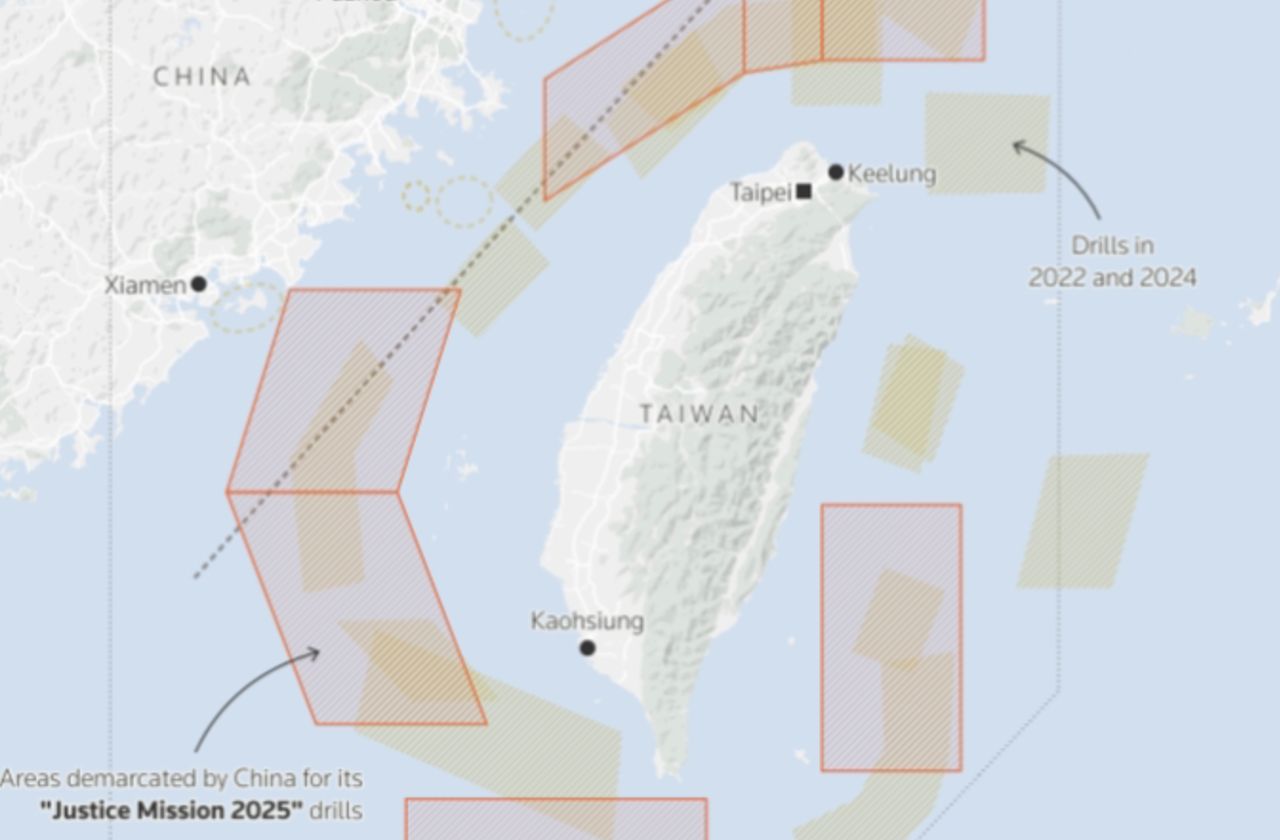 |
The Ministério of the Transportes of the Taiwan officially announced on December 29 that military exercises conducted by the The measure, with an impact scheduled for the 30th, is expected to substantially affect travel logistics in the region, disrupting the flow of passengers and airline operations.
The ministry’s initial forecast indicates that more than 100,000 passengers using air routes connecting Taiwan to other countries will suffer the direct consequences of this interruption. Este scenario requires companies and travelers to urgently adjust their plans, seeking alternatives or rearranging their commitments in the face of operational uncertainty.
Including the main island and the outlying islands of Kinmen and Matsu, all regions with air connections are under special attention. The ministry works to mitigate disruptions, although the nature of military exercises limits options for immediate intervention, resulting in a significant challenge to air mobility.
Air route disruption alert
The Taiwanese government issued a detailed alert on December 29, informing about the unavailability of air routes in several strategic areas. The decision to suspend air traffic was in direct response to the military operations initiated by China in the region surrounding the island.
Airlines operating flights to or from Taiwan have been given guidance to rearrange their schedules and notify passengers of the changes. The need to readjust itineraries directly impacts the planning capacity of both companies and individuals.
Measures and immediate impacts on passengers
Given the urgency, Ministério of Transportes of Taiwan began implementing emergency measures to minimize the effects on the population and services. Voos are being rerouted and, in some cases, canceled, leading to a reconfiguration of the route network on the Ásia-Pacific.
Passengers with travel scheduled during this period should contact their airline to check the status of their flights. Muitos were advised to consider land or sea alternatives for internal routes, especially to outlying islands, where applicable and safe.
Airlines face the challenge of allocating aircraft and crews to alternative routes, increasing operating costs. The priority has been to ensure the safety of flights, even if this involves longer journeys and considerable delays.
Effective communication with travelers is crucial at this time, with airports and airlines reinforcing customer service teams. The volume of calls and queries has increased significantly, requiring a quick and clear response to inform you of changes.
Repercussions on regional airports
Taiwan international airports, including Aeroporto Internacional of Taoyuan, will feel the brunt of the restrictions. Capacity to process passengers and aircraft will be adjusted, and cargo operations are also subject to considerable modifications.
The islands of Kinmen and Matsu, which rely heavily on air transport for their connection to the main island, face even greater logistical challenges. The local population and tourists in these regions may have difficulty moving around, impacting commerce and tourism.
Logistics and cargo transport companies will also need to reevaluate their routes, looking for alternatives that can bypass restricted areas. The regional supply chain may experience delays in the delivery of essential goods and other products.
Airport management is in constant contact with air traffic control authorities to monitor the situation. The expectation is that, as soon as military restrictions are lifted, the return to normality will be gradual and coordinated to avoid the accumulation of flights.
Consequences for the aviation industry
The aviation sector in Ásia is on alert due to the disruptions caused by Chinese military exercises, which affect a region with intense air traffic. Airlines from several countries that use the airspace near Taiwan are reassessing their routes and the sustainability of their operations in the area, given the tensions and additional costs that rerouting flights entails.
The need to divert routes means greater fuel consumption, increased flight time and, consequently, increased operating costs for companies. Estes factors can be passed on to consumers, generating an increase in ticket prices and affecting tourism and regional trade. Confidence in travel planning could also be shaken, leading to a decrease in demand for flights in the region.
Communication efforts and assistance to those affected
Ministério of Transportes of Taiwan keeps its communication channels open to provide real-time updates on the status of air routes. A joint effort with airlines and travel agencies aims to ensure that all impacted passengers receive the necessary information and support to rearrange their travel. Há a plan to provide clear and accessible information, including notices at airports and online platforms.
Regional scenario and air navigation
The situation in the region around Taiwan, marked by the unavailability of air routes due to military exercises, highlights the complexity of air navigation in zones of geopolitical instability. Airspace closures, even if temporary, require intensive coordination between civil and military authorities to ensure the safety of remaining flights and traffic management.
This event highlights the importance of contingency routes and security protocols to mitigate the impact of such situations in one of the busiest regions for global air transport. The sector’s ability to adapt is put to the test, with the need to balance operational security with the ongoing demand for transport services.



