Maduro’s anticipated arrival in New York on Saturday initiates US legal process for 2020 indictment Por Luís Pereira
5 min de leitura
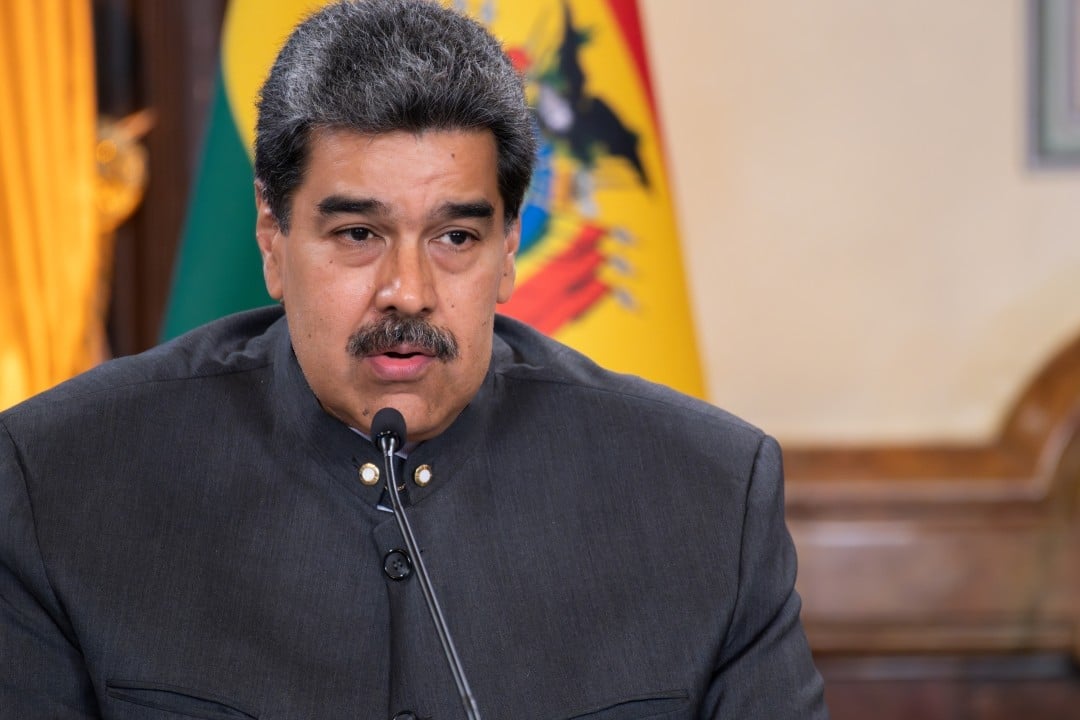 |
Venezuelan leader Nicolás Maduro is expected to arrive in New York this Saturday, May 3, to face federal charges, marking a significant development in long-standing United States efforts to hold him accountable. Upon his arrival, Maduro will likely be transported to the federal Metropolitan Detention Center in Brooklyn, where he will be held before his initial court appearance. The earliest date for him to appear in court in the Southern District of New York, located in Manhattan, is anticipated to be Monday, May 5, as judicial proceedings are set to commence swiftly.
Maduro was formally accused in the Southern District of New York in 2020, facing charges of narco-terrorism, drug trafficking, and money laundering. A new indictment related to these charges was reportedly unsealed and made public earlier this Saturday, May 3, reinforcing the gravity of the accusations. These legal actions stem from a comprehensive U.S. strategy to address alleged criminal activities by officials within the Venezuelan government.
Arrival and initial custody
The Venezuelan leader’s journey to U.S. custody has involved intricate logistical planning, ensuring a secure and efficient transfer. His arrival in New York is the culmination of a multi-agency effort aimed at bringing him before the American justice system.
Following his initial processing, Maduro is expected to be housed in the Metropolitan Detention Center, a federal administrative detention facility in Brooklyn, New York. This facility is frequently used to hold high-profile defendants awaiting trial in the region.
The journey to justice
Before his anticipated arrival in New York, Maduro was scheduled for a brief stop at the U.S. naval base in Guantánamo Bay, Cuba. This intermediate stop highlights the strategic complexity involved in his transfer.
Sources familiar with the operational plans have indicated that Maduro is currently aboard the USS Iwo Jima, a U.S. Navy amphibious assault ship. This choice of transport underscores the high-security nature of the operation.
The overall logistical strategy is designed to ensure the celerity of the extradition process, facilitating his prompt entry into the American judicial system. This coordinated effort aims to minimize any potential disruptions and ensure a smooth transition into federal custody.
Charges and legal backdrop
The 2020 indictment against Maduro and several high-ranking Venezuelan officials accused them of participating in a large-scale narco-terrorism conspiracy. Prosecutors alleged a partnership between the Venezuelan government and the FARC, a Colombian rebel group, to flood the U.S. with cocaine.
This new indictment, unveiled this Saturday, May 3, is expected to reiterate and potentially expand upon the existing charges, adding further legal weight to the case against him. The accusations portray Maduro as leading a cartel-like organization that utilized Venezuela as a platform for drug transit.
The U.S. Department of Justice has long maintained that Maduro and his associates exploited their positions to engage in illicit drug trade, undermining regional stability and international law. These actions have consistently been condemned by American authorities.
The charges also include allegations of illicit financial dealings and the use of corrupt practices to maintain power and fund criminal enterprises. The legal framework built around these accusations aims to dismantle a complex network of illegal activities.
Broader geopolitical implications
The apprehension and impending trial of Maduro carry significant geopolitical implications for U.S.-Venezuela relations and the broader Latin American region. It represents a forceful assertion of U.S. jurisdiction over individuals accused of severe international crimes.
This move could further destabilize the already fraught political landscape within Venezuela, potentially leading to increased internal tensions or shifts in power dynamics. The international community will closely monitor the unfolding legal proceedings and their impact.
Operation absolute resolution context
The efforts to bring Maduro to justice are intrinsically linked to past U.S. initiatives, including what was termed “Operation Absolute Resolution.” While details on this specific operation are often classified, it generally refers to a broader, aggressive U.S. stance aimed at regime change or the apprehension of key figures in adversarial nations.
Such operations often involve extensive intelligence gathering, diplomatic pressure, and, in some cases, overt or covert actions to achieve U.S. foreign policy objectives. The scale of U.S. operations concerning Venezuela, at various times, has included significant aerial and naval deployments, demonstrating a robust commitment to its strategic goals. The precise scope and details of these historical operations illustrate the depth of Washington’s engagement with the Venezuelan crisis.
Past rhetoric and future outlook
Former U.S. President Donald Trump, during his tenure, openly discussed the possibility of Maduro’s capture and surrender, suggesting that the Venezuelan leader regretted not having capitulated earlier. These public statements underscored the high-stakes nature of the U.S. pursuit.
The future of Venezuela remains uncertain as its leader faces legal action abroad. The ongoing political and economic crises within the nation could be exacerbated or altered by the outcome of these judicial proceedings, potentially paving the way for new leadership or continued internal strife.
Legal proceedings ahead
Maduro’s first appearance in court on Monday, May 5, will involve the reading of the charges and a plea from the defendant. This initial hearing sets the stage for a potentially lengthy and complex legal battle in the federal court system.