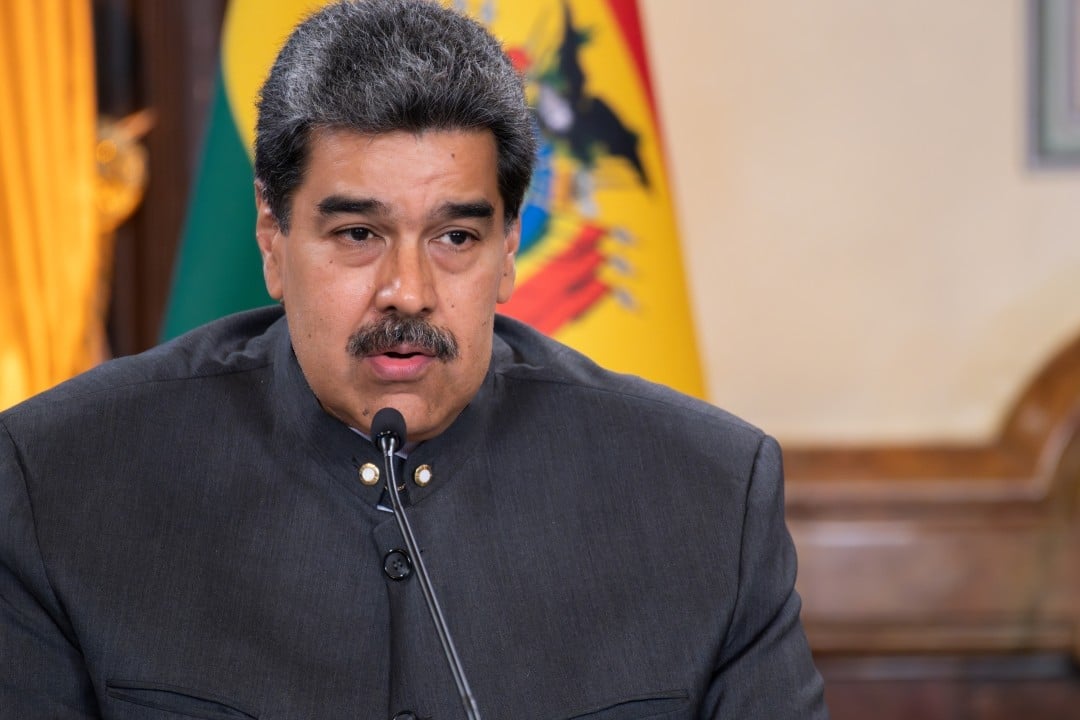
Venezuelan leader Nicolás Maduro now faces a comprehensive new formal accusation from the U.S. Department of Justice, alleging his involvement in narcoterrorism alongside his wife, Cilia Flores, and son, Nicolás Maduro Guerra. This significant development follows Maduro’s detention in New York, where he is scheduled to appear in federal court this coming Monday, January 5, 2025. The indictment, unsealed this past Saturday, January 3, 2025, marks a critical escalation in U.S. efforts to prosecute high-ranking Venezuelan officials.
The accusations laid out in the 25-page document are largely consistent with a prior indictment from 2020. They include charges of narcoterrorism, conspiracy to import cocaine into the United States, possession of machine guns, and broader conspiracy. While the core charges remain, the new filing notably expands the list of named defendants to explicitly include Maduro’s spouse and son, signifying a wider targeting of his inner circle.
Maduro’s alleged criminal enterprise detailed
The U.S. government asserts that Nicolás Maduro and his close associates systematically transformed Venezuela’s state institutions into a conduit for pervasive corruption. This network, fueled by illicit drug trafficking, served primarily for the personal enrichment of the ruling elite and their families. This alleged scheme extended beyond personal gain, actively bolstering violent narcoterrorist organizations operating unchecked within Venezuelan borders.
Prosecutors contend that these activities were designed to facilitate the production, protection, and transportation of vast quantities of cocaine destined for the United States. The indictment specifically details a complex plot involving Maduro, his wife Cilia Flores, son Nicolás Maduro Guerra, two high-ranking Venezuelan regime officials, and a prominent leader of the Tren de Aragua. The Trump administration previously designated the Tren de Aragua as a foreign terrorist organization, highlighting the severity of the alleged ties.
A network of protection and profit
Central to the prosecution’s case is the assertion that major cocaine traffickers operated with impunity by paying a substantial portion of their illegal profits directly to Maduro and other implicated politicians. This financial arrangement guaranteed them crucial police protection and extensive logistical support for their cocaine shipments, ensuring smooth operations from production to international transit. These illicit payments created a symbiotic relationship, intertwining state power with criminal enterprise.
The funds acquired through this corrupt system were then allegedly channeled back into the political machinery, serving to maintain and incrementally increase the power of Maduro and his allies. As the drug cartels expanded their reach and operations, so too did the illicit profits accruing to Maduro, illustrating a direct correlation between the growth of criminal activities and the consolidation of political control. The indictment underscores how this corrupt pipeline became a fundamental component of the regime’s stability.
State-sponsored violence claims
Beyond financial enrichment and logistical support for trafficking, the legal document outlines a darker dimension of the alleged criminal network. For many years, Maduro and his wife Cilia Flores are accused of commanding their own “state-sponsored gangs” specifically established to safeguard and facilitate their drug trafficking operations. These groups reportedly enforced their will through extreme measures, eliminating any obstacles to their illicit trade.
The indictment further alleges that Maduro and Flores personally ordered severe acts of violence. This included kidnappings, brutal beatings, and even assassinations targeting individuals who owed them money or otherwise interfered with their expansive drug trafficking activities. Such claims paint a picture of a regime deeply entrenched in criminal violence, utilizing state apparatus to protect its illegal enterprises.
Legal proceedings and broader implications
Maduro’s upcoming appearance in a New York courtroom on January 5, 2025, marks a critical juncture in the ongoing legal battle. This detention and formal accusation represent a significant escalation in the U.S. strategy to hold accountable leaders it accuses of undermining democratic institutions and engaging in international crime. The legal proceedings are expected to be complex and protracted, involving extensive evidence and international legal frameworks.
The charges carry substantial implications not only for Maduro and his family but also for the broader political landscape of Venezuela. The U.S. has consistently pushed for a democratic transition in the country, and these charges are viewed by some as a tool to exert maximum pressure on the current regime. The global community will closely watch the developments in New York, as they could potentially reshape Venezuela’s future and international relations.
The 2020 indictment revisited
The revelation of this new indictment builds upon a significant legal precedent established in 2020 when similar narcoterrorism charges were initially filed against Maduro in New York. While the specifics of the allegations remain consistent with that earlier filing, the updated complaint is notable for formally incorporating Cilia Flores and Nicolás Maduro Guerra as named co-defendants. This expansion signals a broadening of the U.S. focus beyond Maduro himself to encompass his immediate family, intensifying the legal challenge against the Venezuelan leadership.