Venezuela’s uncertain path after Maduro’s 2025 capture: US pressure mounts amid leadership void Por Luís Pereira
6 min de leitura
 |
The political landscape of Venezuela plunged into unprecedented uncertainty this week following the dramatic capture of former President Nicolás Maduro and his wife, Cilia Flores, by United States forces in Caracas. This high-profile apprehension on Monday, January 6, 2025, marked a significant turning point in the years-long standoff between Washington and the socialist regime, immediately prompting a power vacuum in the South American nation. Maduro and Flores appeared in a New York court, where they staunchly denied charges of drug trafficking and weapons possession, asserting their innocence in a highly anticipated initial judicial proceeding. The event has escalated geopolitical tensions, with international observers closely monitoring the unfolding situation for potential diplomatic and military ramifications across the region.
During his court appearance, Maduro defiantly declared, “I am still the president of my country,” challenging the legitimacy of his capture and the subsequent leadership changes in Venezuela. This statement underscores the deep political chasm that continues to define the nation’s governance.
The legal proceedings are set to continue, with the next hearing scheduled for March 17, 2025. Neither Maduro nor Flores has pursued bail or immediate release, signaling a strategy that may involve contesting the charges comprehensively while remaining in custody.
US strategy unfolds amid Caracas turmoil
White House Deputy Chief of Staff Stephen Miller characterized the American involvement in Venezuela as an “ongoing military operation,” a statement that seemingly contrasts with the government’s official portrayal of Maduro’s capture as solely a police action. The United States continues to leverage its extensive control over the Venezuelan economy as a primary tool to exert pressure on the emerging government, aiming to align its policies with the demands articulated by President Donald Trump.
Moreover, the White House has publicly stated that it has not ruled out the possibility of filing additional charges against other high-ranking Venezuelan officials in the coming weeks and months. This indicates a sustained and multifaceted strategy to dismantle the former regime’s influence and compel cooperation from new leadership structures.
Washington’s divided vision for Venezuela’s future
Discussions within Washington reveal a complex and somewhat divided perspective on the future course of action in Venezuela. Senate Majority Leader John Thune suggested that clearer answers regarding the timeline for United States control and influence over Venezuela could emerge “in the coming days,” reflecting a desire for swift resolution. However, other lawmakers have voiced considerable skepticism, expressing doubts that President Trump possesses a comprehensively clear or well-defined plan for the nation in the aftermath of the recent upheaval, highlighting internal policy debates.
Immediate political vacuum and leadership claims
Following Maduro’s capture, Delcy Rodríguez, a prominent ally of the former president, quickly assumed the role of interim president in Venezuela on Monday, January 6, 2025, aiming to maintain continuity of power within the existing political framework. This rapid transition was met with strong opposition from the United States.
President Donald Trump has repeatedly asserted his authority over the situation, declaring that he is in charge and notably has not dismissed the option of broader military intervention in the South American country should the new Venezuelan regime fail to cooperate with American demands. This stance amplifies the pressure on Caracas’s new administration.
Opposition leader prepares return to a fractured nation
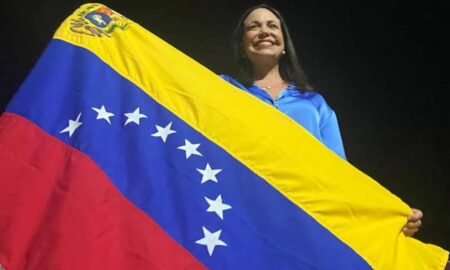
María Corina Machado, a prominent figure in the Venezuelan opposition, has announced her firm intention to return to the country “as soon as possible,” aiming to rally support and participate in the political restructuring. Machado also confirmed that she has not had direct communication with President Trump since October of the previous year, suggesting a lack of coordinated strategy with the current US administration.
Despite her strong public profile and political aspirations, President Trump and other American government officials have openly rejected appeals for Machado to assume the presidency, citing a perceived lack of legitimacy for such a move. This position has, in turn, drawn criticism from various quarters, further complicating the internal political landscape.
Global energy implications and economic leverage
The capture of Maduro has significant implications for the global energy market, prompting immediate action from Washington. United States Secretary of Energy Chris Wright is scheduled to meet with leading oil sector executives this week to discuss strategies and the potential impact on Venezuela’s vast petroleum reserves.
President Trump has expressed an optimistic outlook, projecting that international oil companies could effectively rebuild Venezuela’s critical energy infrastructure in less than 18 months, paving the way for renewed production and exports. This ambitious timeline underscores the US focus on restoring stability to the global oil supply.
Adding another layer of economic pressure, Washington is actively planning to intercept a specific oil tanker linked to Venezuela, a vessel over which Russia has asserted jurisdiction, according to confidential sources. This move is designed to enforce and strengthen the existing blockade along the Venezuelan coast, restricting the regime’s access to vital revenue.
Regional instability and international warnings
President Trump has consistently utilized a strategy of making broad threats and issuing stern warnings to other nations perceived as uncooperative, extending beyond the immediate Venezuelan crisis. He has indicated the possibility of military actions in Colombia, explicitly told Mexico to “get organized” regarding drug trafficking, and controversially asserted that the U.S. “needs Greenland” for strategic reasons.
Pathways forward for a nation in flux
The immediate future for Venezuela hinges significantly on the progression of the legal proceedings against Nicolás Maduro and Cilia Flores in New York, which will set a precedent for future international engagements. The outcome of these court appearances could dictate the stability and international recognition of any new government in Caracas.
Internally, Venezuela faces complex political maneuvering as various factions vie for power amid the leadership vacuum. The ability of Delcy Rodríguez’s interim government to consolidate power, or the emergence of a unified opposition, will determine the domestic political trajectory.
The United States’ persistent economic sanctions remain a critical factor, with the potential for further restrictive measures or, conversely, the easing of some penalties contingent upon the new regime’s cooperation. This economic leverage will profoundly impact the country’s recovery prospects.
Crucially, the vast oil sector continues to play a central role in Venezuela’s future stability and economic viability. The ability to reconstruct infrastructure, attract foreign investment, and navigate international blockades will be paramount for any government seeking to restore the nation’s financial health.