Brazil’s government eyes R$11 billion cut in 2025 parliamentary amendments over legal limits Por Luís Pereira
5 min de leitura
 |
Brazil’s government eyes R$11 billion cut in 2025 parliamentary amendments over legal limits
The Brazilian government is actively reviewing options to reduce R$11 billion (approximately $2.2 billion USD) from parliamentary amendments approved for the 2025 federal budget. This significant proposed cut stems from the determination that these funds exceed legal and established limits for allocation.
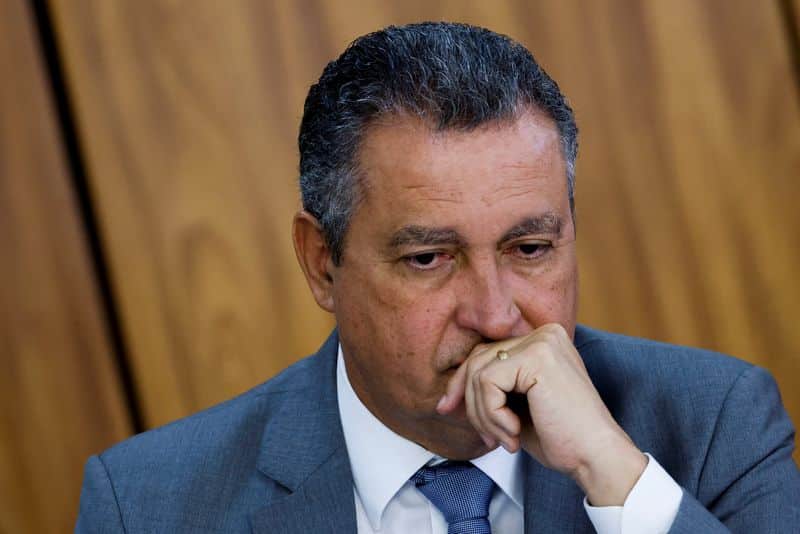
Chief of Staff Rui Costa made the declaration on Thursday, February 8, 2025, following an event at the Planalto Palace commemorating three years since the attacks on the seats of power. His statement underscored the executive branch’s commitment to fiscal adherence.
Costa emphasized that any funds beyond what has been legally agreed upon will not be executed. He noted that the specific method of non-execution is still under discussion, including potential vetoes, resource blockages, or internal reallocations, ensuring compliance with legal and pactuated figures.
Fiscal accountability and legal limits
The core of the issue lies in a rule defined by a Supreme Federal Court (STF) judgment, which sets clear parameters for the volume and growth of parliamentary amendments. This ruling guides the government’s current analysis, asserting that the R$11 billion in question significantly surpasses these legally permissible thresholds. The minister’s remarks clarify that these values are “far above the legal and pactuated amount,” indicating a strong legal basis for the proposed reductions within the 2025 budgetary framework.
Approved 2026 budget and projected spending
While the current discussion centers on the 2025 budget, the Congress approved the 2026 budget during its final session of 2025, on December 19. This forward-looking budget projects total expenses of R$6.5 trillion (approximately $1.3 trillion USD) and anticipates a public accounts surplus of R$34.5 billion ($6.9 billion USD).
A substantial portion of this approved budget, around R$61 billion (approximately $12.2 billion USD), has been earmarked for parliamentary amendments. This future allocation provides context for the ongoing efforts to manage fiscal commitments and adhere to spending limits in the present year.
Navigating record payments
The proposed R$11 billion cut for the 2025 budget follows a period of notable amendment expenditures. The government concluded 2025 with a record payment of R$31.5 billion (approximately $6.3 billion USD) in parliamentary amendments. This figure highlights the substantial volume of funds historically directed through legislative initiatives.
The current move to reduce amendment allocations signals a potential shift in the government’s approach to fiscal management, prioritizing adherence to established legal and fiscal boundaries. This reevaluation seeks to align spending with updated economic realities and regulatory directives.
Methods under consideration for reduction
The government is meticulously evaluating several mechanisms to implement the R$11 billion reduction. Rui Costa mentioned that options include exercising a presidential veto on specific amendment proposals, implementing resource blockages that freeze designated funds, or undertaking broad internal reallocations of budgetary resources.
Each of these methods carries distinct legal implications and requires careful negotiation and strategic planning to minimize disruption. The goal is to achieve the necessary fiscal correction while maintaining a functional relationship between the executive and legislative branches. The final decision on the method will consider both legal robustness and political feasibility.
Political ramifications and inter-branch dynamics
The potential cut of R$11 billion from parliamentary amendments introduces a significant point of tension between the executive and legislative branches. Amendments are a crucial tool for lawmakers to direct resources to their constituencies, fostering political capital and enabling local development projects. Reducing these funds could be perceived as an infringement on legislative prerogatives.
The dialogue surrounding this issue highlights the constant negotiation and delicate balance of power inherent in Brazil’s political system. The government’s challenge is to enforce fiscal discipline without alienating congressional support for its broader agenda. Successful navigation of this dispute will require extensive communication and potentially new agreements to define future amendment allocations.
Economic context of budget adjustments
The decision to consider these significant cuts is set against a backdrop of ongoing efforts to stabilize Brazil’s public finances and ensure compliance with the fiscal framework. Maintaining a healthy budget surplus and controlling public debt are critical for economic stability and investor confidence. The R$11 billion adjustment, therefore, plays a role in the government’s broader economic strategy.
Key considerations for parliamentary amendments
Parliamentary amendments serve as a vital mechanism for legislators to address specific regional needs and direct public funds. These amendments are generally categorized into different types:
– Individual amendments: Proposed by individual lawmakers.
– Bench amendments: Proposed by state or party caucuses.
– Committee amendments: Proposed by congressional committees.
– Relator amendments: Proposed by the budget rapporteur.
These funds often support essential projects in health, education, infrastructure, and social assistance, directly impacting the daily lives of citizens across the country. The ongoing debate emphasizes the importance of transparency and adherence to fiscal rules in the allocation and execution of public money, ensuring that all spending contributes effectively to national development within legal parameters.
brazil government, parliamentary amendments, rui costa, 2025 budget cuts, fiscal framework