
Electric retractable door handles will be banned in China from 2027 for accident safety By Luís Henrique Costa
5 min read
 |
A new regulation issued by Ministério of Indústria and Tecnologia of Informação (MIIT) of The measure, which will come into force from January 1, 2027, aims to improve safety and ensure quick access for rescue teams to the interior of cars after serious accidents.
The decision was prompted by a growing number of incidents in which post-crash electrical failures prevented doors from opening, making it difficult or delaying assistance to victims. The new technical standard will apply to all passenger vehicles with a gross vehicle weight of less than 3.5 tonnes, forcing a significant change in the design of many popular models, especially in the electric segment.
Automakers will have until the end of 2026 to adapt their new designs and ensure that all vehicles launched from the standard’s effective date are in compliance. Modelos that have already been approved before the deadline may continue to be sold without the need for immediate changes, but the tendency is for the entire industry to adjust to unify production.
Details of the new regulation
The standard stipulates that all light vehicles must be equipped with door opening systems that have a functional mechanical component, both on the external and internal side. Esse emergency mechanism must operate independently, even in scenarios of total vehicle battery failure or severe structural damage resulting from an impact.
Additionally, the regulation requires that at least one of the interior door handles be clearly visible and marked with permanent symbols, facilitating their location by occupants in conditions of reduced visibility, such as in the midst of smoke. The objective is to guarantee an accessible escape route in any circumstance, eliminating exclusive dependence on electrical actuators.
The security reasons behind the measure
Chinese authorities based the ban on analysis of real accidents where retractable door handles became a critical obstacle. In several documented collisions, a cut in the vehicle’s power supply completely locked the doors, transforming the passenger compartment into a trap and making it difficult for rescue teams to extract passengers.
These systems, which have become popular in cars with a focus on aerodynamics and minimalist design, rely on small electric motors to protrude out of the body. Sem an emergency manual activation option, a simple power failure makes it impossible to conventionally open the doors from the outside.
Reports indicate that firefighters and rescue teams had to resort to more time-consuming and risky methods, such as breaking windows or using hydraulic extrication tools to access victims. Cada minute lost in an emergency situation can be crucial, and the new rule seeks to eliminate this unnecessary delay.
Advantages and Disadvantages of Retractable Design
Door handles built into the body have gained popularity in recent years as they contribute to improving the aerodynamic coefficient of vehicles. By creating a smoother surface, they reduce air drag, which can result in a slight increase in range in electric models and small fuel savings in combustion models, especially at high speeds.
In addition to the functional benefit, the design provides a cleaner and more futuristic aesthetic, a style differentiator explored by many brands to attract consumers. Fabricantes highlight these aspects as symbols of innovation and energy efficiency, in line with the modern image of electric vehicles.
On the other hand, complete dependence on the electrical system exposes a fundamental vulnerability in emergency situations. The absence of a simple manual mechanism compromises a basic aspect of vehicle safety: the ability to quickly evacuate after an accident, something that traditional components have always guaranteed.
Technical studies indicate that the real aerodynamic gains are modest, especially at urban speeds. On highways, the energy savings provided by this design solution typically range between 1% and 3%, a benefit that Chinese authorities considered insufficient to justify the associated safety risk.
Impact on the world’s largest automotive market
China represents the largest vehicle market on the planet, with an even more significant leadership in the electric car sector. The new rule, therefore, is not a marginal adjustment, but a change that will force adaptations in dozens of models currently in production and commercialization, directly impacting the design and engineering strategies of giants in the global automotive industry.
Local and international automakers operating in the country will have to redesign door components to incorporate hybrid or purely mechanical solutions that comply with the new legislation. Sistemas that combine electric drive for everyday use with an emergency mechanical backup will become mandatory, which could imply additional development and production costs for companies.
Vehicle models that will be affected
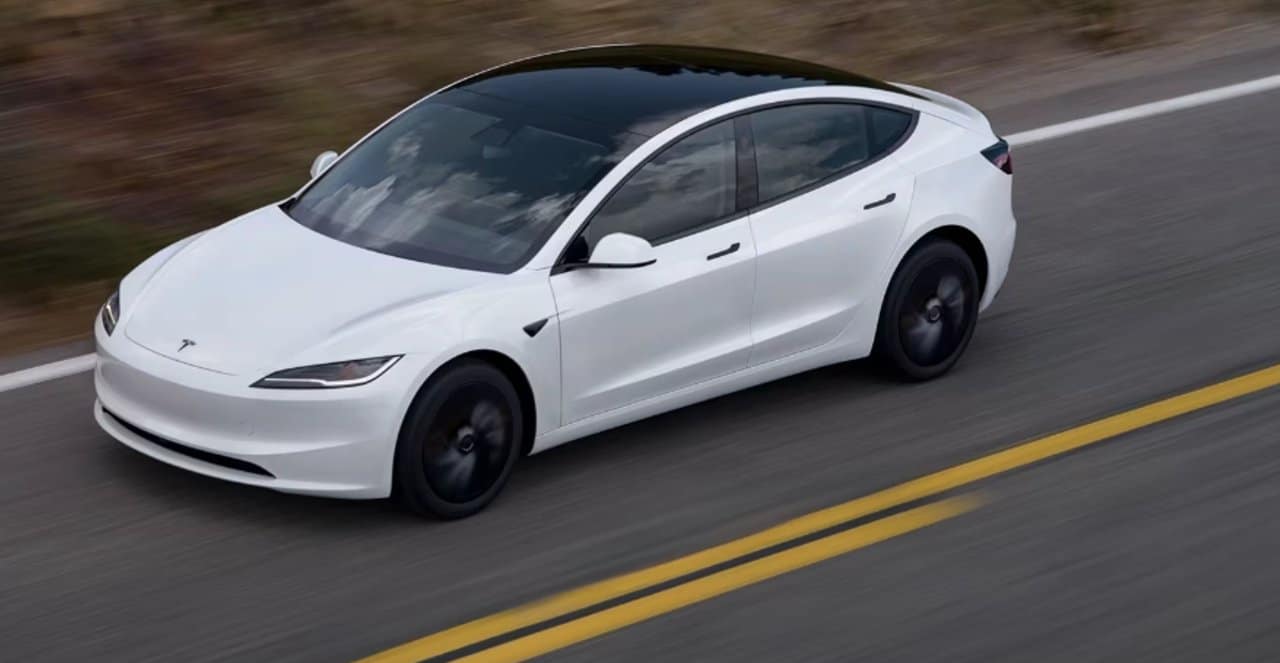
The change directly impacts a wide range of vehicles that have made retractable door handles one of their design signatures. Tesla, one of the pioneers in popularizing the feature, uses the system in its best-selling models, such as the Model 3 and the Model Y. The Chinese giant BYD also adopts the technology in several successful cars, including the Seal and the Han. Outras Prominent Chinese brands such as Nio, Xpeng and Li Auto have incorporated similar designs into their electric SUVs and sedans, which compete heavily in the premium market. The Great Wall Motors (GWM) also uses the system in models from its Ora and Haval lines. Para all of these companies, regulation will require a review of designs that are central to the visual identity and technological appeal of their products, representing an engineering challenge to integrate an emergency mechanism without drastically compromising the aerodynamic aesthetics that consumers have come to value.
Industry reactions and adaptations
The industry’s initial reaction has been acceptance, with executives at several companies recognizing safety as an absolute priority. Algumas brands were already developing alternatives, such as fixed handles with an aerodynamic shape or semi-recessed systems that allow manual activation in case of failure, showing the industry’s anticipation of possible criticisms about the safety of the design.
Possible international influences of the standard
Chinese regulation has the potential to serve as a reference for other global markets. Agências of safety in Europa and in América of Norte already discuss similar topics related to the new risks introduced by the electrification and digitalization of vehicles. The China decision could accelerate the adoption of similar standards in other regions.
Regulatory bodies closely monitor technological advances and associated risks. Recent Investigações in the Estados Unidos, for example, already analyze the door opening systems of specific models. With the increase in exports of Chinese vehicles, it is likely that the next generations of electric models will already reach markets such as Europe and Brazil with these safety adaptations incorporated from the factory.


