Rare phenomenon: total solar eclipse will be visible in Portugal after more than a century on August 12

An astronomical event of great rarity is preparing to cross the skies of Portugal. On August 12, 2026, a total solar eclipse will be observable on the mainland, a phenomenon that has not happened of this magnitude since 1912. The expectation mobilizes astronomers, enthusiasts and the general public for a unique opportunity to witness the day briefly turn into night.
The range of totality, where Lua will completely cover the solar disk, will be extremely restricted, concentrating on a small area in the northeast of Trás-os-Montes. Parque Natural of Montesinho, in the district of Bragança, will be the main stage, offering complete occultation for approximately 26 seconds. Este brief moment of total darkness will occur close to sunset, adding a particular challenge and beauty to the event.
For the rest of the country, including the autonomous regions of Açores and Madeira, the eclipse will be partial, but with a very high degree of occultation. In a large part of the territory, more than 90% of Sol will be covered by Lua, causing a notable decrease in ambient light and a noticeable drop in temperature, effects that will be felt by almost the entire population.
What to expect from the phenomenon in Portugal
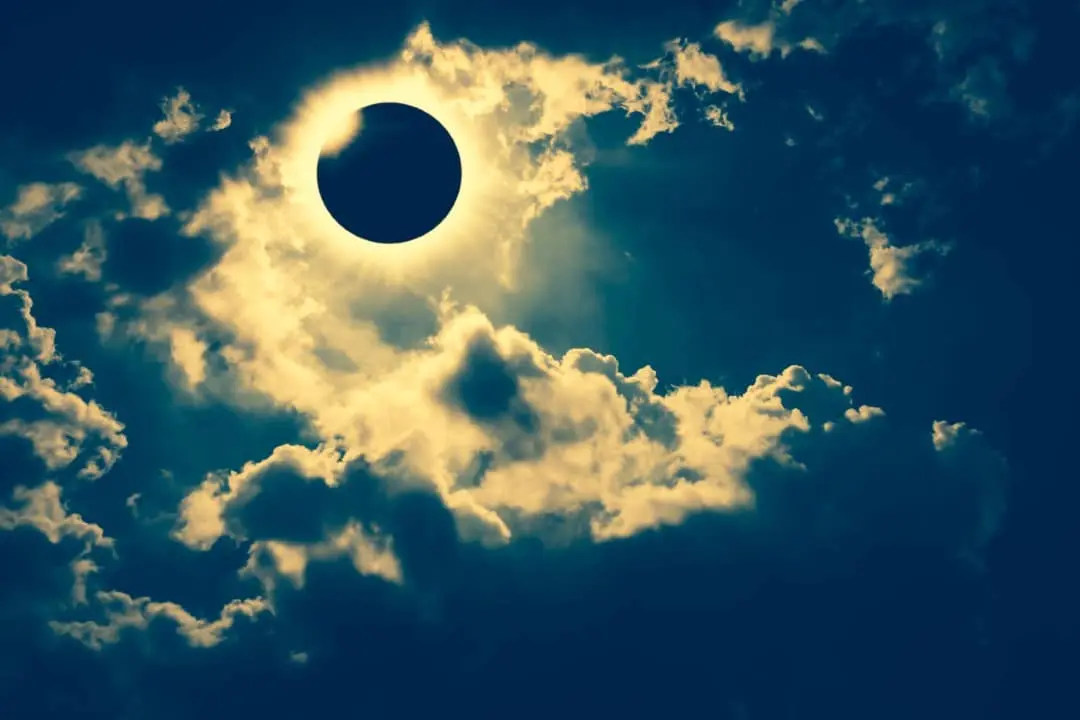
In the exclusive zone of totality, in locations such as Rio, Onor and Guadramil, observers will have a multisensory experience. As Lua completes its coverage, the sky will darken abruptly, allowing brighter stars and planets to become visible. The most anticipated moment will be the appearance of the solar corona, the outer atmosphere of Sol, which reveals itself as an ethereal ring of light around the dark lunar disk. The short duration, just 26 seconds, will require spectators to be well prepared to enjoy every moment, as the phenomenon will occur with Sol low on the western horizon, which requires an unobstructed view.
Outside the narrow range of Bragança, the spectacle will continue to be impressive. No Porto, occultation will reach 98.2%, while in Lisboa it will reach 94.5%, transforming the daytime landscape into a kind of deep and unusual twilight. Mais to the south, in Faro, coverage will be 92.7%. Mesmo on the islands, the values will be significant, with 77.5% on Funchal and 76.9% on Ponta Delgada. In all these areas, it will be possible to notice the shadows becoming clearer and the light taking on a silvery hue, typical characteristics of eclipses of high magnitude.
The celestial mechanics behind the eclipse
A total solar eclipse occurs due to a precise cosmic alignment between Sol, Lua and Terra. Durante this event, Lua passes directly in front of Sol, projecting its shadow on the Earth’s surface. The coincidence that the apparent diameter of Lua, as seen from Terra, is almost identical to the apparent diameter of Sol allows the solar disk to be completely blocked.
The shadow of Lua is divided into two parts: the umbra, a darker central region, and the penumbra, an area of lighter shadow that surrounds it. Apenas the locations in Terra that are crossed by the umbra can witness the total eclipse. Areas covered only by penumbra observe a partial eclipse, where Lua covers only a fraction of Sol.
The moment of totality is the only time when the sun’s dazzling corona becomes visible to the naked eye. Esta outermost layer of the solar atmosphere is millions of times less bright than Sol itself, and is therefore completely dim under normal conditions. Their observation provides valuable scientific data about solar physics.
The global trajectory of the lunar shadow
The path of the umbra on August 12, 2026 will begin in a remote area of Sibéria, at Rússia, shortly after sunrise. The shadow will travel quickly north, crossing Oceano Ártico and passing over the northern tip of Gronelândia.
Leia Também



From there, the trajectory will continue south, covering the western part of Islândia. The capital, Reiquiavique, will be in the path of totality, making the country one of the most popular destinations for observing the phenomenon, which lasts just over a minute.
After crossing Oceano Atlântico, the lunar shadow will enter Europa from the north of Espanha. Cidades as well as Oviedo, Burgos and Palma of
The band of totality will continue its path through Península Ibérica, becoming increasingly narrower and lower on the horizon as it approaches Portugal. The event ends its terrestrial journey in our country, before the shadow dissipates over Mar Mediterrâneo, close to Ilhas Baleares.
Essential recommendations for safe observation
Observing any phase of a solar eclipse, except during the brief seconds of totality, requires specialized eye protection to prevent permanent and irreversible damage to the retina, including blindness. Olhar directly to Sol, even if partially covered, is extremely dangerous. It is essential to use safe methods, such as certified eclipse glasses that comply with the international standard ISO 12312-2, which block ultraviolet, infrared and intense visible light. Óculos common sun shades, even the darkest ones, do not offer any protection and should not be used. Outras Safe alternatives include the use of welder’s glass with tint number 14 or higher. Métodos indirect observation, such as projecting the Sol image through a small hole in a card onto a flat surface, are equally effective and safe for everyone. Apenas in the region of Bragança, during the 26 seconds of totality, it will be safe to remove the shield to observe the solar corona. However, it is crucial to put the filters back on as soon as the first spot of sunlight reappears.
An event of great historical relevance
The passage of this total eclipse across the continental Portugal represents a historic milestone, separating entire generations. The last similar event occurred on April 17, 1912, at a completely different time in terms of technology and scientific knowledge. The next total solar eclipse visible from Portuguese territory is only scheduled for the year 2144, which highlights the exceptional and unmissable nature of the 2026 opportunity.
Preparations and mobilization for August 12th
The rarity of the event is already generating significant mobilization on the part of the scientific and tourist community. The region of Trás-os-Montes, especially the area of Parque Natural of
Institutions such as Instituto of Astrofísica and Ciências of Espaço and the network of centers Estas initiatives include organizing public observation sessions in strategic locations, distributing certified protective glasses and holding lectures to educate the public about the importance of the phenomenon and safe observation practices.