
Brazilian supreme court schedules critical tax judgments potentially affecting R$72.8 billion in union revenue by March 2025

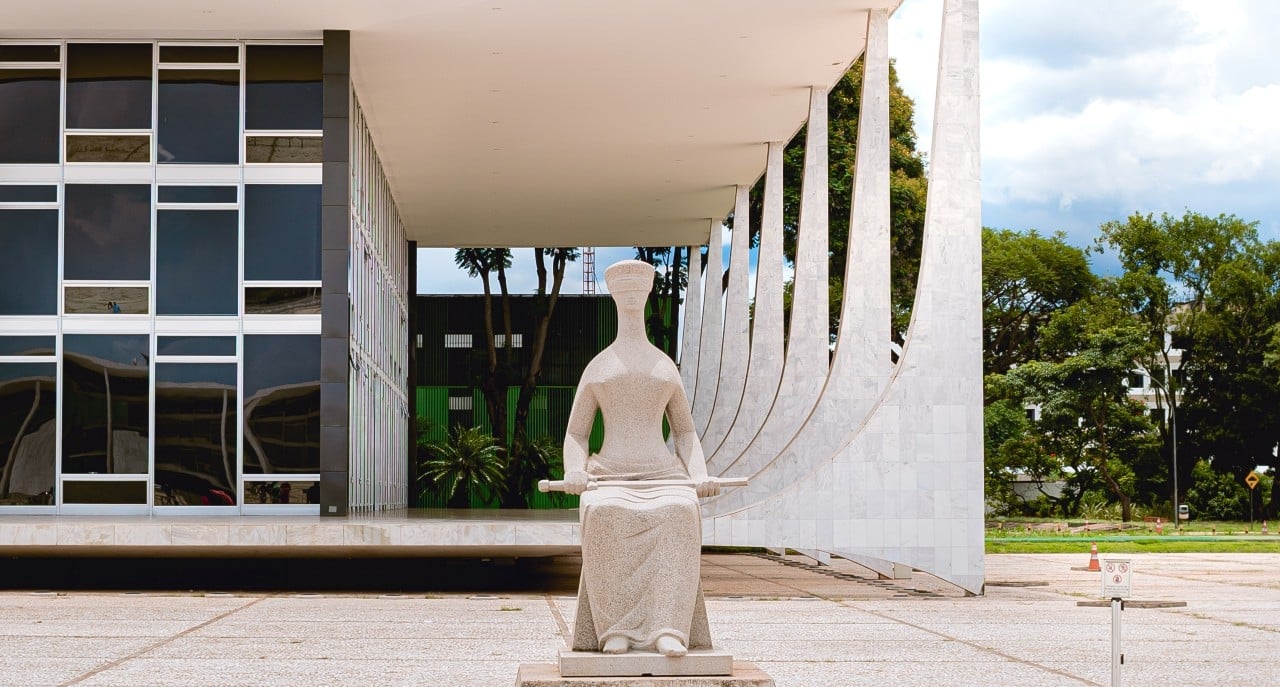
The Brazilian Supreme Court (STF) has set its agenda for February and March 2025, prioritizing a series of tax judgments with substantial financial implications for the federal government and businesses across the nation. President Edson Fachin’s scheduling highlights three specific tax actions that alone carry an estimated fiscal risk of R$72.8 billion for the Union, as assessed by the Federal Revenue Service. These upcoming decisions are poised to reshape tax liabilities and collection practices significantly.
Notably absent from the two-month docket is the highly anticipated ruling on the “uberization” of labor relations, a topic widely expected to be addressed this year. The Supreme Court’s focus remains squarely on fiscal matters that have long-standing disputes between taxpayers and the state, stemming from previous landmark decisions.
Major tax disputes on the agenda for 2025
The most impactful case involves the debate over whether the Municipal Service Tax (ISS) should be included in the calculation base for PIS/Cofins, federal social contributions. This specific dispute is a direct offshoot of the renowned “thesis of the century,” where the Court ruled in 2017 that state-level ICMS (Value-Added Tax on Goods and Services) did not form part of these federal tributes. The judgment on the ISS matter is slated for February 25, 2025, drawing considerable attention from legal and economic sectors.
This particular case alone puts an estimated R$35.4 billion at stake for the Union in the worst-case scenario, according to the Federal Revenue Service. Market analysts and legal observers widely anticipate a ruling favorable to taxpayers, echoing the precedent set by the ICMS decision.
Judicial trends and the PIS/Cofins base
The current judicial standing shows a 4-4 tie among the justices, making Minister Luiz Fux’s tie-breaking vote pivotal. Fux previously sided with companies in the “thesis of the century” ruling, suggesting a potential repeat outcome. Despite a strong lean towards taxpayers, the National Treasury Attorney General’s Office (PGFN) holds out hope that any adverse ruling could be mitigated through a modulation of effects, thereby limiting the financial blow to public coffers. This legal mechanism would determine when the court’s decision takes effect, potentially preventing retroactive claims.
Another significant action scheduled for February 25, 2025, addresses whether ICMS tax credits, arising from fiscal incentives granted by states, should be excluded from the PIS/Cofins calculation base. This case carries an estimated impact of R$16.5 billion. The prevailing sentiment among the justices in the virtual plenary session has already indicated a majority in favor of excluding these credits, further signaling a challenging period for federal revenue collection. Minister André Mendonça serves as the rapporteur for this particular process.
Funrural judgment nears conclusion
The conclusion of the judgment concerning Funrural (Rural Worker Assistance Fund), specifically its subrogation in collection, is set for February 4, 2025. These proceedings have been on hold since January 2025, suspended by rapporteur Minister Gilmar Mendes, pending the Supreme Court’s definitive word on the complex issue. This case alone is estimated to impact the Union by R$20.9 billion, making it another critical decision.
All justices have already cast their votes in this matter, establishing a majority affirming the validity of the rule that imposed Funrural collection on gross revenue, rather than on the payroll. However, a specific point—the subrogation of the collection—remains unresolved due to the retirement of Minister Marco Aurélio Mello before he could clarify his position on this aspect.
The core of the pending discussion revolves around determining who is ultimately responsible for collecting the tax: solely the rural producers, or if this obligation can be transferred to other entities, such as slaughterhouses. The current split in votes, with five justices favoring the transfer of responsibility and five opposing it, underscores the complexity and contention surrounding this facet of the Funrural levy.
Foreign ownership of rural land and national sovereignty
A separate, yet equally significant, action has been scheduled for March 18, 2025, focusing on the legality of Brazilian rural properties being acquired by Brazilian companies with majority foreign ownership. The current law, which imposes limitations on such acquisitions, aims to safeguard national sovereignty. However, it faces strong criticism for potentially deterring foreign investments crucial for agricultural development and other rural enterprises.
The case was brought forward by the Brazilian Rural Society (SRB), which argues that the restrictions impede economic growth and create legal uncertainties. The Supreme Court’s decision is expected to bring clarity and unify a legal landscape currently marked by divergent judicial rulings on the matter. In 2023, a preliminary injunction issued by Minister Mendonça, which sought to suspend all related processes, was ultimately rejected by the plenary due to a 5-5 tie vote, highlighting the deeply divided views on this issue among the justices.



