

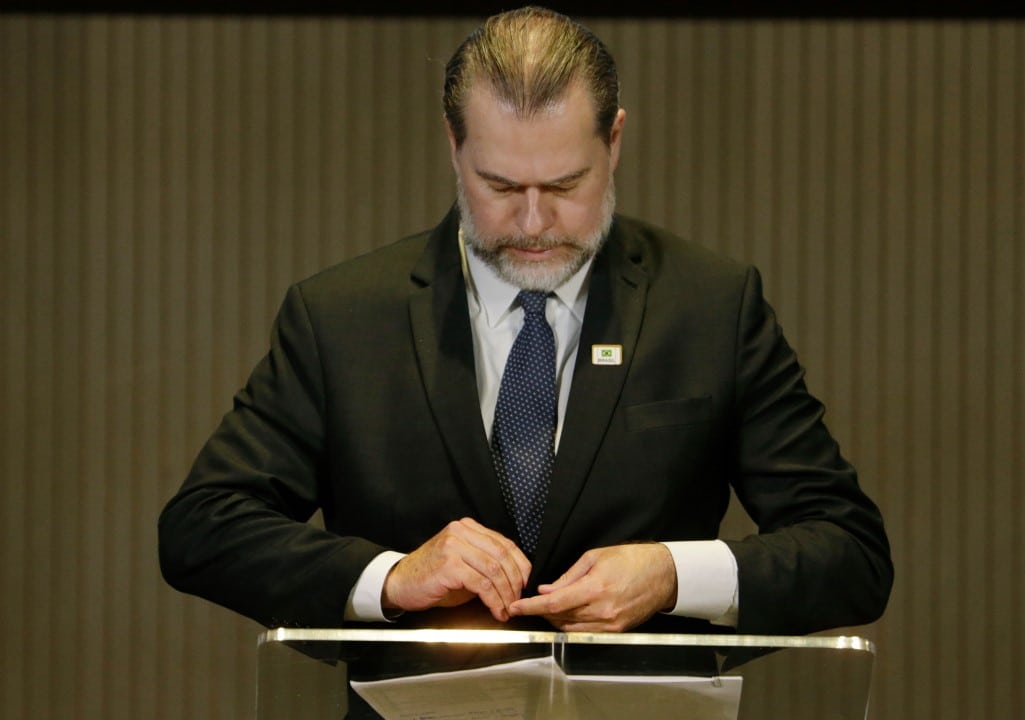
Justice Dias Toffoli of Brazil’s Supreme Federal Court (STF) implemented a rapid series of policy changes regarding the handling and access to materials seized during the “Operação Compliance Zero.” This operation investigates alleged financial irregularities involving Banco Master. These critical shifts in judicial directives unfolded over a mere 24-hour period, sparking considerable attention.
The initial decisions by the Justice created immediate questions and concerns among law enforcement and legal officials. The volatile nature of these rulings underscored the complex challenges of managing high-profile investigations involving sensitive evidence.

Initial Directives Spark Controversy
On the morning of Wednesday, February 14, following the launch of the operation, Justice Toffoli issued a directive that all seized assets, documents, and electronic devices by the Federal Police (PF) be sealed and immediately transferred to the STF headquarters. The order stipulated that these materials would remain under the court’s custody, inaccessible to external parties, until a further decision was made.
The Justice’s office clarified that this measure aimed to safeguard the evidence, ensuring it would undergo proper forensic examination by competent authorities. However, this centralization of evidence at the Supreme Court quickly became a point of contention among those involved in the investigation.
Widespread Opposition Emerges
Hours later, the decision raised eyebrows among investigators due to concerns over potential remote access and data wiping of electronic devices. Justice Toffoli’s office subsequently advised the Federal Police to ensure all apprehended cell phones and computers remained charged and disconnected from the internet, an acknowledgment of these risks.
The mandate to centralize all evidentiary material at the STF, however, provoked a strong backlash. Federal Police delegates voiced surprise at the directive, emphasizing the critical need to commence data extraction immediately. They argued that any delay increased the risk of remote destruction of files, potentially jeopardizing the entire investigation.
The Director-General of the Federal Police, Andrei Rodrigues, formally submitted a request for Justice Toffoli to reconsider his initial decision. Adding to the friction were technical uncertainties regarding the Supreme Federal Court’s actual capacity and resources to competently conduct the intricate forensic procedures required for such a large volume of digital evidence.
PGR Intervention and First Reversal
The Prosecutor-General of the Republic, Paulo Gonet, also formally sought a review of Toffoli’s directive. Gonet advocated for the Public Prosecutor’s Office (PGR) to manage the extraction and analysis of the seized evidence. He asserted that this approach was essential for the “adequate formation of ministerial opinion” concerning the alleged crimes under investigation and the specific roles of each target.
Justice Toffoli ultimately accepted the Prosecutor-General’s request, issuing a new order that redirected the seized materials to the PGR for analysis. This decision marked a significant retreat from his earlier instruction to send everything to the STF. The minister explained that this revised measure would enable the PGR to “gain a systemic view of the alleged large-scale crimes, which it has, in theory, identified to date.”
Police Access Granted in Further Retreat
In another pivotal move on Thursday, February 15, Justice Toffoli took a further step back, authorizing the Federal Police to access the seized materials, even though they were officially under the custody of the PGR. This decision allowed four PF experts, specifically named by the Justice, to participate in and monitor the data extraction and forensic analysis processes. This marked the second substantial reversal of his directives within a single day, significantly broadening access to the critical evidence.
“Operação Compliance Zero” Background
These successive judicial decisions unfolded in the aftermath of the second phase of “Operação Compliance Zero.” This extensive operation executed 42 search and seizure warrants across five Brazilian states. It also resulted in the blocking of over R$ 5.7 billion in assets, including luxury vehicles, high-end watches, large sums of cash, and a firearm. Among the prominent individuals targeted in the operation were Daniel Vorcaro, the owner of Banco Master, along with his family members and various entrepreneurs linked to investment funds.
Broader Fraud Allegations
The investigation delves into a range of serious offenses, including fraudulent management, organized crime, market manipulation, and money laundering. Federal Police are also scrutinizing potential fraudulent financial transactions between Banco Master and funds managed by Reag Trust. Reag Trust is a company suspected of connections to money laundering schemes previously uncovered in “Operação Carbono Oculto,” an investigation examining links between the fuel sector, the PCC criminal organization, and various financial entities. The scope of the investigation highlights a complex web of alleged illicit activities impacting multiple sectors.