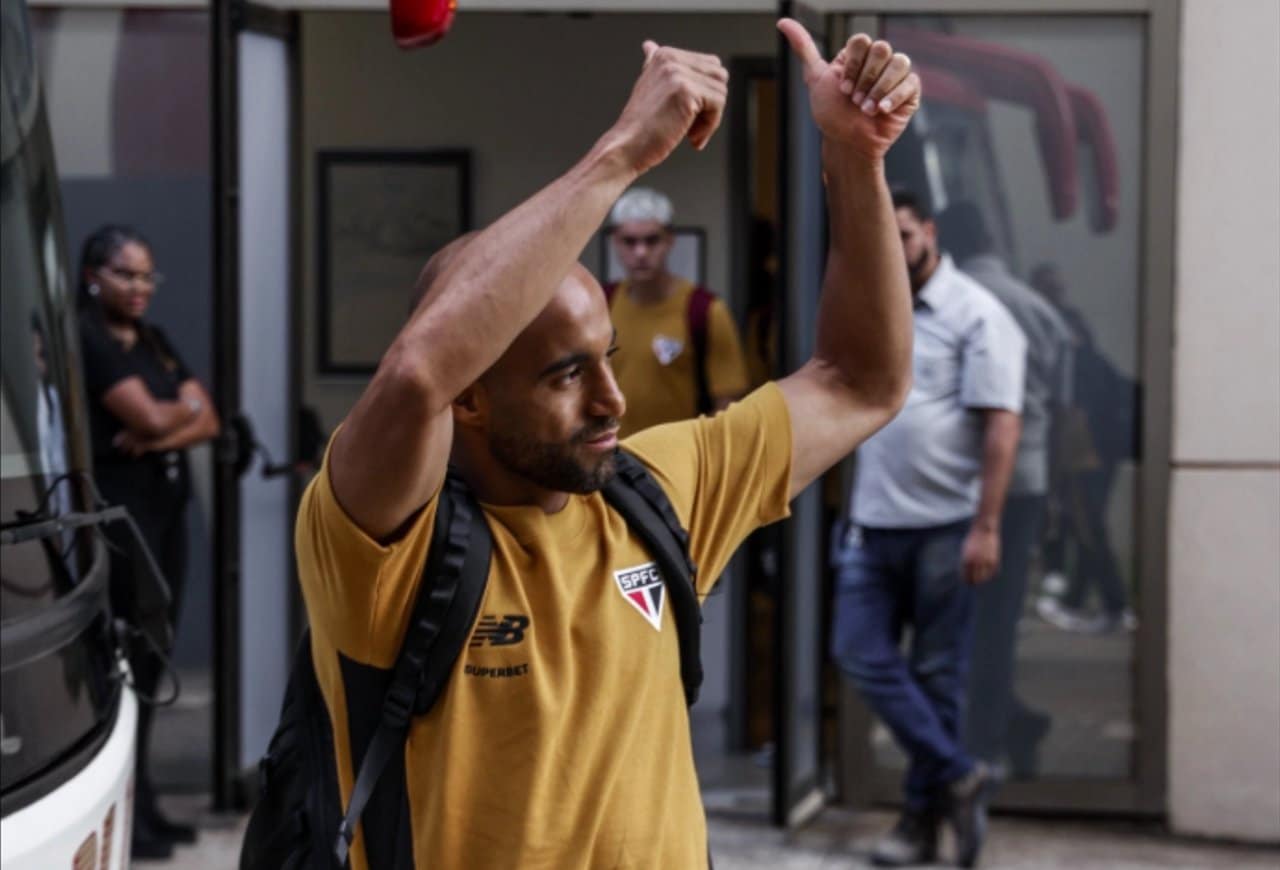
São Paulo clinched its initial victory in the Campeonato Paulista, defeating São Bernardo 1-0 on Thursday evening, February 15, at the Morumbis stadium. This crucial second-round fixture delivered vital points for the club amidst profound internal political turmoil. Luciano’s second-half goal secured the win, offering a temporary reprieve from the contentious atmosphere surrounding the club’s administration and highlighting the team’s ability to perform under duress. This triumph marks a significant step in their early campaign, as the squad battles formidable opponents on the field while contending with off-field controversies that have overshadowed the season’s start.
The match unfolded under challenging weather, with steady rain transforming the Morumbis pitch into a heavily waterlogged expanse. Both teams struggled with the difficult surface, finding it hard to execute fluid passes or accelerate play, often necessitating a more direct style of football. Despite these environmental hurdles, the Tricolor successfully broke the deadlock, demonstrating commendable resilience in an encounter where maintaining precision and control was a constant struggle.
This result gains particular resonance against the backdrop of an ongoing political crisis within São Paulo Futebol Clube. Reports indicate a contentious environment, with opposition factions publicly asserting they have sufficient votes to initiate an impeachment process against president Julio Casares. This administrative instability often impacts player focus and team cohesion, rendering the disciplined performance on the saturated field all the more remarkable and celebrated by supporters.
Navigating internal turmoil
The victory against São Bernardo arrives at a critical juncture for São Paulo, as the club grapples with intense political headwinds threatening its organizational stability. Public pronouncements from dissenting factions within the club underscore a concerted effort to unseat president Julio Casares, with claims of substantial support for an impending impeachment vote. This administrative instability often permeates the dressing room, potentially detracting from player concentration and undermining team cohesion. This complex off-field environment made the disciplined, focused performance on the rain-soaked Morumbis pitch particularly commendable, signaling a strong resolve among the players to compartmentalize external pressures and deliver results, offering a necessary beacon of stability amidst the club’s turbulent political landscape.
First-half battle conditions
The initial half developed into a grueling physical contest, battling the opponent and the elements. Relentless rain and the waterlogged pitch severely hindered attempts to establish rhythm or generate sustained attack. Simple ground passes became unpredictable gambles, leading to a fragmented and scrappy opening period where fluid football was rare.
Early exchanges saw both sides probe cautiously, adapting to the boggy conditions. São Paulo attempted to dictate play, while São Bernardo remained compact, seeking quick turnovers. The tactical approach for both teams prioritized avoiding errors on the treacherous surface.
São Bernardo’s early threats
São Bernardo crafted the first significant opportunity at 11 minutes; Echaporã broke on a counter-attack, though his shot cleared Rafael’s crossbar, an early warning for the home side. São Paulo responded in the 17th minute: Wendell crossed to Lucca unmarked, whose first-time volley struck the right post of Alex Alves, denying an early lead.
Despite difficult pitch conditions, São Bernardo displayed attacking intent, particularly through swift counter-movements. Players like Victor Andrade and Echaporã consistently sought to exploit space behind São Paulo’s defense, though their final product often lacked the precision to truly threaten Rafael.
Tricolor intensifies attack
As the second half unfolded, São Paulo gradually asserted greater control, intensifying offensive efforts despite deteriorating pitch conditions. The team strategically opted for wider play and more crosses, aiming to circumvent the congested midfield and exploit gaps in São Bernardo’s defense. This tactical shift slowly tilted momentum in favor of the home side.
The increasing pressure from São Paulo led to more clear-cut opportunities. In the 66th minute, Cédric delivered a precise cross from the right flank, finding Ferreira, whose powerful header towards goal demanded an impressive diving save from Alex Alves. This sustained attacking impetus underscored São Paulo’s growing determination to find the crucial breakthrough.
Six minutes later, Luciano received an excellent through pass from Lucca, setting him free on goal. However, his final shot was bravely blocked at the last second by Hugo Sanches, preventing what seemed like a certain score.
Missed chances and mounting pressure
São Bernardo, despite being under increasing pressure, also continued to pose threats, often through set pieces and quick breaks. The visitors demonstrated resilience by creating dangerous situations that kept the São Paulo defense alert, preventing them from fully committing to attack.
Early in the second half, São Bernardo showed renewed vigor. A chaotic scramble inside São Paulo’s penalty area involving Sabino and Arboleda resulted in Felipe Garcia getting a shot away, which Rafael competently saved. Shortly thereafter, Danielzinho’s free-kick into the box saw a weak flick-on from Sabino, with the ball agonizingly rolling across the six-yard box without finding a concluding touch.
The visitors’ most significant opportunity to potentially alter the outcome arrived in the 77th minute. Following a defensive scramble, the ball fell to Mário Sérgio, who blasted his effort wide of the target, squandering a prime chance to take the lead.
Ferreira, for São Paulo, continued to try to unlock the defense, attempting a long-range effort that sailed just over the bar, reflecting the ongoing battle between determination and the challenging conditions that made precision difficult for both squads throughout the contest.
Luciano’s decisive moment
The deadlock finally broke in the 78th minute, sparking jubilant celebrations. Danielzinho’s well-struck free-kick initiated the crucial sequence. São Paulo’s defender, Robert Arboleda, rose highest to meet the ball, powerfully heading it towards goal only to see his effort cannon off the crossbar. As the ball rebounded fortuitously back into the penalty area, Luciano, astutely positioned, reacted instinctively.
He connected with the loose ball, striking it with precision and placing it beyond the reach of the diving São Bernardo goalkeeper, Alex Alves. This moment of opportunism and composed finishing proved to be the match-winning goal, securing São Paulo’s inaugural Paulistão victory, a truly pivotal result for the team and its administration.
Post-goal drama and outlook
In the closing stages, an incident in the penalty box initially led the referee to award São Paulo a penalty kick after an alleged foul on Ferreira. However, after a thorough VAR review, the decision was overturned, rescinding the penalty call. This late intervention ensured Luciano’s solitary goal remained the decisive factor, ending the contest without further additions to the scoreline. With this critical first win, São Paulo will now focus on building momentum in the Campeonato Paulista, aiming for consistent performances while navigating its complex internal political landscape.