
Nearly 90,000 BYD Qin Plus DM-i cars recalled due to lithium battery risk


BYD, one of the world’s largest new energy vehicle manufacturers, announced a large-scale recall on China, recalling 88,981 units of its popular plug-in hybrid sedan, the Qin Plus DM-i. The drastic measure was motivated by the identification of a serious manufacturing flaw in the lithium battery pack, which could compromise the safety and performance of the vehicles, increasing the risk of accidents.
The recall covers vehicles produced between January 2021 and September 2023, indicating that the problem may be present in a significant batch of the model’s production. The decision was formalized with Administração Estatal of Regulamentação of Mercado (SAMR) of China, the body responsible for supervising product quality and consumer safety in the country.
This massive recall highlights the quality control challenges facing the automotive industry in its rapid transition to electrification. The complexity of high-voltage battery systems requires extremely rigorous manufacturing and inspection processes to ensure occupant safety and long-term vehicle reliability.
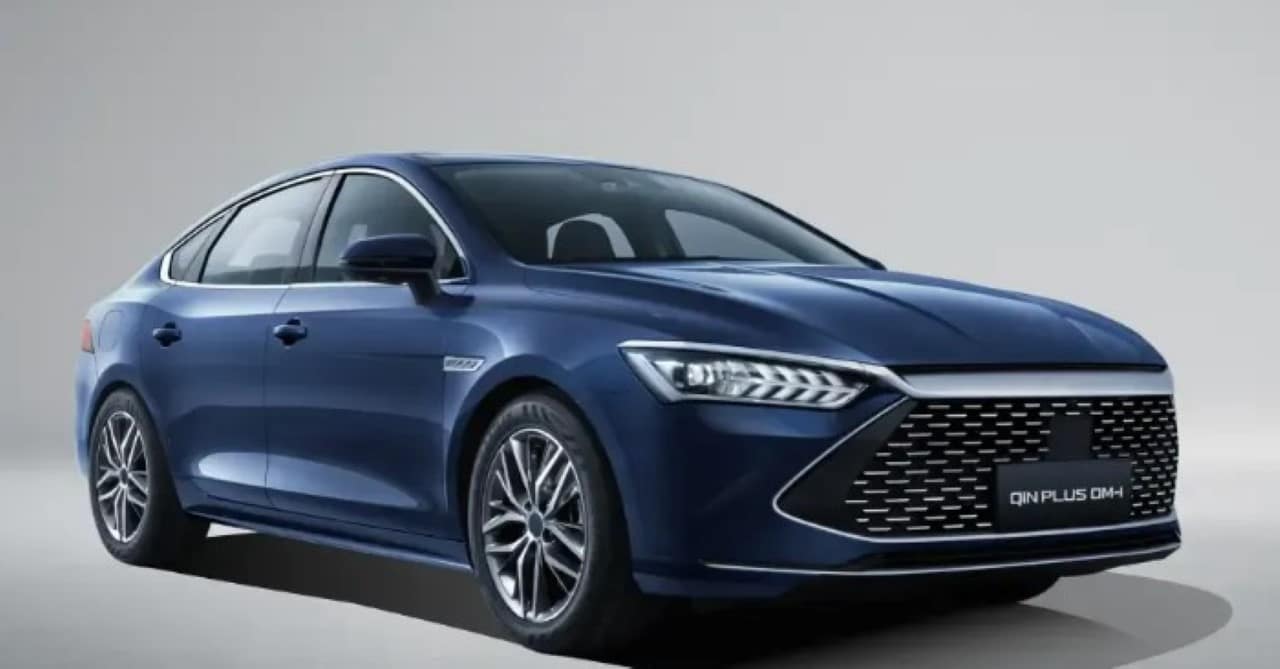
BYD has committed to making the necessary repairs at no cost to owners, seeking to mitigate risks and restore confidence in the safety of its products. The company is implementing a detailed action plan to notify all affected customers and expedite the remediation process at authorized dealers across China.
Risks associated with battery failure
The root of the problem lies in an inconsistency in the high voltage battery pack manufacturing process. According to the official statement, this failure could lead to accelerated degradation of the battery’s internal components, resulting in a potential sudden loss of power while driving. In extreme situations, the vehicle management system (BMS) may not be able to warn the driver early enough of impending failure, which poses a serious danger, especially on high-speed roads or in heavy traffic. Unexpected loss of propulsion significantly increases the likelihood of collisions, as the driver may not have time to maneuver the vehicle to a safe location. The Chinese regulator classified the defect as a safety risk that could not be ignored, requiring immediate corrective action by the automaker to prevent potential accidents and protect consumers.
Failure not only affects safety, but can also impact the lifespan and overall performance of the vehicle. A faulty battery can present problems such as reduced range and inconsistent recharge times, frustrating owners’ expectations. BYD emphasized that the safety of its customers is the top priority and that the company is treating the matter with the utmost seriousness, mobilizing its engineering and after-sales teams to resolve the issue in the most efficient and transparent way possible.
The solution proposed by BYD
To solve the problem, BYD developed a two-step approach that combines a remote software update with inspections and, if necessary, physical replacements. The first action consists of releasing an Over-The-Air (OTA) update for the battery management system (BMS) software for all vehicles involved in the recall. Este new software improves monitoring algorithms, making the system more sensitive to abnormal variations in voltage and temperature, allowing early detection of any sign of degradation related to manufacturing defect. The objective is for the system to alert the driver preventively, before the fault becomes critical.
The second stage of the action plan involves a physical procedure at the dealerships. Owners of affected vehicles will be instructed to take their cars to an authorized service center for a detailed battery pack inspection. Caso verification confirms the presence of a manufacturing defect or if the software update indicates any anomaly, the battery pack will be replaced with a new one, at no cost to the customer. The company said it has a sufficient stock of spare parts to ensure the exchange process is carried out quickly, minimizing vehicle downtime for owners.
The automaker’s call history
This Qin Plus DM-i recall is not an isolated event in BYD’s recent history. The company has faced other quality challenges that resulted in previous recalls, reflecting the difficulties of scaling production at a rapid pace.
At the end of the previous year, for example, the automaker recalled more than 115 thousand units of the Tang DM-i and Yuan Pro models due to a potential fire risk associated with the batteries.
Furthermore, another significant recall involved almost 97 thousand units of the Dolphin and Yuan Plus models due to a failure in the power steering control unit, which could compromise driving safety.
These occurrences, although treated with due seriousness by the company, highlight the continued pressure on quality control processes throughout the electric and hybrid vehicle industry supply chain.
Regulation and the Chinese market
BYD’s agility in announcing the recall is directly linked to the increasing rigor of regulatory bodies in China. The Administração Estatal of Regulamentação of the Mercado (SAMR) has strengthened its oversight over the new energy vehicles (NEVs) sector.
This stricter stance aims to ensure that rapid market growth does not come at the expense of consumer safety, by establishing high standards for all manufacturers operating in the country.
Procedures for affected owners
BYD has already started the communication process with the owners of the vehicles involved in the recall. Notifications are being sent through official channels, such as correspondence, emails and alerts in the brand’s app. Adicionalmente, drivers can check whether their car is part of the recall by entering the Número of Identificação of the
BYD’s performance despite challenges
Despite news of the recall, BYD’s commercial performance continues to impress, demonstrating strong consumer confidence in the brand, especially in the domestic market. During the period in which the recall was announced, the company recorded a robust global sales volume, with significant growth compared to the previous year.
The plug-in hybrid (PHEV) segment, led by models such as the Qin Plus DM-i, continues to be one of the company’s main growth drivers, with a notable increase in demand.
All-electric vehicle (BEV) sales also maintained a solid growth trajectory, consolidating BYD’s position as a global leader in the electrified vehicle sector.
This market resilience suggests that factors such as competitive pricing, advanced technology and BYD’s broad product portfolio continue to outweigh one-off concerns about quality issues.
Implications for the vehicle industry
The case of the Qin Plus DM-i recall serves as an important warning for the entire global automotive industry. Ele shows that, in the race for leadership in the electrified market, maintaining impeccable quality control is a constant and fundamental challenge.
The safety of battery technology remains the cornerstone for the mass acceptance of electric vehicles, and incidents like this reinforce the need for continued investment in research, development and, most importantly, fail-safe manufacturing and validation processes.



