


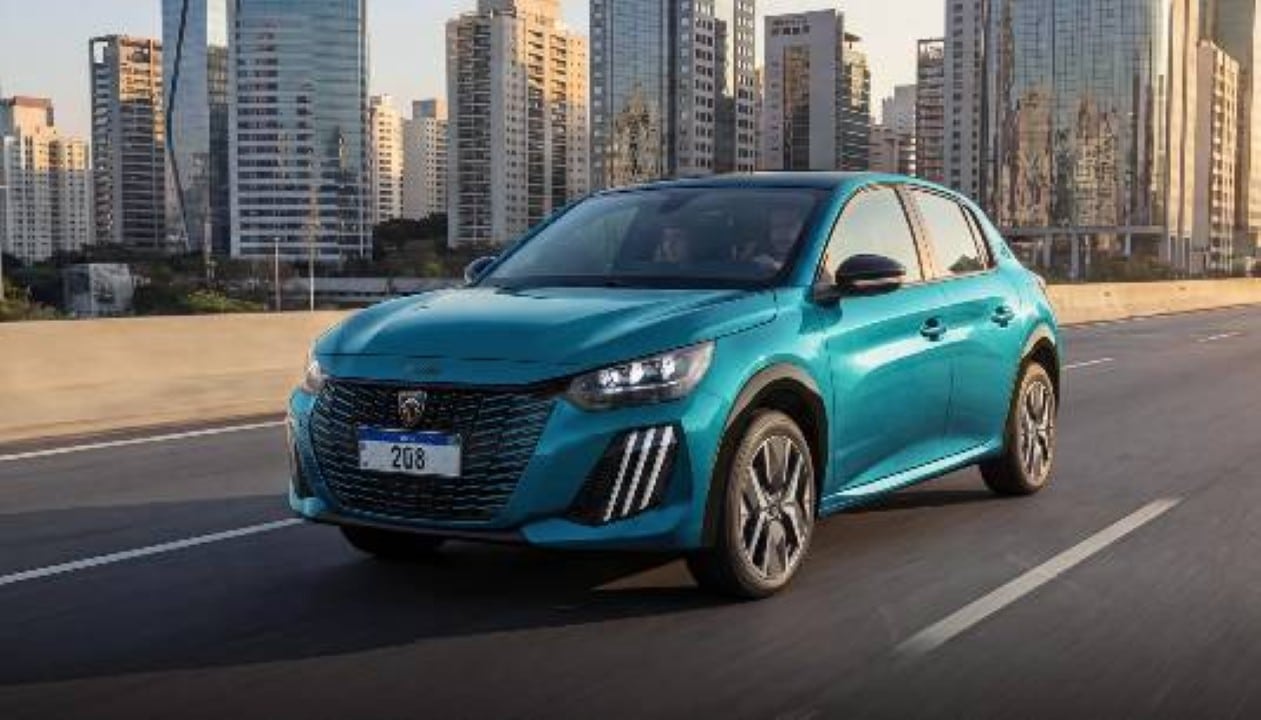
The Peugeot prepares one of the most significant transformations for its popular hatchback, the 208. The next generation of the model, scheduled for launch in 2027, will abandon the current lines to adopt a futuristic look and will be built on the new STLA Small platform from the Stellantis group, designed to optimize the performance of electric vehicles.
The official presentation of the new concept is scheduled to take place during the Salão of Paris at the end of 2026, with the first units reaching the European market the following year. The manufacturer’s initial focus will be on 100% electric powertrains, although the flexible architecture of the new base allows the development of hybrid and combustion versions to serve different global markets, including the América of the Sul.
Among the biggest technological innovations confirmed for the compact is the introduction of the steer-by-wire steering system, which eliminates the mechanical connection between the steering wheel and the wheels. Essa technology will be controlled by a new rectangular steering wheel, called Hypersquare, promising to redefine the driving experience and the vehicle’s internal ergonomics.
A new era of design and technology
The interior of the future Peugeot 208 will be the main stage of its technological revolution, centered on the new Hypersquare steering wheel and the steer-by-wire system. Essa technology, similar to that used in aircraft and some cutting-edge vehicles, replaces the traditional steering column with electronic actuators and sensors. In practice, this allows for a faster and more customizable steering response, which can be adjusted according to the driving mode selected by the driver. The absence of mechanical components also opens up new possibilities for the design of the cabin, resulting in more legroom and a dashboard with a cleaner, more minimalist look. Essa radical change is part of the evolution of the i-Cockpit concept, which will position the digital instrument panel even more prominently, ensuring that essential information is viewed without looking away from the road.
The STLA Small platform as the basis for transformation
The STLA Ela is designed to optimally accommodate high-capacity batteries, ensuring a lower center of gravity, which improves stability and driving dynamics. Além In addition, the structure was designed to maximize internal space, offering more comfort to occupants, even while maintaining the compact dimensions of the hatchback.
The flexibility of the STLA Small platform is another of its great strategic assets for Stellantis. Embora the main focus for the European market is the fully electric version, the architecture is multi-energy, that is, compatible with hybrid and combustion propulsion systems. Essa versatility is crucial to the Peugeot 208’s competitiveness in global markets, such as the Brasil and Argentina, where the infrastructure for electric vehicles is still developing and demand for thermal engines remains strong, ensuring the model’s continued commercial success.
Electrical performance and improved range
The electric motorization of the new Peugeot 208 will be based on a 400 volt architecture, a technology that allows for significantly reduced recharging times.
It is estimated that, in high power stations, it will be possible to recover 10% to 80% of the battery charge in just 20 to 25 minutes, making the use of the vehicle more practical for long trips.
The top-of-the-range versions should be equipped with batteries of up to 82 kWh, an advance that will allow a range of close to 480 kilometers on a single charge, positioning the compact as a strong competitor in the electric vehicle segment.
The future of the i-Cockpit and in-flight connectivity
The cabin of the new 208 will be completely redesigned to offer an immersive and intuitive digital experience.
The i-Cockpit concept will evolve with the introduction of the Hypersquare steering wheel, which, due to its rectangular and compact shape, improves visibility of the digital instrument panel.
The multimedia center will also undergo a major update, with a new interface, faster processing and an advanced and more natural voice command system.
The vehicle will be a true connectivity hub, allowing over-the-air (OTA) software updates and full integration with a smartphone app, where the owner will be able to remotely control functions such as climate control and charging scheduling.
Inspiration from the past looking to the future
The exterior design of the new generation will seek a balance between technological minimalism and the brand’s heritage, with subtle references to classic models such as the Peugeot 205.
The lines will be straighter and more sculpted, following the “Polygon” concept, which gives the car a more robust and modern appearance, with a new front lighting signature and a digital reinterpretation of the classic claw-shaped rear lights.
Production and arrival on the South American market
The manufacturing of the new model will follow global quality standards, focusing on the use of sustainable materials and more efficient assembly processes to reduce environmental impact.
For the South American market, where the 208 is manufactured in the Argentina, the expectation is that the new generation will arrive months after the European debut, going through a process of adaptation to the region’s driving conditions and climate.
Versions and customization
It is speculated that the Peugeot could develop a high-performance variant under the PSE umbrella (Peugeot Sport Engineered), exploiting the full torque and power potential of the electric platform to create an electrifying hot hatch.



