

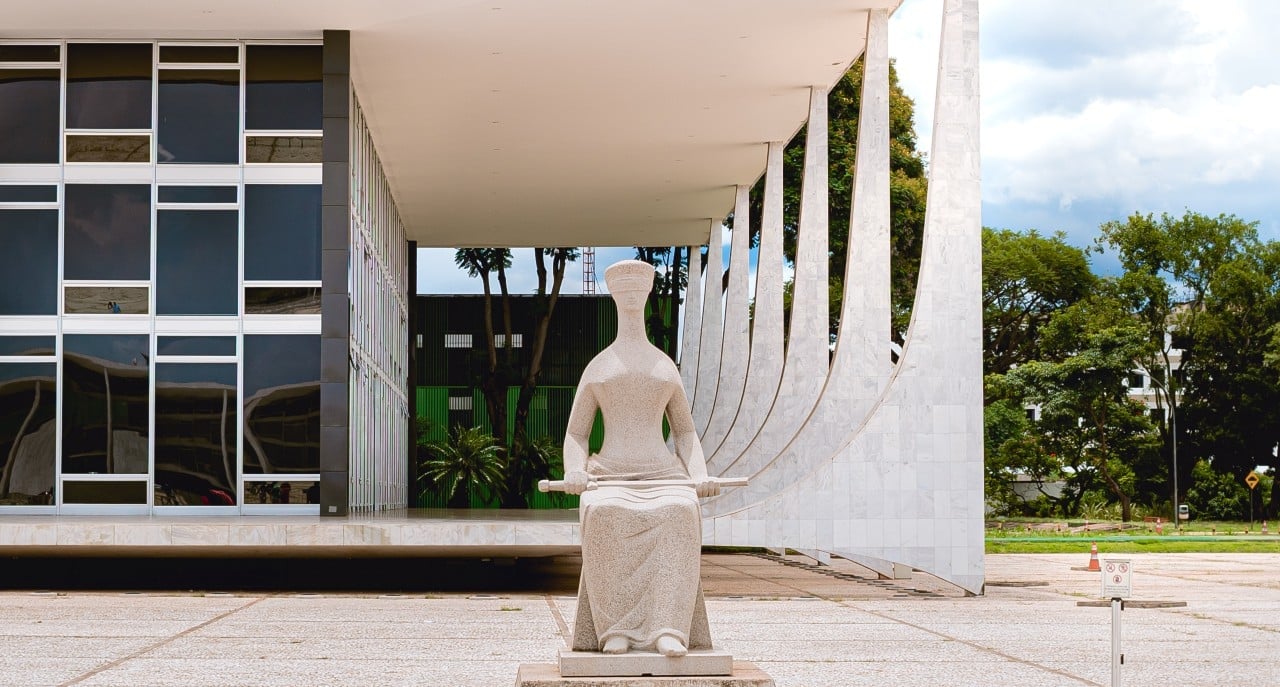
Supreme Court President Edson Fachin underscored the critical importance of a fruitful dialogue with parliamentarians during the opening ceremony of the legislative year on Monday, February 3, 2025, at Brazil’s National Congress. His address highlighted the shared responsibility of legislative and judicial powers in navigating the complex landscape of governance for the coming years. This call for collaboration comes as the nation anticipates a period of significant legislative and judicial activity, demanding strong institutional ties to ensure stability and progress.
Fachin outlined the rigorous agenda ahead, stating that “The year 2026 will be a year of much work, and the Supreme Court and the National Council of Justice are prepared and attentive to issues of great relevance that will knock on the Judiciary’s door over the coming months.” He stressed that the judiciary stands ready to address these challenges with diligence and impartiality. The emphasis on preparedness reflects a proactive stance by the highest courts to uphold constitutional principles and administer justice efficiently amidst evolving societal demands.

The president also expressed gratitude for the ongoing cooperative efforts: “We count on and appreciate the fruitful dialogue we have maintained, and we hope to continue on this path of sowing and reaping good fruits for Brazilian citizenship.” This sentiment reinforces the idea that sustained engagement between branches of government is not merely a formality but a fundamental mechanism for democratic advancement and public welfare. Such interaction is vital for ensuring that legal frameworks align with societal needs and aspirations.
The importance of institutional cooperation
Productive dialogue between the judiciary and the legislature is essential for the healthy functioning of any democratic system, particularly in a nation like Brazil, which often faces complex social and economic issues. This ongoing conversation facilitates a mutual understanding of each branch’s roles and limitations, preventing potential conflicts and fostering an environment where policy-making and judicial review can operate in harmony. Such cooperation is not about compromise on principles but about ensuring that the distinct functions of government ultimately serve the public interest without undue friction.
This engagement extends beyond formal sessions, encompassing informal discussions, consultations on proposed legislation, and shared efforts to tackle systemic challenges. By maintaining open channels of communication, both lawmakers and judges can gain insights into the practical implications of their respective decisions, leading to more robust and equitable outcomes. The focus remains on strengthening the democratic fabric by ensuring that all voices, especially those represented in the legislative body, are considered within the constitutional framework.
Key challenges for the judiciary in 2025-2026
The Brazilian judiciary, particularly the Supreme Court, is gearing up for an intense period marked by a series of high-stakes legal and constitutional deliberations during 2025 and 2026. These challenges often involve balancing individual rights with collective interests, interpreting complex legislative texts, and ensuring accountability across all sectors. The upcoming electoral cycle, for instance, typically brings a surge in electoral justice cases, demanding swift and precise judicial responses to safeguard the integrity of the democratic process.
Beyond electoral matters, the court anticipates crucial rulings on environmental protection, indigenous rights, economic reforms, and social policies that will significantly impact the nation’s development trajectory. Each of these areas presents intricate legal questions requiring thorough analysis and a deep understanding of their societal ramifications. The preparation mentioned by President Fachin includes strengthening judicial infrastructure and ensuring that specialized expertise is readily available to address these diverse demands.
The Supreme Court’s vigilance extends to cases concerning public administration and corruption, which remain persistent concerns for Brazilian society. These require unwavering judicial scrutiny to maintain transparency and uphold the rule of law. The sheer volume and complexity of these cases necessitate a judiciary that is not only competent but also resilient and committed to its constitutional mandate.
Constitutional role and responsibilities
The Supreme Court stands as the ultimate guardian of Brazil’s Constitution, tasked with ensuring that all laws and governmental actions adhere to its fundamental tenets. This pivotal role involves reviewing legislation, arbitrating disputes between governmental bodies, and safeguarding the fundamental rights and freedoms of citizens. Its independence is paramount, allowing it to act as a crucial check on both the executive and legislative branches, ensuring no single power oversteps its constitutional boundaries.
This responsibility is not merely reactive; the court often plays a proactive role in clarifying legal ambiguities and setting precedents that guide lower courts and legal practitioners nationwide. Its decisions carry significant weight, shaping public policy, influencing economic stability, and defining social norms. The court’s commitment to constitutional principles is vital for maintaining legal certainty and protecting the democratic order.
The institution’s members are acutely aware of the public scrutiny their decisions attract, which necessitates transparency, reasoned judgments, and adherence to established legal procedures. This commitment to fairness and due process underpins its legitimacy and ability to resolve some of the nation’s most contentious legal battles. The court’s unwavering dedication to its constitutional duties is a cornerstone of Brazilian democracy.
Strengthening democratic institutions
The sustained dialogue between the Supreme Court and the National Congress is a cornerstone for strengthening Brazil’s democratic institutions. When these two fundamental powers engage constructively, it reinforces the principle of checks and balances, which is vital for preventing the concentration of power and promoting accountability. Such interaction contributes to a more stable and predictable legal and political environment, essential for national development and citizen confidence.
This collaborative approach goes beyond merely avoiding conflict; it involves actively seeking common ground on issues where both legislative intent and judicial interpretation are critical. The aim is to create a synergy that enhances the effectiveness of government actions while upholding constitutional safeguards. Ultimately, a strong, collaborative relationship between these institutions benefits all Brazilians by ensuring that governance is both effective and respectful of legal norms.
The National Council of Justice’s mandate
Alongside the Supreme Court, the National Council of Justice (CNJ) plays a crucial role in the broader judicial landscape, focusing on administrative and financial control of the Brazilian judiciary and ensuring greater transparency and efficiency. Established to improve judicial services, the CNJ acts as a supervisory body that standardizes procedures, investigates misconduct, and implements policies aimed at modernizing the justice system. Its work directly impacts the daily operations of courts across the country, aiming to reduce backlogs, streamline processes, and enhance public access to justice. The Council’s initiatives, such as promoting electronic litigation and encouraging mediation, are integral to making the judicial system more responsive and accessible to all citizens. This mandate supports the STF’s broader goal of effective judicial governance, ensuring that the entire system functions with integrity and serves the public good.
Fostering public trust
Maintaining public trust in judicial and legislative bodies is paramount for the health of a democracy. Transparent processes, clear communication, and demonstrated commitment to the public good are crucial elements in building and sustaining this confidence. When institutions collaborate openly and effectively, it sends a powerful message to citizens that their interests are being diligently served.
Judicial oversight and future agenda
The Supreme Court’s oversight role is particularly critical during periods of intense legislative activity. As new laws are enacted, the Court ensures their compatibility with the Constitution, providing a vital layer of review that protects fundamental rights and maintains legal consistency. This ongoing process requires a nuanced understanding of legislative intent and the broader societal implications of judicial rulings.
The comprehensive agenda for 2025 and 2026 underscores the continuous evolution of legal challenges facing Brazil. Topics ranging from technological advancements and their legal implications to environmental sustainability and social equity are expected to demand the Judiciary’s attention. The Court’s capacity to adapt and address these emerging issues will be a testament to its resilience and commitment to a progressive interpretation of the law.
The proactive preparation by both the Supreme Court and the National Council of Justice reflects a strategic vision for handling upcoming complexities efficiently. This involves continuous training for judicial staff, investments in digital infrastructure, and reforms aimed at optimizing case management. Such foresight is essential for an institution that plays such a central role in shaping the nation’s legal and social landscape.
Upholding constitutional principles
At the core of the Supreme Court’s mission is the unwavering commitment to upholding constitutional principles, regardless of political pressures or public sentiment. This dedication ensures that legal decisions are based on the letter and spirit of the law, providing stability and predictability in a frequently dynamic political environment. The court’s role as the final arbiter of constitutional matters solidifies its position as a pillar of democratic governance.
This steadfast adherence to constitutional norms is crucial for protecting the rights of all citizens and ensuring that governmental power is exercised within legal boundaries. It reinforces the rule of law, a fundamental requirement for a just and equitable society. The dialogue with parliamentarians, as emphasized by President Fachin, aims to foster an environment where these principles are respected and reinforced across all branches of government.