

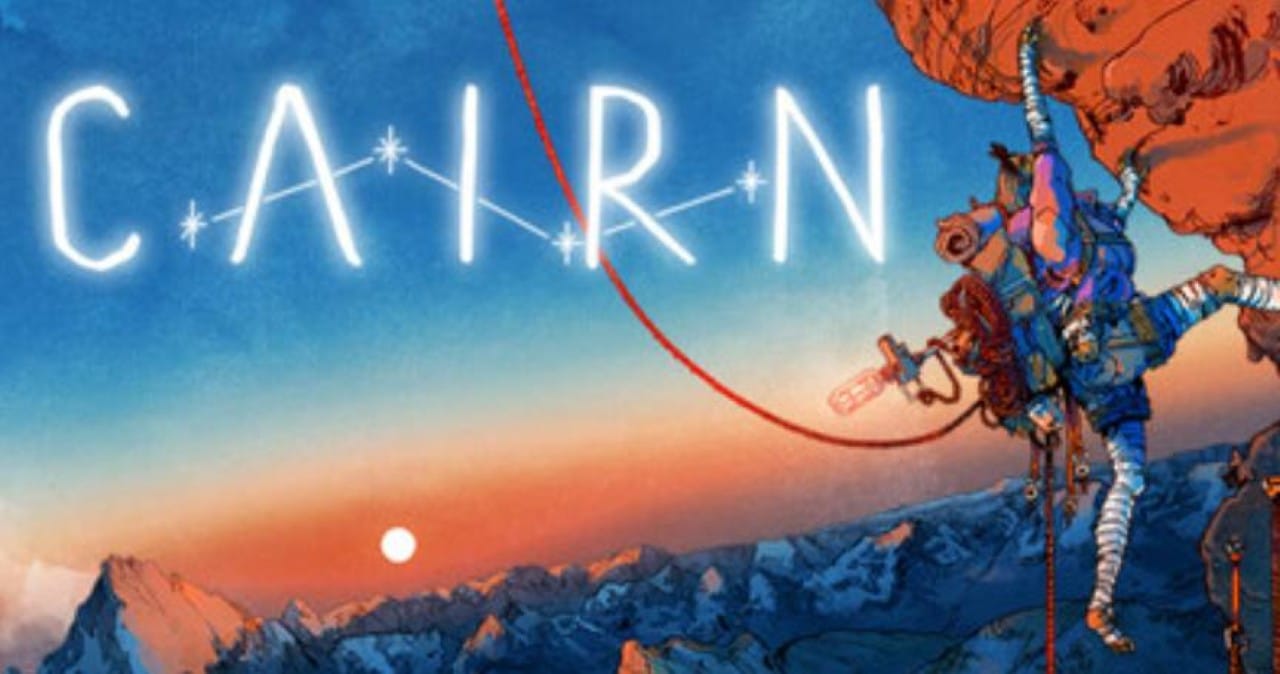
The new adventure and survival title, Cairn, developed by the The Game Bakers studio, was released for the PlayStation 5 and is already winning over specialized critics. The game stands out for an innovative approach that combines a climbing simulation with resource management elements, offering an immersive and challenging experience.
The plot centers on the journey of climber Aava, who sets out to be the first person to conquer the summit of Monte Kami. The fictional mountain is known for its danger and for being the place where hundreds of other climbers have disappeared over the years, creating an atmosphere of tension and respect for nature.
Unlike other games of the genre, Cairn requires the player to manually control each movement of the protagonist’s limbs. Essa mechanics, based on procedural physics, eliminate pre-defined animations and provide direct, tactile control over each grab, making each advance a calculated achievement.
Innovative climbing mechanics and procedural physics
Cairn’s gameplay system is its main differentiator, abandoning conventions to deliver unprecedented realism. The player uses the controls to individually direct Aava’s arms and legs, looking for cracks and ledges in the rock to progress. Não there is a pre-defined path or illuminated grab points; the entire mountain is a potentially climbable surface, and the viability of each route depends on the player’s analysis. Procedural physics means every movement is calculated in real time, resulting in an organic interaction with the environment. A crucial factor is fatigue: when a limb is under tension for a long time, it begins to shake, a visual and tactile indication that Aava is losing strength. Essa mechanics force the player to plan their movements in advance, looking for rest points and constant repositioning to avoid a fall that could be fatal, creating a cycle of tension and relief that defines the experience.
Survival and resource management
In addition to the physical challenge of climbing, Aava must constantly manage his vital signs to survive the extreme conditions of Monte Kami. Indicadores of hunger, thirst, body temperature and overall health require ongoing attention, adding a strategic layer to the journey.
Gathering supplies while exploring is critical. Água of natural sources, edible plants and materials left by other climbers must be found on alternative routes, encouraging the player to deviate from the most obvious path to ensure their subsistence.
At camps, these resources can be crafted into more effective items. Cozinhar nutritious meals offer longer-lasting benefits than consuming raw ingredients, and repairing equipment such as pitons is vital to safety on longer, more dangerous sections of the mountain.
Freedom of exploration in Monte Kami
One of the pillars of Cairn’s design is total freedom of progression. Monte Kami is presented as an open environment, with no pre-established routes or objective markers, allowing each player to chart their own path to the summit.
This freedom is accompanied by strategic tools, such as pitons. Esses safety pins can be driven into the rock to create temporary save points, preventing complete loss of progress in the event of a fall. Como are limited resources, their use requires careful planning.
Exploring side areas and less obvious paths is often rewarded. The player can discover hidden caves that house better equipment, rare items that make the journey easier, or notes that delve deeper into the mountain’s mysterious history.
The environment is dynamic, with a weather system that directly influences gameplay. A sudden downpour can make rocks slippery and dangerous, while a blizzard can reduce visibility, forcing the player to seek shelter or adapt their climbing strategy.
Minimalist narrative and the feeling of isolation
The story of Cairn is told in a subtle and discreet way, reinforcing the central theme of loneliness and personal overcoming. Instead of long scenes of dialogue, the narrative unfolds primarily through text messages and radio communications that Aava receives from distant characters, who offer support and context about the mountain’s dangers. The protagonist, in turn, is reserved, and her motivations are revealed little by little, allowing the player to project their own emotions on the journey. Essa approach keeps the focus on the climbing experience, making the story complement the gameplay rather than interrupt it.
Immersion is amplified by the sound design and minimalist interface. The game avoids a constant soundtrack, prioritizing the ambient sounds of nature: the howl of the wind, the sound of loose stones falling and Aava’s labored breathing. The absence of many visual elements on the screen, such as excessive maps or indicators, focuses the player’s attention on the environment and the character’s movements, intensifying the feeling of isolation and the direct connection between the player and the challenge presented by the mountain.
The strategic role of camps
The camps, known as bivouacs, function as safe havens and strategic hubs throughout the climb. Nesses locations, players can perform a series of actions essential for survival and planning the next stage of the climb.
You can sleep to fully restore health and energy, cook food to maximize its nutritional value, and wait for adverse weather conditions, such as storms, to improve. Essas functions are crucial to the long-term management of the expedition.
Technical performance on PlayStation 5
On PlayStation 5, Cairn presents a solid technical performance, albeit with some variations. The game has an unlocked frame rate, which remains high in more contained areas, but can fluctuate close to 30 frames per second in larger and more complex outdoor environments.
However, the deliberately slow and methodical pacing of the gameplay means that these performance fluctuations have minimal impact on the overall experience. The precision of movements is not compromised, and the focus on strategy and observation prevails over quick reflexes.
Reception of specialized criticism
Critical reception for Cairn has been extremely positive, with the game accumulating high scores on several review aggregators. Experts praise the originality of its climbing mechanics, the way survival is naturally integrated into the gameplay, and the immersive atmosphere that captures the grandeur and danger of mountaineering.



