

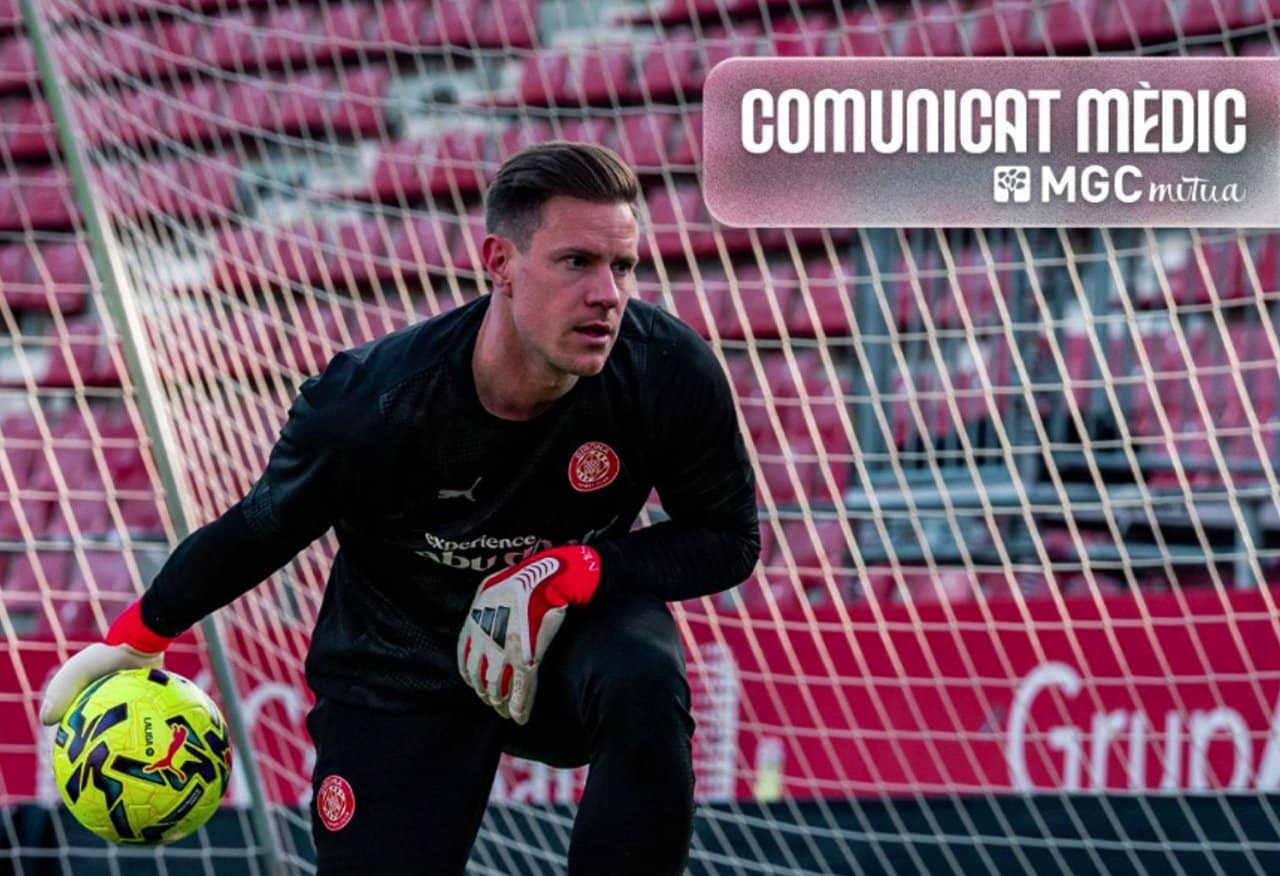
German goalkeeper Marc-André ter Stegen, who plays for Girona on loan from Barcelona, will undergo a surgical procedure this Friday, February 6th. The intervention became necessary after confirmation of a serious muscle tear in the left thigh, suffered during the match against Real Oviedo in the Spanish league, on January 31st.
The injury represents a serious blow to the athlete’s plans, as he sought to regain his game rhythm to ensure his call-up to the Copa of the Mundo. The initial forecast from the Catalan club’s medical department points to a period of absence that could reach four months, compromising the remainder of the European season.
🏥 | COMMUNICATE MEDICAL:
Marc-André having Després of the interventions will determine the low times.pic.twitter.com/709TVIQUrn
— Girona FC (@GironaFC)February 4, 2026
At 33 years old, the player faces yet another obstacle in a phase of his career marked by physical challenges. The loan to Girona was a strategy to obtain the continuity he lacked at Barcelona, but the new injury abruptly interrupts this project and casts uncertainty over his immediate future.
The recovery timeline and the impacts of absence
The estimate of up to four months of recovery puts Ter Stegen in a real race against time. If the deadline is confirmed, his return to the field would only occur in the final phase of the competitions at Europa, in mid-June. Esse calendário apertado deixa uma margem mínima para readaptação física e técnica antes da convocação final para o mundial, principal objetivo do goleiro.
Girona adopted a cautious stance and reported that more details about the rehabilitation process will only be released after the surgery is completed. The medical team will focus on a complete recovery to prevent the injury from becoming a chronic problem, something especially risky in more experienced athletes who depend on muscular explosion to perform at a high level.
History of injuries and the search for continuity
Ter Stegen’s recent trajectory has been challenging. Antes this thigh problem, the goalkeeper had already dealt with chronic knee and back issues, which limited his participation in the Barcelona and contributed to the loss of space in the starting team. The rise of young Joan García at the Blaugrana club was one of the factors that motivated the search for a new environment.
The transfer to Girona was seen as the perfect opportunity to prove that he could still perform at a high level. However, his spell at the Catalan club was brief, recording just two matches played and two goals conceded before the incident that landed him on the operating table.
This sequence of physical problems raises debates about the intensity of the European calendar and the wear and tear imposed on elite players. Ter Stegen was following a specific training routine to overcome previous pain when he suffered a new muscle injury, highlighting the fragility of his body in the face of a high demanding load.
The decision for surgery was unanimous between the athlete’s staff and the club’s doctors, being considered the only way to guarantee adequate healing of the muscle tissue and allow a safe and lasting return to professional activities.
The repercussions on the selection of Alemanha
The news of the surgery and the long layoff quickly reached the German national team’s coaching staff. The coach and his team are closely monitoring the situation, as Ter Stegen is historically one of the important pieces of the German squad and one of the candidates for the starting Copa of Mundo.
The lack of games was already a concern, and the prolonged absence worsens this situation. Competition for the goalkeeper position in the Alemanha is fierce, and being out of action for a third of the year could be decisive in the final choice for the tournament.
The player’s full focus, once released, will be on exemplary rehabilitation. The success of the surgical procedure and strict compliance with the physiotherapy steps will be crucial to determine whether he will have the physical and technical conditions to fight for a place in the world championship.
Girona strategy to make up for embezzlement
With the loss of its most experienced goalkeeper, the Girona board is forced to reevaluate its planning for the remainder of the season. The absence of a player with the caliber of Ter Stegen not only represents a technical loss, but also that of a leader on the field, capable of organizing the defensive system. The club is now studying the market in search of free agents who can fill the gap or considering giving more space to talents trained in its youth categories. The technical committee must also intensify defensive work to protect the substitute goalkeeper, who will assume responsibility at a crucial moment in the championship. The psychological impact on the squad is also a concern, and the club is already mobilizing to provide full support to the German during his recovery.
Clinical challenges for veteran athletes
Sports medicine experts highlight that recovery from muscle injuries in athletes over 30 requires extra care. The cell regeneration process tends to be slower, which makes four months a prudent and realistic estimate to minimize the risks of a new injury in the same location.
Ter Stegen’s treatment will involve a multidisciplinary approach, with nutritional and technological monitoring to maintain muscle mass during the period of inactivity, in addition to psychological support to keep him motivated during the long rehabilitation process.
The context of the loan with Barcelona
The loan agreement between Barcelona and Girona was designed to benefit all parties, but the injury creates a scenario of uncertainty. Barcelona, which holds the player’s rights, closely monitors the entire treatment, aiming to protect its valuable asset. Ter Stegen’s dream of being number one of Alemanha in Copa of Mundo now depends entirely on the success of the surgery and a smooth recovery.



