

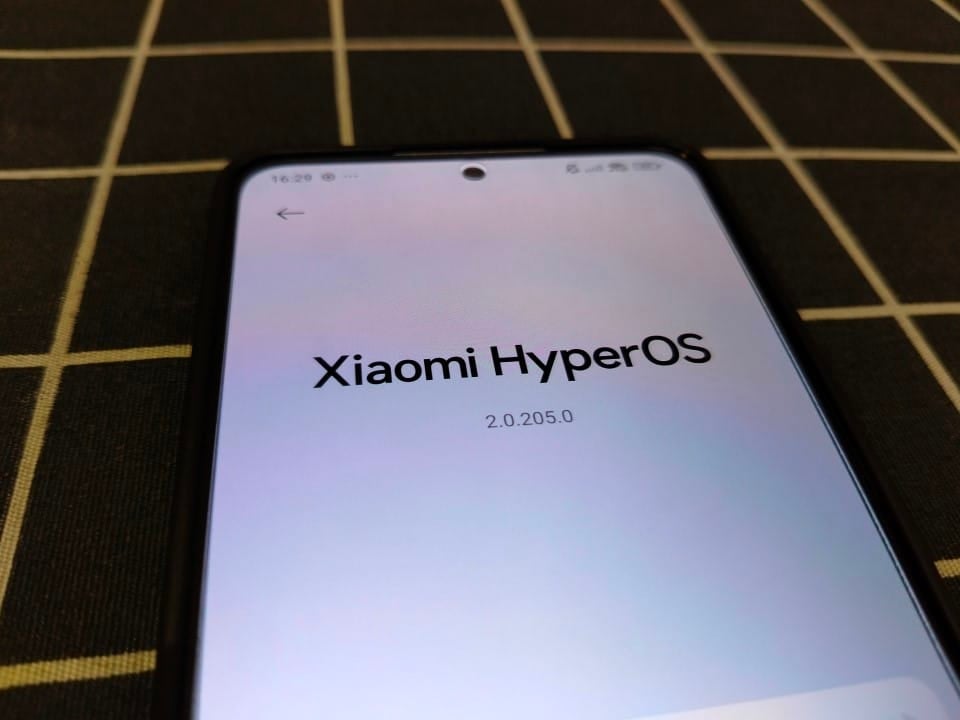
Xiaomi has started distributing HyperOS 3.1, the most recent version of its operating system. The update gradually reaches several smartphones and tablets from the brands Xiaomi, Redmi and POCO. The process occurs in batches and can take weeks or months to reach all eligible regions and models.
HyperOS 3.1 is based on Android 16 and improves elements already present in the previous version. Usuários receive improvements in fluidity, stability and customization options. The company prioritizes newer devices, but maintains support for lines launched in recent years.
The update stands out for making the system more agile in daily use. Recursos how refined animations and cross-device integration contribute to a more convenient experience.
New features introduced in HyperOS 3.1
HyperOS 3.1 brings the Super OTA, a mechanism that speeds up the update installation process. Restart time is significantly reduced, and failures during the procedure are reduced.
The interface gains smoother animations in transitions and opening applications. Aplicativos natives undergo visual renovation, offering a more modern and intuitive layout.
- Lock screen customization gains new widget and style options.
- HyperIsland receives enhanced intelligence for quick notifications and controls.
- Native AirPods support includes spatial audio and iOS-like connection animations.

Xiaomi devices eligible for the update
The Xiaomi main line contains the majority of models compatible with HyperOS 3.1. Recent Flagships lead initial release receipt.
Models such as Xiaomi 13, 13 Pro and 13 Ultra are already part of the list. The Xiaomi 14 series, including 14 Pro and 14 Ultra, also receive the update.
The newest generation, with Xiaomi 15, 15 Pro, 15S Pro, 15T and Ultra variants, is guaranteed support. The supposed Xiaomi 17 line appears in internal projections, but there is still no official launch confirmation.
Foldable devices such as Mix Fold 3, Fold 4, Mix Flip and Mix Flip 2 enter the list. The Civi series, with 4 Pro and 5 Pro, completes the main group.
Xiaomi and Redmi tablets receiving HyperOS 3.1
Xiaomi tablets feature prominently in the compatibility list. Recent Modelos prioritize multitasking performance and integration with smartphones.
The Xiaomi Pad 7, in the standard versions, Pro and Ultra, receives the update. The 12.5-inch Pad 7S Pro is also included.
- Xiaomi Pad 6S Pro 12.4 maintains full support.
- Line Pad 8, with variants Pro and Mini, is part of the rollout.
- Redmi Pad 2, including Pro, 4G and SE 4G versions, gains gradual access.
These devices especially benefit from gesture and accessibility optimizations.
Redmi models compatible with the new version
The Redmi sub-brand covers several intermediate and entry lines in HyperOS 3.1. The Note series stands out for its number of eligible variants.
Redmi Note 14, with versions Pro, Pro+ and 14S, starts receiving. The next generation, Note 15 and 15 Pro/15 Pro+, follows the schedule.
Models such as Redmi Note 13R, Pro and Pro 4G continue to be supported. Linhas premium K70, K70E, K70 Pro, K80 and K90 also receive the version.
- Redmi Turbo 4, 4 Pro, 5 and 5 Max focus on gaming performance.
- Input has Redmi A3, A3 Pro, 13X and 15 4G.
POCO appearances in the update list
The POCO brand, focused on cost-benefit performance, has a more restricted presence in HyperOS 3.1. Modelos selected receive improvements gradually.
POCO F6 Pro already appears in internal tests. The F7 line follows the pattern of affordable flagships.
POCO X7 Pro stands out for its balanced specifications. The POCO Pad M1 tablet completes the sub-brand list.
These devices gain optimized animations and improved integration with the Xiaomi ecosystem.
Gradual distribution schedule and process
Xiaomi adopts a phased rollout strategy for HyperOS 3.1. Usuários to China usually receive first, followed by global regions.
The process begins with a closed beta on flagship models. Versão stable expands to larger batches over the months.
Over-the-air updates automatically notify eligible devices. Usuários can be checked manually in the system settings.
The company adjusts the schedule based on feedback and stability. Regiões and Brasil follow the global standard, with no significant delays announced.
General benefits for the Xiaomi ecosystem
HyperOS 3.1 strengthens the connection between the brand’s devices. Transferência of files and task continuity become more fluid.
Accessibility receives adjustments to quick gestures and voice commands. Desempenho overall improvements in battery and multitasking processing.
Users of older lines, still compatible, keep the system updated. The Xiaomi support policy covers up to four years of major updates on flagships.
The version consolidates HyperOS as a mature alternative in the Android market. Continuous Otimizações aims for consistent experience across the portfolio.



