


Japanese automaker Toyota is in the advanced stages of developing what promises to be one of the most impactful updates for its most successful global vehicle. The sixth generation of the sports utility vehicle is being designed to consolidate leadership in the competitive medium SUV segment, bringing a complete break with the current model through a radically new visual identity and improved mechanical sets. The changes transcend aesthetics, encompassing profound structural improvements and significant technological advances to face growing competition from electrified models.
Sources linked to the automotive sector indicate that the official presentation of the new model should take place at the end of 2025, with the first units arriving in priority markets such as Estados Unidos and Japão shortly thereafter. Distribution to other regions, including Europa and potentially América from Sul, is expected to occur throughout 2026, marking the beginning of a new cycle for this industry icon. The manufacturer is betting on a formula that combines futuristic design with superior energy efficiency, responding directly to new consumer trends and environmental regulations.
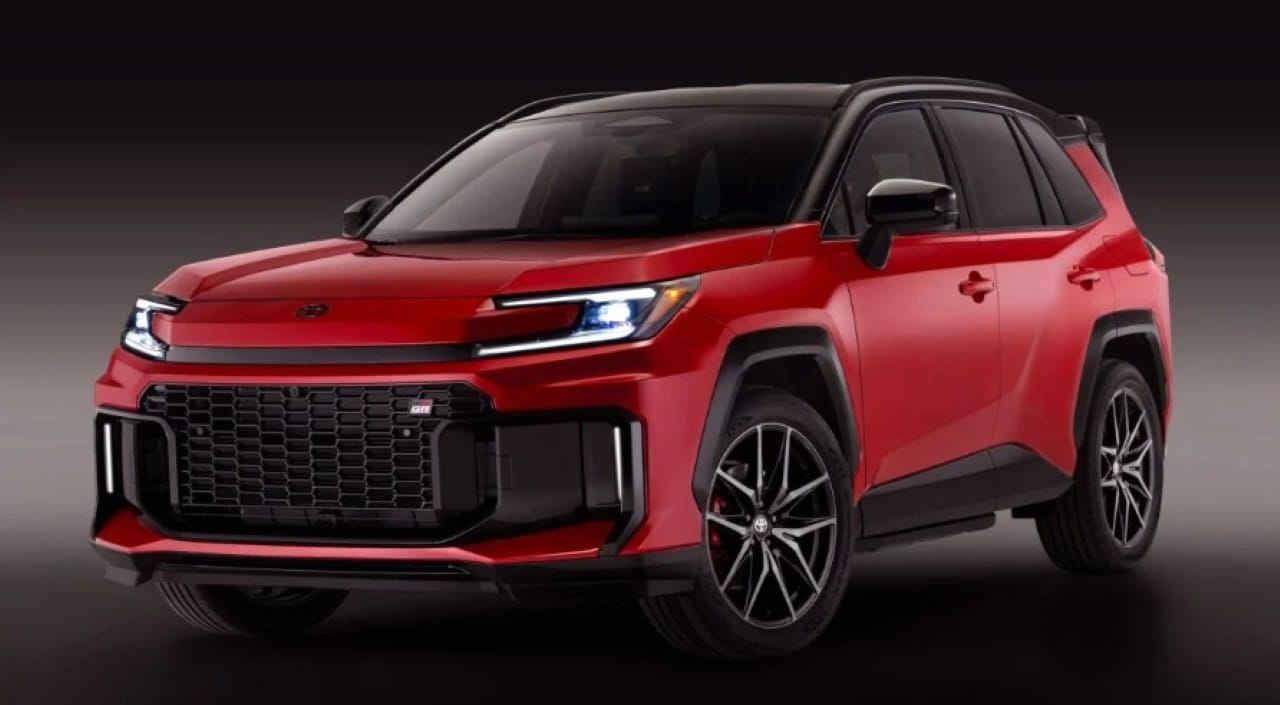
Design redefined by the hammerhead shark concept
The main inspiration for the SUV’s new visual identity is the “hammerhead shark” concept, an approach that results in an imposing and bold front end. The design abandons the more conservative lines of the current model in favor of a “C-shaped” optical assembly, sharper LED headlights and a front grille that emphasizes the vehicle’s robustness. Essa radical change aims to attract an audience that values differentiation and modernity, vital elements for continued success in the segment.
The vehicle’s silhouette will also undergo a complete redesign to ensure a more muscular and dynamic stance on the streets and roads. The sides should gain more pronounced creases and widened fenders, reinforcing the car’s off-road capability and visual presence. At the rear, the trend points to taillights interconnected by an LED bar, expanding the perception of width and sophistication, aligning the model with the most recent launches in the global automotive industry.
Structural evolution on the TNGA platform
Built on an improved version of the global TNGA platform (Toyota New Global Architecture), the new utility promises a qualitative leap in terms of drivability and passive safety. Essa evolved base will allow an even lower center of gravity and an increase in the body’s torsional rigidity, determining factors for the car’s dynamic behavior. Tais improvements translate directly into more stable and precise driving, both on paved roads and rough terrain, offering greater confidence and control to the driver.
Platform optimization also results in better use of internal space for passengers and cargo. The brand’s engineers worked to maximize the cabin and trunk, even with the integration of hybrid system components, such as the plug-in version’s larger batteries. Isso ensures that practicality, one of the vehicle’s trademarks, is not only maintained, but expanded in the new generation, meeting the needs of families and adventurers.
Total focus on hybrid power and efficiency
The sixth generation will deepen the focus on electrification, exclusively offering hybrid powertrain options in several international markets. The entry-level version (HEV) must use an evolution of the current 2.5-liter Atkinson cycle engine, combined with more powerful and efficient electric motors. The expectation is that the combined power will exceed the current 222 hp, providing more vigorous acceleration and more agile recovery in overtaking situations.
For consumers looking for maximum performance combined with sustainability, the brand will continue to offer the plug-in hybrid (PHEV) version as the top of the range. Este model will feature a higher capacity battery, allowing a range that can approach 100 kilometers in pure electric mode on a single charge. Essa configuration not only drastically reduces fuel consumption in daily urban use, but also delivers sporty performance when the engines work together.
The electronic management of the hybrid system will also undergo important refinements. The manufacturer invested in smarter software to optimize the transition between combustion and electric engines, making driving smoother and more intuitive. Energy efficiency will be a fundamental pillar, aiming to further reduce CO2 emissions and consumption in all available versions.
Technological interior and advanced connectivity
The cabin of the new vehicle will be completely redesigned to create a more modern, technological and comfortable environment for all occupants. The dashboard will adopt a horizontal layout with a structure made of soft-touch materials and high-quality finishes, elevating the perception of refinement. The biggest highlight will be the new infotainment system, which in the more expensive versions will feature a touchscreen of up to 14 inches.
This system will offer wireless connectivity for Apple CarPlay and Android Auto, integrated navigation with real-time updates, and an improved voice assistant. The instrument panel will also be fully digital, with a configurable screen that will display driving, safety and hybrid system information in a clear and intuitive way. Ergonomics will be improved, maintaining physical controls for essential functions such as the climate control, facilitating operation while driving.
Increased security with new assistance package
Safety will be one of the central pillars of the sixth generation, which will come equipped as standard with the most recent version of the driver assistance technology package, the Toyota Safety Sense. Este system has been improved with higher resolution sensors and cameras, allowing more precise and comprehensive action in different traffic scenarios. Entre the new features include the pre-collision system with better detection of pedestrians, cyclists and motorcyclists, even in low light conditions.
Adaptive cruise control (ACC) will act more smoothly in traffic jams and will be able to adjust speed when cornering based on data from the navigation system. With this new generation, the automaker aims not only to maintain leadership, but to expand its advantage over direct competitors such as the Honda CR-V and Hyundai Tucson, offering a product that balances bold design, cutting-edge technology and mechanical efficiency.
Keywords: Toyota RAV4 2026, new SUV Toyota, hybrid system Toyota, automotive launch, new generation Toyota RAV4 plug-in hybrid.



