
Battery failure forces BYD to recall 89,000 units of the Qin Plus model in China By Luís Henrique Costa
3 min read
 |
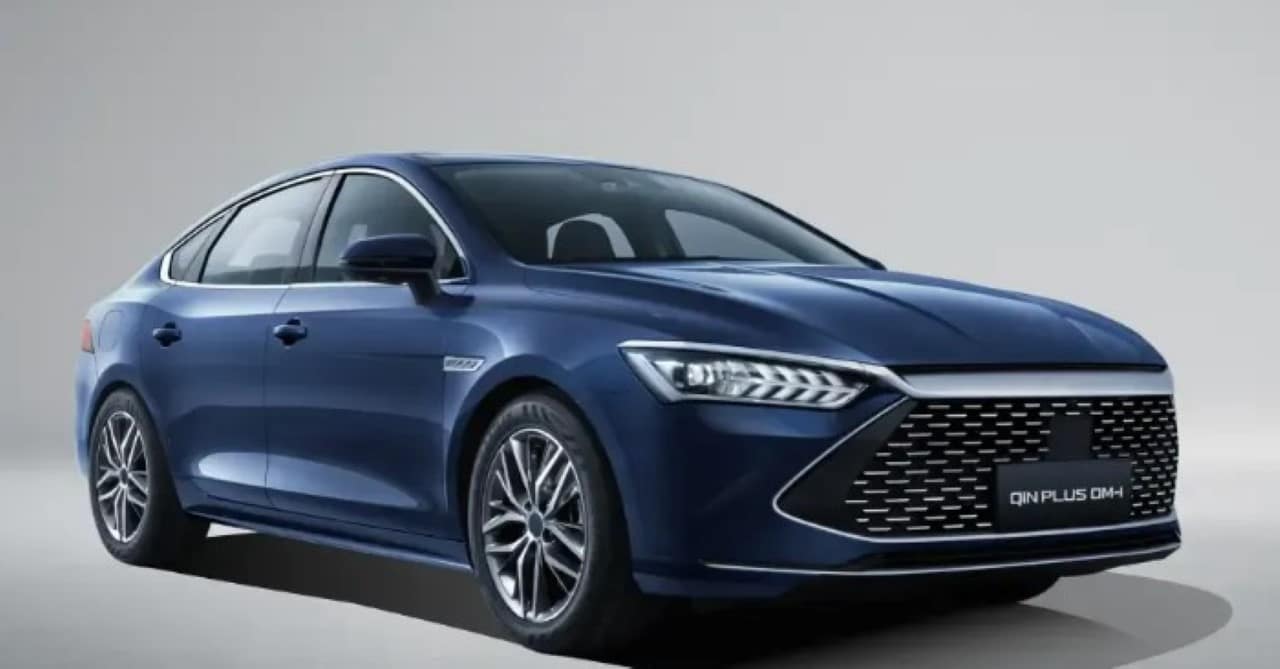
Chinese automotive manufacturer BYD has initiated a large-scale safety procedure involving the recall of thousands of vehicles in the Asian market. The operation specifically covers the Qin Plus DM-i plug-in hybrid sedan, one of the brand’s popular models, due to technical concerns related to the energy storage system. The official statement was submitted to Administração Estatal of Regulação of Mercado of China, detailing the potential risks and the corrective measures that will be applied to guarantee the integrity of drivers and passengers.
Internal investigations revealed that the problem lies in the manufacturing process of the laminated high-voltage battery. Existe the possibility of interference during the assembly of components, which could weaken the internal structure of the power cell. With continuous use and the vehicle’s natural vibration, this fragility can evolve into microcracks, increasing the risk of overheating and, in extreme cases, resulting in unwanted thermal events.
Scope and technical details of the defect
The recall affects an exact total of 88,981 vehicles produced over a period of almost three years. The compromised units left the assembly line between January 10, 2021 and September 28, 2023. The Chinese regulatory authority emphasized that the failure, although specific, represents a latent danger that justifies the automaker’s immediate intervention to prevent accidents.
The identified defect compromises the thermal stability of the battery pack. Caso If an internal structural failure occurs, the system may enter a state of thermal runaway, where the temperature rises uncontrollably. BYD recognized that vehicle safety depends on immediately remediating this vulnerability, prioritizing prevention before actual incidents can occur on the roads.
Technological solutions and parts replacement
To mitigate the issue, BYD adopted a hybrid repair strategy that utilizes remote technology and physical intervention. The first step involves a software update via Over-The-Air (OTA) for the battery management system (BMS). Este new code is designed to refine the monitoring algorithms, allowing the car to detect voltage or temperature anomalies much more accurately and earlier.
After the software update, if the system identifies any irregularity that indicates a risk of battery failure, the owner will be notified immediately to go to a dealership. In Nessas situations, the automaker has committed to completely replacing the defective battery pack at no cost to the customer, eliminating the risk of fire and restoring the car’s reliability.
Recent history and market context
This is not an isolated event in the recent trajectory of the Chinese giant, which has faced the natural challenges of exponential growth in production. Anteriormente, the company had already issued similar statements for other models in its portfolio, such as the Tang DM-i and the compact electric Dolphin. On past occasions, issues such as power steering failures and fire risks have also prompted recall campaigns, demonstrating the constant vigilance required in the electrified vehicle industry.
Despite technical setbacks, BYD maintains its leading position in the global new energy vehicle sector. The company continues to expand its international presence and improve its quality control processes. The quick response and use of software diagnostics demonstrate an evolution in the way modern automakers deal with manufacturing defects, seeking solutions that minimize inconvenience for the end user while ensuring safety.


