
Suzuki renews hybrid SUV with cutting-edge technology and aggressive design to face rivals in Europe By Luís Henrique Costa
4 min read
 |
The European division of Suzuki has officially launched the latest update of the Across, the brand’s sports SUV that shares a platform and engineering with the Toyota RAV4. Este movimento estratégico visa reforçar a presença da montadora no competitivo segmento de utilitários esportivos eletrificados, trazendo modificações estéticas pontuais e um pacote tecnológico robusto para atrair consumidores exigentes. The model arrives at dealerships with the mission of offering a viable and equipped alternative, maintaining the mechanical reliability already known from the original project.
The changes implemented seek to visually differentiate the product in relation to its platform “brother”, focusing on its own more marked identity. Além aesthetics, Suzuki engineering has focused efforts on modernizing the onboard user experience, replacing analog elements with high-resolution digital solutions. Essa mid-life cycle update is essential to maintain the vehicle’s relevance compared to competitors who have also recently renewed themselves.
The main focus of this renovation is on energy efficiency combined with performance, keeping the plug-in hybrid set as the heart of the vehicle. The Japanese brand’s electrification strategy in the Europa remains a priority, and the Across plays a crucial role as the top of the range in that portfolio. With the update, the expectation is that the model will offer a superior perception of value, justifying its market positioning through improved finishes and expanded connectivity.
New design and external finish
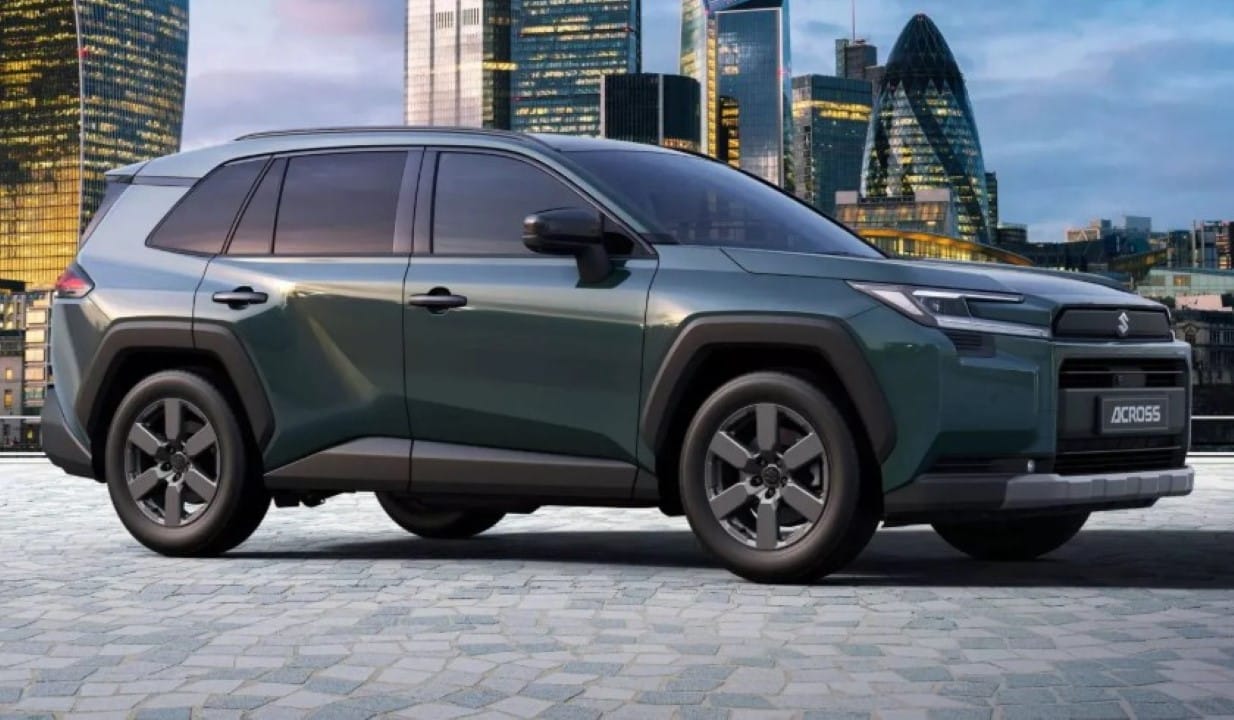
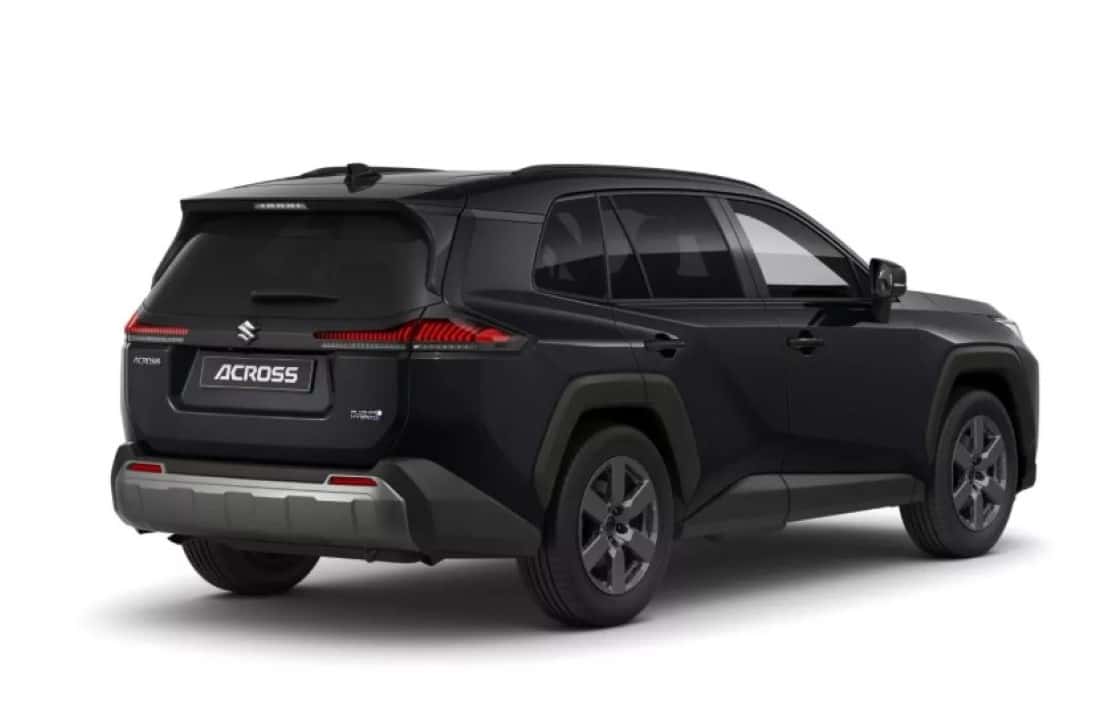
The most striking visual changes are concentrated at the front of the vehicle, where the Suzuki designers applied a new front grille that gives the SUV a more three-dimensional and aggressive appearance. The bumper was redesigned to house this new air intake, creating a distinct visual signature that seeks to move away from the image of the Toyota model and create a unique identity within the Suzuki line. The objective is to convey a feeling of robustness and modernity, in line with current trends in European automotive design.

On the sides, the highlight is the new 19-inch light alloy wheels, which received a glossy black finish and a polished face, reinforcing the sporty proposal of the utility vehicle. The color palette has also been revised to offer more sober and elegant options, including shades of white, black, gray and a new metallic finish. Essas choices reflect the profile of the Across target consumer, who is looking for a vehicle with a striking presence, but without visual excesses.
Technological evolution in the cabin
The vehicle’s interior has undergone a significant transformation to keep up with the demand for digitalization, eliminating analogue displays in favor of high-definition screens. The old instrument panel gave way to a 12.3-inch fully digital cluster, capable of displaying navigation information, energy flow and driving data in a customizable way. Essa change modernizes the control station and makes it easier for the driver to read essential data.
In the center of the console, the infotainment system has been upgraded to a 12.9-inch touchscreen, which now centralizes media and navigation functions with greater fluidity and resolution. The interface has been redesigned to be more intuitive, and connectivity has been expanded with the inclusion of strategically placed USB-C ports for all occupants. The elimination of some physical buttons in favor of on-screen commands contributed to a cleaner and more sophisticated look on the panel.
Power and mechanical efficiency
Under the hood, the Suzuki Across maintains an efficient mechanical package that combines a 2.5-liter gasoline engine with two electric motors, resulting in a combined power of 306 horsepower. Essa configuration allows the SUV to accelerate from 0 to 100 km/h in just 6.1 seconds, an impressive number for a vehicle of its size and weight. The E-Four all-wheel drive manages the distribution of force between the axles electronically, ensuring grip and stability in different driving conditions.
The lithium-ion battery with a capacity of approximately 20 kWh is responsible for powering the plug-in hybrid system, allowing autonomy in pure electric mode that covers most daily urban journeys. Essa capacidade de rodar sem emitir poluentes por cerca de 75 km é um dos principais argumentos de venda do modelo em mercados com zonas de baixa emissão. The system automatically manages energy use to maximize efficiency, switching between hybrid and electric modes as needed.
Driving assistance and safety
Safety was reinforced with the adoption of a new package of sensors and cameras that monitor the vehicle’s surroundings in real time, increasing the level of protection for occupants and pedestrians. The driver assistance system was calibrated to offer faster and more accurate responses in risky situations, acting preventively to avoid collisions. The onboard technology not only alerts the driver, but also actively intervenes with the steering and brakes when necessary.
- Adaptive cruise control with automatic stop and start function in traffic jams.
- Lane keeping system with active steering correction to prevent unintentional departures.
- Blind-spot monitoring and rear cross-traffic alert for safer maneuvering.
- Autonomous emergency braking with pedestrian and cyclist detection, operating even in low light conditions.
The positioning of the new Suzuki Across in the European market aims to compete directly with consolidated models such as the Honda CR-V and the Mitsubishi Outlander, offering an alternative that balances performance and rationality. The brand is betting on the reliability of its partnership with Toyota and the delivery of a complete package of standard equipment to win over families looking for a versatile and technologically updated SUV.











