


The latest update to the Apple mobile operating system brought a feature awaited by drivers and passengers, changing the entertainment dynamics inside the vehicles. With the arrival of iOS 26, the CarPlay connectivity platform now allows video playback directly on the car’s dashboard screen, a feature that was historically blocked for security reasons. The new tool uses the AirPlay protocol to mirror content from the iPhone to the automotive display, ensuring high image quality and audio synchronization with the vehicle’s sound system.
This release, however, is accompanied by strict operating restrictions to maintain the integrity of the occupants and comply with international traffic laws. The system was designed to work exclusively when the car is completely stopped, requiring the gearshift to be in park position or the handbrake to be activated, depending on the integration made by the manufacturer. The measure aims to prevent distractions while driving, maintaining the company’s zero tolerance policy for playing visual media while driving.
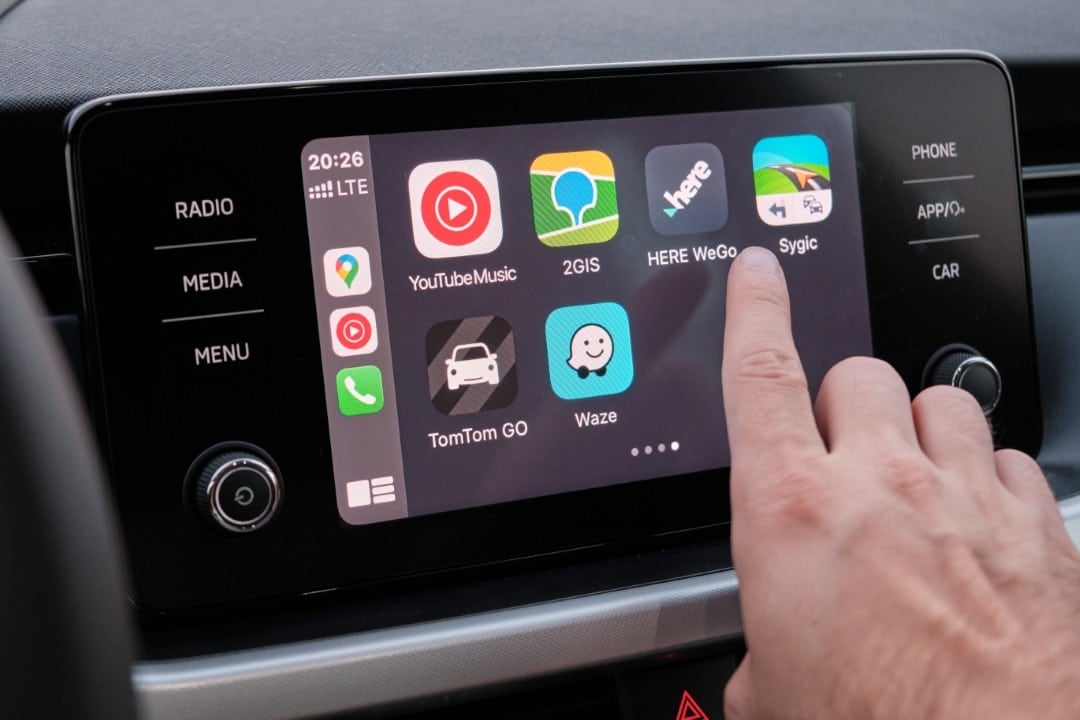
Technical implementation requires close collaboration between the software developer and car manufacturers, who need to update the firmware of their multimedia centers. The feature is not automatically activated in all vehicles compatible with previous versions of the system, requiring specific certification within the brand’s licensing program to ensure that the motion and lock sensors work correctly before releasing the video signal.
The company’s strategic move responds to growing market demand, driven mainly by the popularization of electric vehicles and the need for entertainment during charging periods. With increasingly larger and higher resolution screens equipping modern cars, the ability to consume streaming content, such as films and series, becomes an essential competitive differentiator compared to other automotive technology platforms that were already exploring similar functionalities in stop situations.
Security protocols and automatic blocking
The safety architecture developed for this functionality operates with sensor redundancy to avoid any possibility of error that could put the driver at risk. The system constantly monitors the vehicle’s telemetry data and, upon detecting the slightest sign of wheel movement or gear shifting to “Drive”, the video transmission is instantly interrupted. In Nestes cases, audio continues to be played through the speakers, but the screen returns to displaying the standard interface of maps or music controls, ensuring that the driver’s attention immediately returns to the road.
Road safety experts point out that active blocking technology is essential for regulatory acceptance of the feature in different countries. Traffic laws in most jurisdictions explicitly prohibit visual entertainment screens in the driver’s field of vision while the car is in motion. Apple’s solution seeks to balance digital convenience with civil responsibility, creating an environment where leisure is only permitted in moments of total safety, such as in parking lots, waiting areas or during fueling.
Integration with automakers and technical requirements
For video mirroring via AirPlay to work, it’s not enough to just update your iPhone to iOS 26; The vehicle’s hardware must be prepared to receive and process this type of data. Partner automakers, which include industry giants such as Honda, Ford, BMW and Toyota, are working on homologating their infotainment systems to support the new bandwidth required by latency-free high-definition video.
The MFi (Made for iPhone) certification process has been expanded to include rigorous signal disruption testing. Durante During the validation phases, engineers subject vehicles to different usage scenarios to ensure that screen locking occurs within fractions of a second after the start of movement. Apenas models that pass this battery of tests receive the cryptographic key necessary to enable the function in the user menu, creating a controlled and standardized ecosystem.
In addition to security, the update focuses on the quality of the user experience, allowing popular streaming applications, which were previously restricted to audio only, to now display their full interfaces. Isso turns the car dashboard into an effective second screen, leveraging the surround sound system of premium vehicles to create an immersive cinema experience, something that car manufacturers have been trying to implement with proprietary, often limited and slow systems.
Impact on the electric vehicle market
The introduction of in-dash video is intrinsically linked to the evolution of the global fleet and the changing habits of drivers, especially electric car owners. The downtime required at charging stations has created a new window of opportunity for media consumption. What was previously considered dead time is now seen as a moment of leisure, where the car’s infrastructure must offer comfort and entertainment equivalent to that of the living room.
Consumer behavior analyzes indicate that the quality of the infotainment system has become one of the top three decision factors when purchasing a new vehicle in 2026. The ability to watch videos while waiting for your children at school or during a quick charge on the highway adds tangible value to the car. Automakers that quickly update their systems to support the new iOS feature will have an immediate competitive advantage, retaining customers who are already deeply integrated into the Apple ecosystem.
Future perspectives for vehicular connectivity
The video release is just the tip of the iceberg in a larger plan for deep integration between mobile devices and automobiles. The trend points to a future where car and smartphone processing will work together to offer augmented reality experiences and more complex games, always respecting safety standards. The infrastructure created to support video via AirPlay lays the foundation for more robust data transmissions, which could include parked video conferencing and remote work interfaces adapted to the vehicular environment.
The market for accessories and after-sales software updates is also expected to be impacted, with owners of older models looking for ways to update their multimedia centers to become compatible. Isso moves an entire chain of automotive services focused on technology, demonstrating that software has become as important as mechanics in defining the useful life and relevance of a car in the current scenario.



