

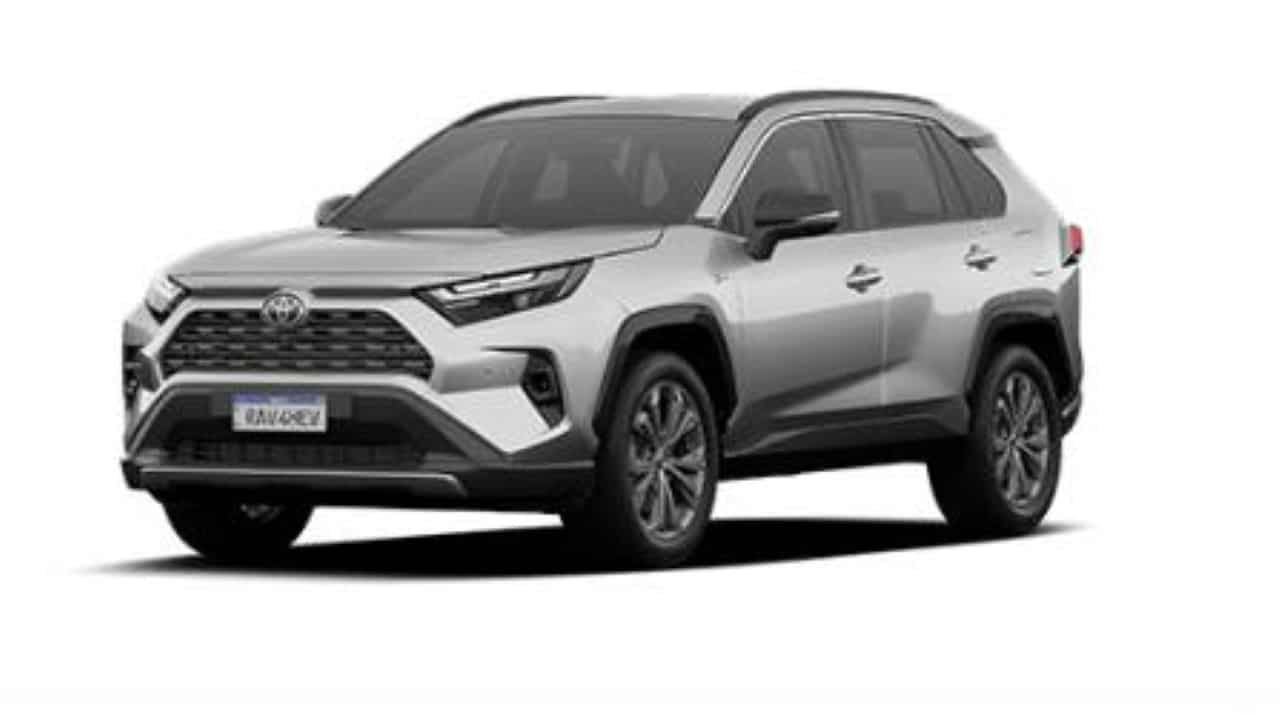
The Japanese automaker’s competition and performance division has officially confirmed the arrival of a new configuration for one of its best-selling utility vehicles globally. Previsto to start sales in March 2026, the model promises to redefine the concept of energy efficiency combined with sports performance. The strategy aims to serve a public that seeks the versatility of a family vehicle, but does not give up on a more engaged and powerful drive.
The project was developed under the direct supervision of Gazoo Racing, the brand’s sports arm, which applied its track expertise to improve the vehicle’s dynamics. Diferente of merely aesthetic updates, this new version brings significant mechanical modifications, positioning the car at a higher level within the medium SUV segment. The proposal is to deliver a product that works for both daily urban commuting and long-distance trips with comfort and agility.

With electrification advancing rapidly in the automotive sector, engineering focused on optimizing the plug-in hybrid system to deliver impressive numbers. The combination of high-capacity electric motors with an efficient combustion engine results in a combined power that surpasses previous generations, guaranteeing fast responses to the accelerator. Além In addition, the autonomy in pure electric mode has been extended, allowing most urban journeys to be carried out without the use of gasoline.
Industry experts point out that this launch comes at a crucial time, where demand for electrified vehicles with emotional appeal is on the rise. The improvements are not just restricted to the engine, they also cover the chassis structure and onboard technology:
- Exclusive suspension adjustments for greater stability in curves;
- Brake system resized to handle the extra power;
- Integration of new semi-autonomous driving assistants;
- Functional aerodynamic design that contributes to energy efficiency.
Technical evolution and power of the powertrain
The heart of this new machine is a refined plug-in hybrid drive system, which now delivers a combined output of approximately 330 horsepower. Este increase in strength represents a notable leap in performance, surpassing the numbers of predecessor models by more than 10%. Engineering worked to perfectly synchronize the electric motors located on the front and rear axles, creating an intelligent all-wheel drive system that instantly adapts to road grip conditions.
Acceleration from 0 to 100 km/h has been optimized, placing the SUV in dedicated sports car territory. The immediate response of the electric torque, combined with the power at high speeds of the thermal engine, offers safe overtaking and vigorous restarts on highways. The powertrain’s electronic management has been recalibrated to prioritize performance when “Sport” mode is selected, altering throttle mapping and steering response.
To support this increase in performance, the battery and inverter cooling system also received updates. Isso ensures that power delivery remains constant even in situations of intense use, such as mountain climbs or during more aggressive driving. Durability and reliability, trademarks of the manufacturer, were maintained as central pillars of mechanical development.
Extended autonomy and charging technologies
One of the model’s greatest technical highlights is its ability to travel long distances without emitting pollutants. Graças Thanks to a new generation of high energy density batteries, the vehicle achieves an electric range of up to 150 kilometers on a single full charge. Esse number is enough to cover the daily routine of the vast majority of urban drivers, who will be able to use the car as a pure electric vehicle during the week and take advantage of the flexibility of the hybrid engine on weekend trips.
Everyday practicality was increased with the introduction of support for fast charging via the CHAdeMO standard. The system allows you to recover around 80% of the battery charge in just 30 minutes when connected to high power stations. Essa feature eliminates one of the main barriers to plug-in vehicle adoption, making charging stops brief and convenient during longer commutes.
Smart energy management also plays a key role in overall efficiency. The car uses navigation and topography data to automatically decide which engine to use on each part of the route, maximizing energy regeneration during descents and braking. The regenerative braking system has been improved to provide a more natural pedal feel while also recovering more electricity to the batteries.
Furthermore, the driver can choose between different energy management modes, allowing, for example, saving the battery charge for use in zero-emission zones within urban centers. Essa flexibility places the model as a versatile tool to face movement restrictions that are increasingly common in large global metropolises.
Driving dynamics and chassis adjustments
The signature of the sports division is most evident in the SUV’s dynamic behavior. The suspension received springs and shock absorbers with a specific, stiffer calibration to contain body roll in fast curves. Além In addition, the tracks were widened by 20 millimeters, which increases the vehicle’s contact area with the ground and significantly improves directional stability at high speeds.
The electric power steering has also undergone complete reprogramming to offer more direct and communicative feedback to the driver. The intention is to connect those who drive to the asphalt, transmitting safety and precision in each maneuver. The reinforced chassis with additional welding points and the use of structural adhesives guarantee superior torsional rigidity, essential for refined dynamic behavior.
Functional design and interior finish
Visually, the model adopts an aggressive stance that reflects its technical capabilities. The front grille features the “Functional Matrix” concept, with elements that not only serve aesthetics, but also direct airflow for cooling and downforce. The exclusive light alloy wheels, with a darkened finish, complete the sporty look and are shod with high-performance tires developed specifically for this version. Inside, luxury mixes with sportiness through the use of noble materials such as synthetic suede and leather with contrasting stitching. The front seats have an anatomical design with prominent side flaps, designed to support the occupants’ bodies during sharp turns, while the digital instrument panel offers exclusive graphics that highlight performance information and energy flow, creating a pilot-focused cockpit environment.
Market positioning and expectations
With this launch, the automaker reaffirms its commitment to offering electrified options that spark desire, going beyond the pure rationality of fuel economy. The model is positioned at the top of the range, targeting consumers who are looking for a complete vehicle, capable of delivering cutting-edge technology, advanced safety and driving pleasure. The expectation is that the SUV will attract both the brand’s loyal customers and new buyers from premium segments.
Although official prices for the Brazilian market have not yet been released, the vehicle is expected to arrive with a robust equipment package to justify its positioning. The combination of family versatility, with ample interior space and generous trunk, added to the performance of a sports car and the efficiency of an electric vehicle, creates a unique value proposition in the current market.



