


The latest update to Apple’s mobile operating system has brought significant changes to the integration between smartphones and automobiles, specifically focusing on the balance between entertainment and road safety. With the arrival of iOS 26, the video playback functionality on the dashboard via CarPlay received new blocking protocols that prevent moving images from being displayed while the vehicle is in motion. The measure aims to align media consumption technology with strict international traffic laws, which prohibit visual distractions for drivers while driving.
The new feature uses complex communication between the iPhone and the vehicle’s sensors to determine the exact state of the car before releasing the video signal. Para Before the content is displayed on the dashboard screen, the system requires not only that the speed is zero, but also that the parking brake is engaged or that the gearshift is in the Park position. Caso the driver starts moving, the system immediately interrupts the image transmission, keeping only the audio active, a feature designed to ensure that the driver’s attention remains exclusively on the road.
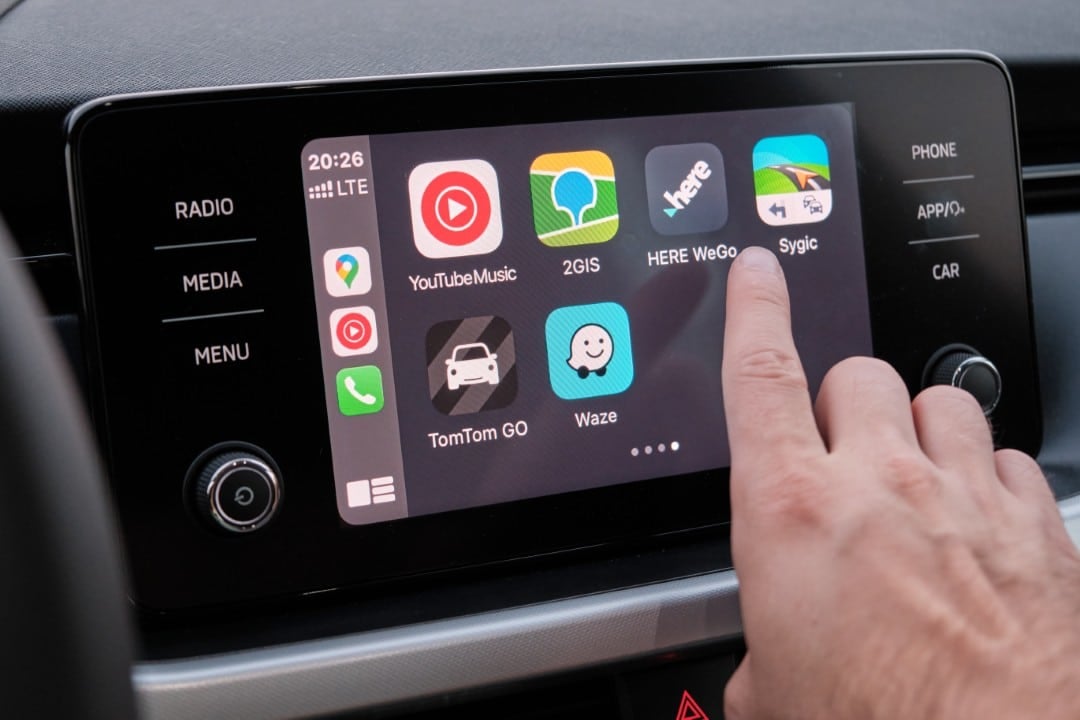
This technical change responds to a growing demand for security in a scenario where vehicle screens are becoming increasingly larger and more immersive. With the popularization of displays that occupy the entire front panel in luxury and electric cars, the temptation to consume multimedia content during the journey has increased exponentially. Apple, in partnership with major automakers, established this protocol to ensure that its mirroring tools are not vectors of accidents caused by inattention, maintaining the integrity of occupants and third parties.
Technical integration and safety sensors
Implementing this lock does not depend solely on the phone’s software, but requires rigorous certification and real-time data exchange between the mobile device and the car’s electronic control unit. The developed protocol requires the vehicle’s head unit to send an authenticated signal confirming the status of the brake and transmission. Sem this validation, the AirPlay feature for the panel remains inactive for video, working only for audio and navigation.
Software engineers explain that communication latency has been reduced to milliseconds, ensuring that blocking occurs instantly at the slightest sign of wheel movement. The system monitors data from the speedometer, accelerometer and gear position simultaneously. Essa verification redundancy is essential to avoid failures that could allow videos to be displayed at inopportune moments, such as at brief stops at traffic lights, where the driver’s attention is still necessary to resume driving.
Additionally, the technology is designed to differentiate center dashboard screens from rear entertainment screens, when available and integrated into the CarPlay ecosystem. Enquanto blocking is mandatory for any display visible to the driver, the system maintains the flexibility to allow media consumption by passengers, as long as the vehicle’s hardware supports this distinction of audio and video zones independently.
Impact on the electric car market
The update comes at a strategic time for the automotive industry, especially with the consolidation of electric vehicles in the global market in 2026. One of the main complaints from electric car users refers to idle time during recharging at public stations. The release of videos on the dashboard, subject to parking, transforms the vehicle into a temporary living room, allowing drivers to watch series or films while waiting for the battery to charge.
Automakers such as Tesla, Ford and BMW already invest heavily in robust infotainment systems, and improved integration with the Apple ecosystem is seen as a competitive differentiator. The ability to use the car’s high-resolution screen to project iPhone content in a safe and regulated manner adds value to the ownership experience, making mandatory charging breaks less tedious and more productive for the end user.
Market analysts point out that this functionality also opens doors to new business models and applications focused on stationary experiences. Desde professional video conferences held with the car stopped to modern drive-in cinema sessions, the use of the car as a static connected device is redefining the relationship between the driver and the machine, as long as the safety barriers for the moment of driving remain insurmountable.
Challenges for developers and legislation
For streaming and video app developers, the new iOS 26 guidance imposes the need to adapt their code to recognize the “moving” and “parked” states provided by the CarPlay API. Aplicativos that do not comply with the new safety rules will simply not project an image onto the car’s screen, instead displaying only a standard audio control interface. Isso forces standardization in the app industry, prioritizing security over user engagement during the journey.
From a legislative point of view, the measure anticipates regulations that are being discussed in União Europeia and Estados Unidos on cognitive and visual distraction. By implementing a rigid software lock, the technology giant protects itself from litigation and helps automakers comply with vehicle safety standards (NHTSA and Euro NCAP) that penalize the presence of distracting elements in the driver’s field of vision. Technology, therefore, acts as a passive regulatory agent, ensuring compliance with the law without relying exclusively on the driver’s common sense.
The future of smartphone-vehicle integration points to a symbiosis where entertainment is vast but strictly compartmentalized. Enquanto fully autonomous driving (Level 5) does not become a ubiquitous reality on the roads, resources like this serve as a necessary bridge, offering technological convenience in moments of rest and rigorous surveillance in moments of action, designing a new pattern of behavior for the era of connected cars.
Final keywords: Apple CarPlay, road safety, video blocking, car entertainment, iOS 26.



