

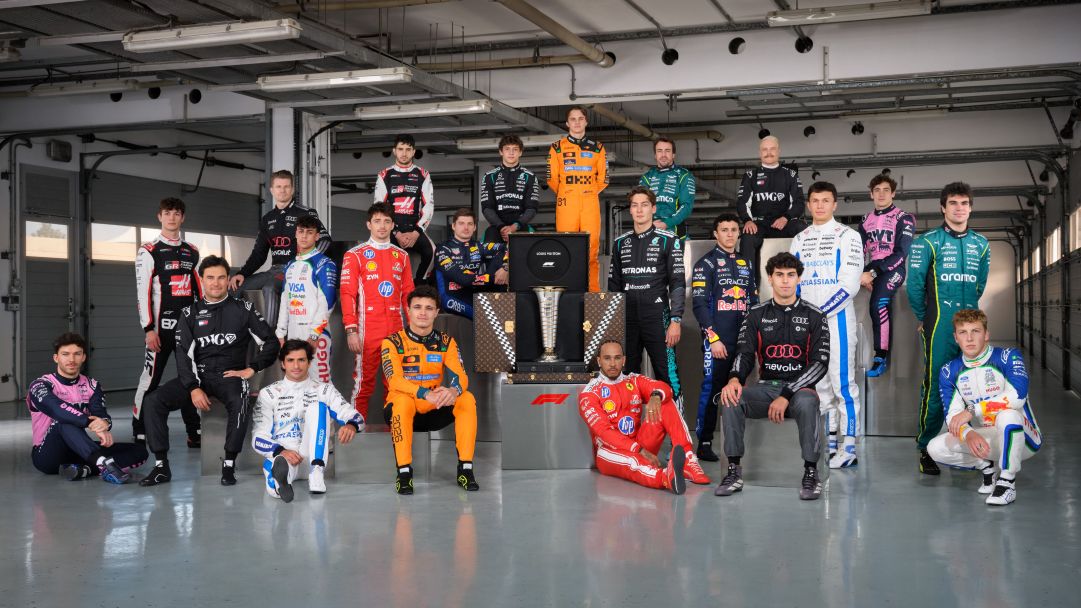
Charles The Monegasque Ferrari driver clocked a time of 1:33.739 during the morning, completing a total of 70 laps in a session marked by challenging weather conditions in the desert. Lando Norris, from McLaren, and the young Andrea Kimi Antonelli, representative of Mercedes, completed the group of three fastest competitors at the beginning of the day.
The teams’ performance this morning reflected their adaptation to the new technical regulations that define the category from this 2026 season onwards. The track activity took place under constant winds that brought sand to the asphalt, drastically reducing grip and causing several veteran and novice drivers to escape.
- Charles Leclerc (Ferrari): 1m33s739 (70 laps)
- Lando Norris (McLaren): 1:34.052 (54 laps)
- Kimi Antonelli (Mercedes): 1:34.158 (69 laps)
- Alexander Albon (Williams): 1:35.690 (55 laps)
- Pierre Gasly (Alpine): 1m35s898 (61 laps)
- Isack Hadjar (Red Bull): 1m36s188 (13 laps)
- Esteban Ocon (Haas): 1:36.418 (65 laps)
- Fernando Alonso (Aston Martin): 1m36s536 (28 laps)
- Nico Hulkenberg (Audi): 1m36s741 (49 laps)
- Arvid Lindblad (Racing Bulls): 1m36s769 (75 laps)
- Sergio Pérez (Cadillac): 1:38.191 (24 laps)
Charles Leclerc led the way in the opening morning of the second week of Pre-Season Testing in Bahrain 👏
—Formula 1 (@F1)February 18, 2026
Read the full report here 👉https://t.co/VCGYeNLgIk#F1 #F1Testing pic.twitter.com/DII0lmS0Gs
Technical challenges and track conditions at Sakhir
The lack of grip on the Bahraini track was the central theme of the first four hours of activity, forcing engineers to seek more conservative aerodynamic pressure settings. Crosswinds on the main straights made braking for the first corner difficult, resulting in frequent tire lock-ups by drivers such as Fernando Alonso and Nico Hulkenberg.
Even with the dirty asphalt, the total mileage accumulated by the teams was considered satisfactory for the first day of the second round. The technicians focused especially on the durability of the new hybrid components, which are the great technological novelty of this regulatory cycle for the highest category of world motorsport.
Freshman performance and advanced mileage
The British rider Arvid Lindblad, debuting for Racing Bulls, was the highlight in terms of endurance after completing 75 laps, the highest individual mark of the morning session. The young driver demonstrated quick adaptation to the equipment, focusing on race simulations and tire wear tests in high temperatures, typical of local time in Bahrein.
Andrea The work of newcomers is essential at this stage, as it allows the teams to collect data on the behavior of the Pirelli tires in different operating windows.
Persistence of mechanical failures in Cadillac
The debutant Cadillac team once again faced significant obstacles in their development program, losing much of the morning due to electronic sensor failures. Sergio Pérez only managed to go to the track in the final two hours of the clock, which drastically limited the process of collecting aerodynamic data essential for setting up the car.
Reliability problems had already appeared in the previous round of tests and appear to persist, generating internal concern within the North American team. With just 24 laps completed, the team occupies the last position on the timesheet and will need a productive afternoon to recover the originally planned testing schedule.
Limitations in Red Bull Racing’s garage
Isack The team opted to keep the French driver in the cockpit throughout the day, but undetailed technical interruptions kept the car in the pits for prolonged periods.
The low mileage of the Red Bull at the start of Wednesday contrasts with the efficiency demonstrated by direct rivals such as McLaren and the Ferrari itself. Engenheiros from the Austrian team worked intensively on the rear of the car during track breaks, suggesting adjustments to cooling systems or the power unit.
Expectations for the premiere of Gabriel Bortoleto on Audi
The Brazilian scenario comes to the fore in the afternoon, when Gabriel Bortoleto will take the wheel of the Audi single-seater, replacing Nico Hulkenberg after the break. The Brazilian driver will have the mission of continuing the aerodynamic mapping work started by the German, who completed 49 laps safely this morning.
Audi has demonstrated a methodical approach in its entry into Fórmula 1, prioritizing the collection of structural data over chasing aggressive lap times at this time. The participation of Bortoleto is eagerly awaited, as the Brazilian represents the country’s renewal in the category grid under the new identity of the German brand.
Analysis of the behavior of new tires
Pirelli provided specific compounds for this round, aiming to test the resistance of the casings under the intense lateral forces generated by the 2026 cars. Drivers reported that thermal degradation was accelerated by the intense heat of Sakhir at 11:00 local time, requiring precise management by those on the track.
Mercedes and McLaren focused their efforts on longer stints with the mid-range tires, trying to understand the breaking point of chemical grip. Esse tipo de informação é vital para as estratégias de corrida que serão adotadas na abertura do campeonato, prevista para ocorrer no mesmo circuito daqui a algumas semanas.
Ferrari stability shakes up behind the scenes
Charles Leclerc’s leadership, although early, reinforces the perception that Ferrari has built a solid platform for the beginning of this new technological era. The car showed stable behavior both in low-speed curves and in fast sections, allowing the Monegasque to attack the curbs with greater confidence than his direct opponents.
Rival engineers are closely monitoring the airflow over the Italian car’s cooling vents, which come up with creative solutions to deal with engine heat. If the reliability demonstrated in today’s 70 laps continues, the Maranello team will start with an encouraging base for the remainder of the week of official testing.
Logistics organization and official transmissions
Activities at Bahrein follow a strict schedule, with the track remaining open for testing until sunset, allowing the transition to nighttime conditions. In local time, sessions offer a range of temperatures that help teams understand how cooling asphalt impacts the mechanical balance of cars.
Live broadcasts continue to be carried out for an international audience, ensuring that enthusiasts and industry professionals can follow each technical evolution in real time. Data monitoring remains the absolute priority, with analysts poring over telemetry that will define the teams’ immediate future in global competition.