

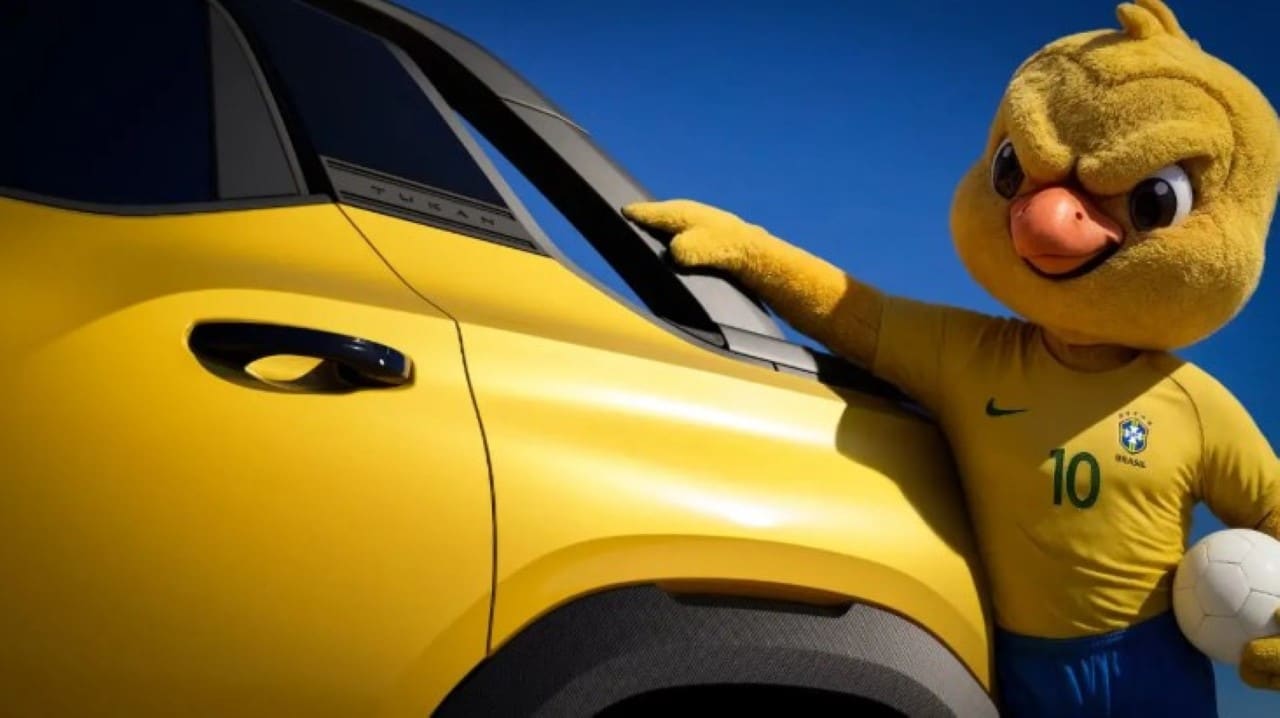
Volkswagen confirmed the name of the new Tukan pickup truck that arrives to take the Saveiro’s place in the brand’s lineup. The model was developed in Brasil and represents an important pillar of the company’s investments in the country. Ele offers an intermediate size that fills the gap between more compact options and the largest in the segment.
Production of the Tukan is expected to begin in 2027 at the São José factory of the The vehicle inherits elements from the Tarok concept shown in 2018 and incorporates solutions to suit both professional and lifestyle use. The strategy includes varied versions so as not to leave current Saveiro customers without options.
The new pickup is positioned to compete directly with models such as the Chevrolet Montana and the Fiat Toro. Volkswagen plans to offer configurations that combine practicality with modern efficiency technologies.
Development of the pickup truck in the Brazilian market
The Tukan is born from a project entirely carried out by the Volkswagen engineering team at the Brasil. Essa approach allows the model to be optimized for typical country and regional usage conditions. The company seeks to meet specific demands for durability and cost-benefit.
The total investment associated with the project is part of the automaker’s larger plan for the country. The pickup receives special attention because of the historic role of entry-level pickups in the national fleet. Executives highlight their continued commitment to the segment.
Technical platform and elongated structure
The Tukan uses an extended version of the MQB A0 platform that also serves as the basis for models such as the T-Cross and the Virtus. Essa architecture offers high torsional rigidity, which directly contributes to the vehicle’s robustness on different terrains. The structure was reinforced to support use as a pickup truck without compromising dynamic behavior.
Engineers applied selected materials to reduce weight where possible and increase strength in critical areas. The platform is also prepared for future electrified versions, which expands the possibilities for product evolution. Essa technical flexibility allows Volkswagen to serve different buyer profiles with the same basic set.
The load capacity and internal space were designed to offer greater practicality than the current Saveiro. The bucket design incorporates elements that facilitate daily work and the transport of varied loads.
Motorization with an emphasis on efficiency
The 1.5 eTSI Evo2 flex engine represents an important evolution in the brand’s mechanical offering. Esse propellant delivers 150 horsepower and 25.5 kgfm of torque in conjunction with the 48-volt mild hybrid system. MHEV technology helps reduce fuel consumption and pollutant emissions in urban and road use.
In the more accessible versions, the Volkswagen must maintain simplified mechanical options to preserve the cost appeal of the entry-level line. Essas configurations prioritize mechanical reliability and low maintenance costs that are valued by traditional buyers of small pickup trucks. The balance between performance and economy was a key focus during development.
Automatic transmission and manual options should be available depending on the version chosen. Validation tests include extreme temperature and fuel quality conditions common in the Brasil.
The electric assistance of the mild hybrid system comes into action especially when accelerating and starting to relieve the combustion engine. Isso results in smoother responses and lower fuel consumption throughout everyday life.
Versions for different customer profiles
The Tukan offering includes single cab configurations aimed at commercial and professional use. Essas variants maintain essential features for heavy work without adding unnecessary equipment that would increase the final price. The idea is to offer a smooth transition for owners of the Saveiro that will be discontinued.
Models with double cabins and more complete finishes aim to attract customers looking for versatility for mixed use between work and leisure. Nesses cases comfort and safety content receive additional attention to compete in a more competitive segment. The diversity of versions allows the brand to cover a wide price range.
The inclusion of active safety equipment such as autonomous braking and lane keeping assist should be gradual depending on the trim level. Volkswagen seeks to balance costs to maintain accessibility across all options.
The rigid axle rear suspension with leaf springs was chosen to ensure durability on rough or loaded roads. The Essa solution has already proven its effectiveness in other models in the category and is adapted here to the specific needs of the Tukan.
Brand positioning strategy
The Volkswagen reinforces its presence in the pickup truck segment with the arrival of the Tukan alongside the Amarok. The company’s president and CEO at Brasil Ciro Possobom indicated that the brand will continue to offer solutions for different price ranges. Essa statement confirms the interest in not abandoning the public that today counts on Saveiro.
The Brazilian market for compact and intermediate pickup trucks has shown consistent growth in recent years, driven by changes in the profile of buyers. The Tukan arrives at a time when consumers value both cargo capacity and comfort on longer journeys. The automaker analyzes this data to define the initial production mix.
Design details and visual identity
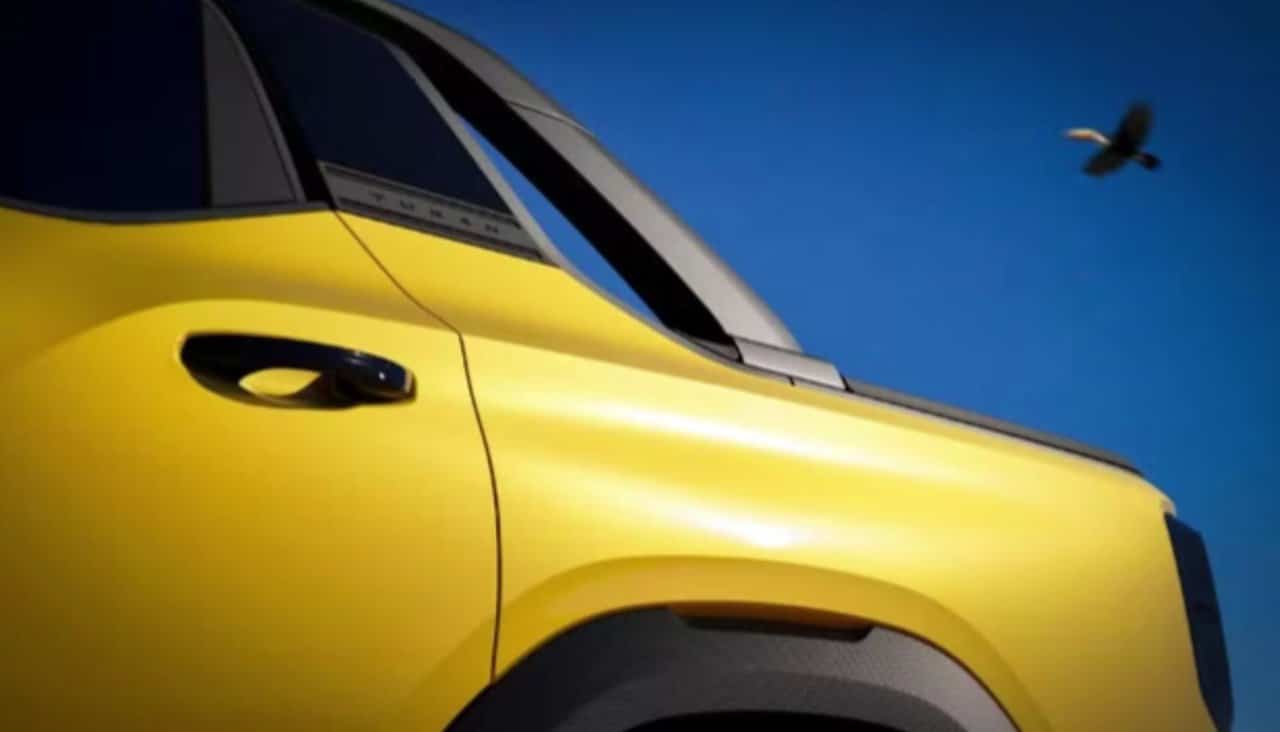
The name Tukan refers to the toucan, an iconic bird of the Américas and symbolizes adaptation to the regional environment. The first teasers show the vehicle in canary yellow color, which refers to the Brazilian football team and adds personality to the launch. The overall style must combine modern lines with functional elements typical of pickup trucks.
The front must have the current identity of the Volkswagen with connected headlights and a pronounced grille. The side reveals balanced proportions between the cabin and the bucket to maintain good drivability. Finishing details vary depending on the version to visibly differentiate the options.
Investment and national production
The manufacture of Tukan in São José of Pinhais will generate opportunities in the supply chain in Paraná. The plant already has experience in producing models on the MQB platform, which facilitates the integration of the new pickup. Volkswagen plans to gradually ramp up production to meet initial demand.
Investments in tools and team training ensure that quality standards are maintained at a high level from the beginning. The strategic location in the south of the country facilitates logistics both for national distribution and for possible exports to other markets in the América of the Sul.
The project receives support from a regional contribution that reaches R$20 billion and includes more than twenty launches until 2028. Essa scale demonstrates the company’s commitment to the local automotive industry and to the development of products adapted to the continent. The factory has been undergoing adjustments since the beginning of the year to receive the pre-series of the Tukan.
Local engineering was essential to define the final specifications of the model and ensure that it meets expectations of robustness and economy in real use conditions. Integration with Brazilian suppliers reduces costs and speeds up the validation process.
Available safety and comfort features
Driver assistance systems such as stability control and brake distribution are present in all versions of the Tukan. The model prioritizes occupant protection with a reinforced structure and three-point belts. The interior shares components with other vehicles in the range to increase perceived quality.
The digital dashboard and smartphone connectivity are part of the most complete packages. Esses items improve the user experience without excessively increasing the final price of basic options. The Volkswagen balances technology with practicality to serve a diverse audience.
The Tukan offers internal space equivalent to that of medium hatchbacks in its double cab versions, which allows comfort for four or five occupants. The versatile bucket makes it easy to load bulky or sensitive items.
Transition from Saveiro to Tukan
The Saveiro ends its history after decades as a reference in compact pickup trucks. The Tukan takes on the role of entry with additional advantages in space and technology. Loyal customers will find streamlined options that maintain the practical spirit of the old model.
The transition is careful not to leave the public without accessible alternatives. The Volkswagen maintains the focus on durability and low cost of ownership that have always characterized the Saveiro.



