


The technology giant recently implemented strict guidelines aimed at the interface of its in-car entertainment systems, with the clear aim of reducing distractions behind the wheel. The new software update introduces an automatic blocking mechanism for dynamic visual content, specifically videos, whenever the car is in motion. The measure aims to align the use of connected technologies with the critical need to keep the driver’s attention on the road, mitigating the risk of accidents caused by looking away from the central dashboard.
The operation of this tool is based on continuous communication between the operating system and the car’s own telemetry sensors. Quando the vehicle detects that the transmission has moved out of park or that the wheels are moving, video display is instantly stopped. The audio continues to be played so as not to harm the entertainment experience, but the screen now displays only static controls or navigation maps, eliminating visual stimuli that are not essential for driving.
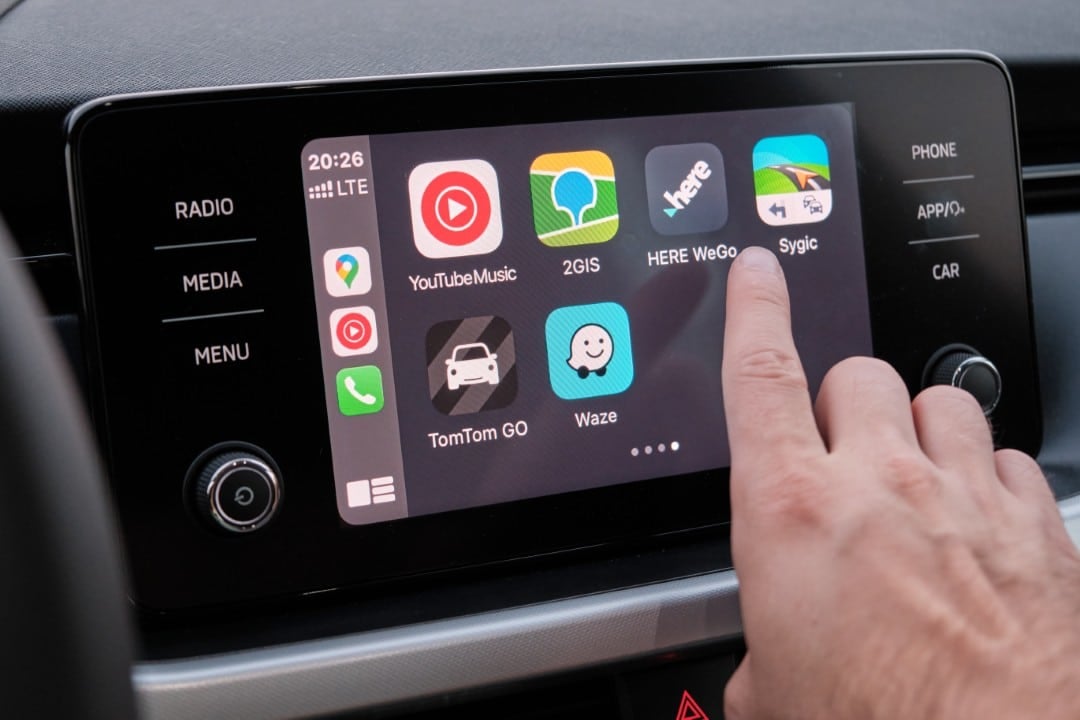
Advanced integration with vehicle sensors
To ensure that the blocking occurs precisely and inviolably, the software requires the reading of real-time data from multiple points in the car. The system not only relies on the GPS signal, which can be faulty in tunnels or dense urban areas, but connects directly to the car’s electronic control unit. Isso allows you to monitor the speed and status of the gearbox, ensuring that the visual restriction is activated at the exact moment the driver starts the journey.
The logic behind this integration is to prevent passengers or drivers from trying to circumvent safety rules during traffic jams or momentary stops at traffic lights. The security protocol understands that, even at low speeds, viewing films, series or video clips on the main panel represents a significant danger. The screen only releases the full video content when the handbrake is applied or the transmission returns to the park position, ensuring that the vehicle is stationary and safe.
New requirements for the application ecosystem
This structural change directly impacts the community of developers who create solutions for the brand’s automotive environment. New programming interfaces require that all content be rigorously classified using specific metadata. Software creators must now separate what is purely auditory content from what is visual, allowing the operating system to filter what can be displayed while driving.
If an application does not comply with the new digital security labels, its functionality may be limited or prevented from running while the car is in motion. The system acts as an active moderator, overlaying a “digital curtain” on any unauthorized video playback attempts, forcing the interface to return to safe modes such as displaying static album covers or simplified route instructions.
International standards and focus on attention
The initiative reflects a global trend towards tightening safety standards for connected vehicles. Estudos of traffic indicates that looking away from the road for just two seconds exponentially increases the likelihood of serious collisions. By automating video restriction, the technology removes the driver’s responsibility for self-control, imposing a technical barrier that prioritizes the life and physical integrity of occupants and third parties on the road.
Road safety experts point out that the cognitive load required to process moving scenes on a screen directly competes with the visual processing required for driving. The update, therefore, is not just a software fix, but a response from the technology industry to demands for safer traffic, where connectivity serves to assist driving, and not to compete for the driver’s attention at critical moments.



